CM Rekha Gupta launches 'Arpan' cloth donation drive at Delhi Metro
Synopsis
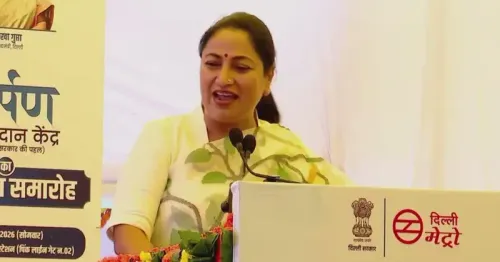
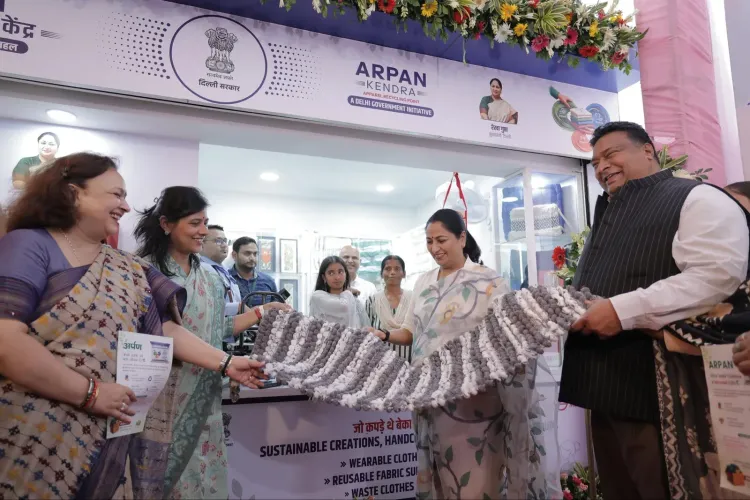
Delhi Chief Minister Rekha Gupta inaugurated 'Arpan', a used-clothing donation and recycling centre, at Punjabi Bagh West Metro Station on August 3, 2026. The initiative will span 10 Delhi Metro stations, targeting textile reuse, recycling, and upcycling while creating livelihood avenues for women.
Key Takeaways
Arpan was launched at Punjabi Bagh West Metro Station on August 3, 2026 by Delhi CM Rekha Gupta .
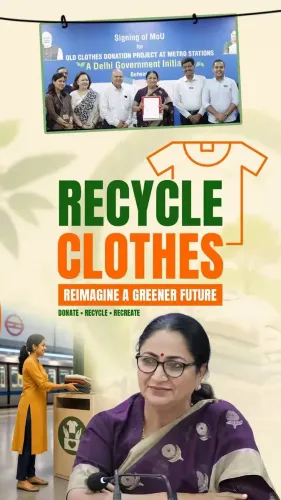
The programme will cover 10 Delhi Metro stations , serving as collection points for old and usable clothes.
Donated garments will undergo Reuse, Recycling, and Upcycling — a three-track circular economy model.
The initiative is designed to generate livelihood opportunities for women through the textile processing chain.
MLA Kailash Gangwal and Delhi Metro officials attended the inauguration.
The drive is framed as a public participation campaign, urging Delhi residents to donate wearable old clothing.
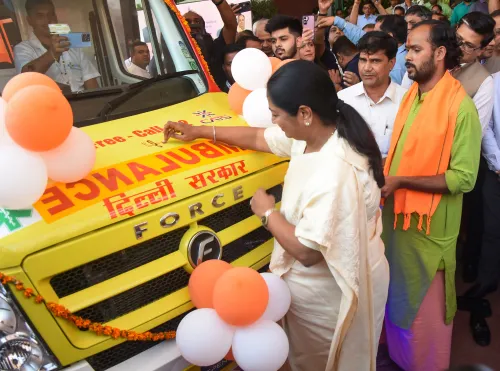
Old clothes found a new purpose at Punjabi Bagh West Metro Station on Monday, August 3, 2026, as Delhi Chief Minister Rekha Gupta inaugurated 'Arpan' — a dedicated donation and recycling centre for used garments — marking the first node of a planned 10-station network across the Delhi Metro.
What 'Arpan' does — and why metro stations
The centres are designed around a three-track model: Reuse, Recycling, and Upcycling of donated clothing. Metro stations are not an accidental choice — they are among the highest-footfall public spaces in the city, making them natural collection hubs that require no additional civic infrastructure to reach residents. Indian cities have increasingly turned to transit corridors for exactly this kind of circular-economy intervention, and Delhi Metro's network, one of the largest in the world, gives the initiative an immediate citywide reach.
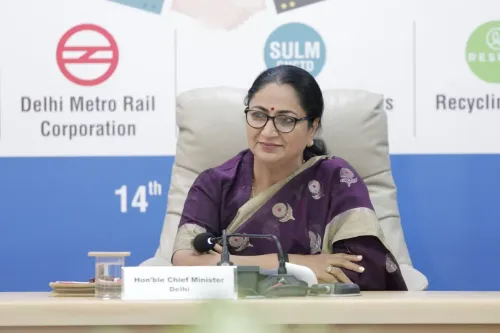
CM Gupta called on Delhi residents to donate wearable old clothes at the nearest Arpan centre, framing it as a 'janbhagidari abhiyan' — a people's participation campaign. MLA Kailash Gangwal, other elected representatives, and the Delhi Metro team were present at the launch.
Livelihood angle: women at the centre of the chain
Beyond the environmental pitch, the initiative carries an explicit economic promise: the sorting, upcycling, and resale chain is intended to generate new livelihood opportunities for women. Textile-linked circular economy programmes across Indian cities have repeatedly demonstrated that the labour-intensive stages — grading, mending, repurposing — can sustain self-help group employment when collection volumes are consistent. Whether Arpan builds that linkage formally will be the metric to watch as the remaining nine stations come online.
Swachh Bharat's urban thread runs through this
The initiative sits within the broader arc of Swachh Bharat Mission, launched in 2014, which pushed waste segregation, reuse, and recycling into urban policy across India. Arpan applies that mandate specifically to textiles — a category that generates significant solid waste but has historically received less policy attention than plastic or organic waste in Indian cities. Delhi's move to anchor the programme inside metro stations rather than municipal wards is a logistical bet: convenience drives donation volumes, and volumes are what make recycling economics work.
Nine more stations, a growing pile of donated clothes, and a livelihood chain waiting to be built — Arpan's real report card will be written in the months ahead.
Point of View
It threads together three politically useful narratives simultaneously: environmental stewardship, women's economic empowerment, and visible civic action. The real test is operational: Delhi has seen several such drives announced and quietly stall when collection volumes fail to sustain the recycling economics. If the livelihood-for-women component is formalised with verifiable self-help group linkages, 'Arpan' could become a replicable urban circular-economy model; if not, it risks being remembered as a ribbon-cutting moment.
NationPress
3 Aug 2026
Frequently Asked Questions
What is the 'Arpan' scheme launched by Delhi CM Rekha Gupta?
'Arpan' is a used-clothing donation and recycling initiative launched by Delhi Chief Minister Rekha Gupta at Punjabi Bagh West Metro Station on August 3, 2026. Centres will be set up at 10 Delhi Metro stations where old clothes will be collected for reuse, recycling, and upcycling.
Which Delhi Metro stations will have Arpan donation centres?
The government has announced that 10 Delhi Metro stations will host 'Arpan' centres, with Punjabi Bagh West being the first. The full list of stations has not been officially confirmed yet.
How does Arpan help women in Delhi?
The 'Arpan' initiative is designed to create livelihood opportunities for women through the sorting, upcycling, and resale stages of the donated clothing chain, though formal implementing arrangements have not been publicly detailed yet.
How can Delhi residents donate clothes at Arpan centres?
Residents can drop off old and wearable clothing directly at any 'Arpan' centre located inside participating Delhi Metro stations. CM Rekha Gupta has appealed to the public to contribute to the campaign.
Is Arpan connected to Swachh Bharat Mission?
Yes, 'Arpan' aligns with the broader goals of the Swachh Bharat Mission launched in 2014, which promotes waste segregation, reuse, and recycling in urban India — applied here specifically to the textile waste stream.