CM Rekha Gupta marks five years of PM GatiShakti

Synopsis
Delhi Chief Minister Rekha Gupta marked the fifth anniversary of PM GatiShakti on 14 October 2026, saluting the scheme's role in coordinating India's infrastructure planning across ministries and connecting it to the Viksit Bharat 2047 vision.
Key Takeaways
PM GatiShakti was launched on 13 October 2021 as a GIS-based National Master Plan for multi-modal connectivity to break planning silos across central ministries.
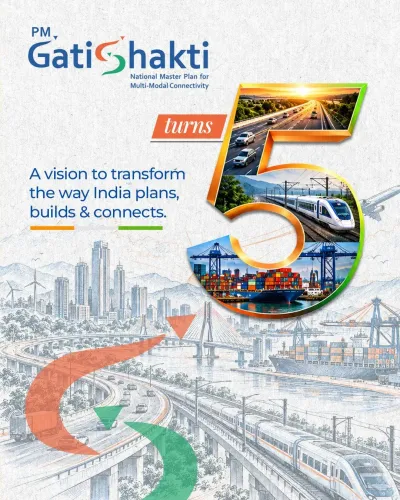
Delhi CM Rekha Gupta marked the scheme's fifth anniversary on 14 October 2026 , crediting PM Modi's leadership for more efficient infrastructure delivery.
The scheme is the operational centrepiece of India's broader infrastructure push, which began with the National Infrastructure Pipeline in 2019 .
State-level integration of the GatiShakti portal with local projects remains a key next step for maximising the programme's impact.
The initiative is directly tied to India's Viksit Bharat 2047 goal of becoming a fully developed economy through sustained infrastructure and economic reform.
Five years after Prime Minister Narendra Modi upended the way India builds roads, rail lines, and ports, Delhi Chief Minister Rekha Gupta paused on Wednesday, 14 October 2026 to mark the anniversary of a plan that was always about one deceptively simple idea: stop building in silos.
What PM GatiShakti actually changed
Launched on 13 October 2021, the PM GatiShakti National Master Plan was a direct answer to a chronic failure in Indian infrastructure delivery — ministries planning projects independently, roads ending where railways began, and logistics bottlenecks eating into economic competitiveness. The plan introduced a GIS-based digital platform that pulled all central ministries and eventually state governments onto a single planning canvas, letting agencies see each other's projects in real time before a single shovel hit the ground.
CM Gupta framed the milestone in terms of outcomes: projects 'planned together, connected better and delivered with greater efficiency.' That language tracks the programme's core logic — that coordination is not an administrative nicety but a cost-saving, time-saving economic lever.
GatiShakti inside the bigger infrastructure arc
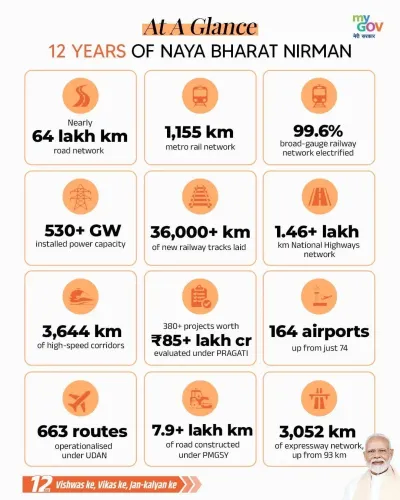
The scheme did not emerge in a vacuum. It was the operational centrepiece of a broader push that began with the National Infrastructure Pipeline in 2019, which catalogued over ₹111 lakh crore worth of projects across sectors. Successive Union Budgets have layered in digital planning tools, multimodal corridor investments, and logistics-cost reduction targets — all feeding the same ambition. GatiShakti became the nervous system that connected those ambitions to actual ground-level execution.
For a city-state like Delhi, the stakes are concrete: seamless integration of metro extensions, expressways, freight corridors, and last-mile connectivity determines how quickly goods and people move through the National Capital Region — and by extension, how competitive the broader northern economy becomes.
The road to Viksit Bharat runs through this portal
CM Gupta's post closes on the government's horizon goal: a 'faster, more connected Viksit Bharat' — the 2047 vision to transform India into a fully developed economy. Infrastructure density and logistics efficiency are two of the most cited prerequisites for that leap. The five-year mark of GatiShakti is, in that framing, not a celebration of the past but a checkpoint on a much longer journey.
The next critical test will be how deeply state governments, including Delhi, integrate the GatiShakti portal with local project pipelines — and whether upcoming Union Budgets deepen the funding and technology commitments that have driven the programme so far.
Point of View
Coordinated governance is the differentiator of this era of Indian infrastructure. By invoking Viksit Bharat in the same breath, she connects a five-year-old administrative reform to a twenty-year national vision — a rhetorical move that keeps Delhi's BJP leadership visibly in step with the Union government's biggest branding exercise. The more substantive political question is whether state-level integration of the GatiShakti portal has kept pace with the Union's ambitions, since the scheme's real dividends depend on buy-in below the central level. Delhi's own project pipeline — metro, expressways, freight linkages — will ultimately be the proof of concept closest to the Chief Minister's own desk.
NationPress
14 Oct 2026
Frequently Asked Questions
What is PM GatiShakti and when was it launched?
PM GatiShakti is the National Master Plan for Multi-modal Connectivity launched on 13 October 2021 . It uses a GIS-based digital platform to integrate infrastructure planning across central ministries and state governments, aiming to reduce project delays and logistics costs.
Why is Rekha Gupta talking about PM GatiShakti?
Delhi Chief Minister Rekha Gupta posted on X on 14 October 2026 to mark the fifth anniversary of PM GatiShakti, praising PM Modi's leadership in transforming how India plans and delivers infrastructure projects.
What is the connection between PM GatiShakti and Viksit Bharat?
Viksit Bharat is India's government-set vision to become a fully developed economy by 2047 . PM GatiShakti is seen as a foundational infrastructure tool for achieving that goal by improving connectivity and cutting logistics costs across the country.
How does PM GatiShakti reduce infrastructure delays?
By placing all ministries on a shared GIS-based planning platform, PM GatiShakti allows agencies to see each other's projects before construction begins, preventing overlaps and coordination failures that historically caused costly delays.
What comes next for PM GatiShakti after five years?
The focus going forward is on deeper state-level integration of the GatiShakti portal with local project pipelines, and on whether upcoming Union Budgets will expand the funding and digital tools that underpin the programme.