CM Rekha Gupta Pays Tribute to Raja Ram Mohan Roy
Synopsis
Delhi Chief Minister Rekha Gupta marked the death anniversary of 19th-century social reformer Raja Ram Mohan Roy on 27 September 2026, honouring his campaign against sati, his founding of the Brahmo Samaj, and his advocacy for women's rights and modern education.
Key Takeaways
Delhi CM Rekha Gupta paid tribute to Raja Ram Mohan Roy on his death anniversary, 27 September 2026 .
Roy is credited with spearheading the campaign that led to the Bengal Sati Regulation of 1829 , which abolished the practice of sati.
He co-founded the Brahmo Samaj , a reformist movement promoting rational inquiry, women's education, and rejection of casteism.
CM Gupta described Roy as a 'pioneer of the Indian renaissance' whose ideas on social reform 'continue to inspire' modern nation-building.
Tributes to Roy on 27 September are issued annually by Indian political leaders across party lines, reflecting his cross-partisan legacy.
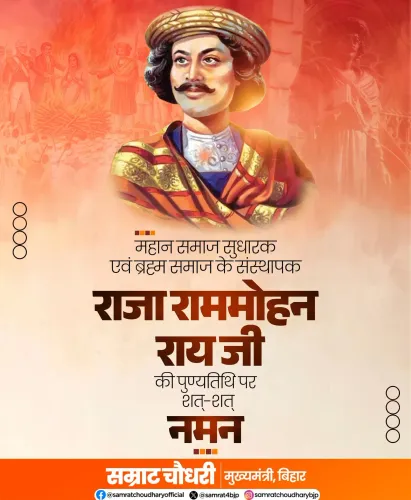
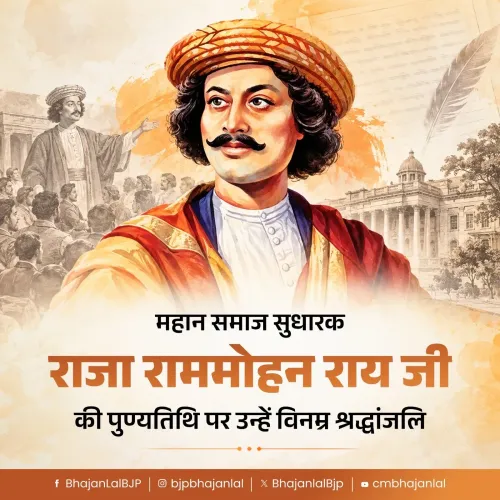
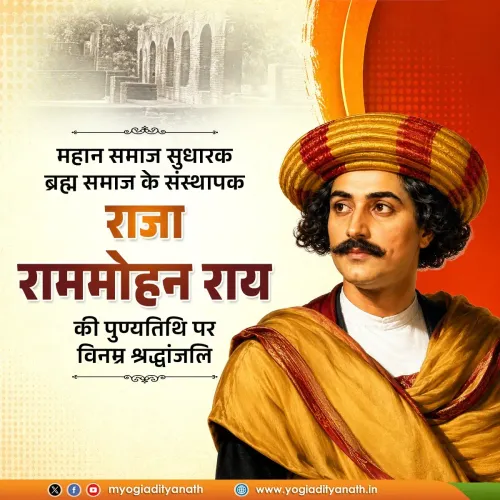
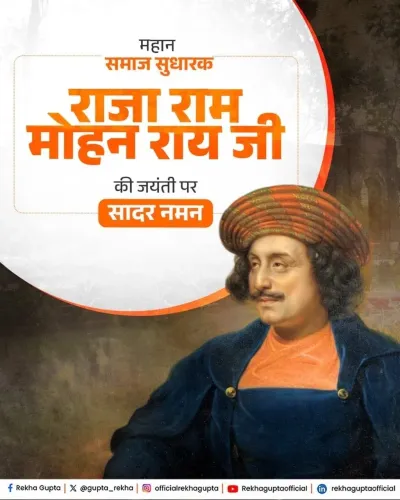
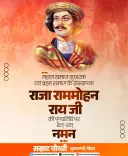
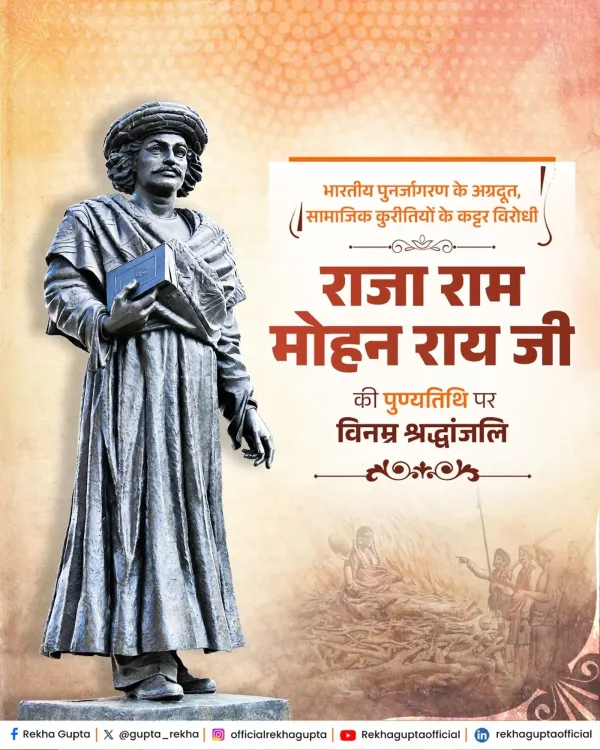
A reformer who bent the arc of Indian society toward dignity — Delhi Chief Minister Rekha Gupta paid homage to Raja Ram Mohan Roy on his death anniversary, 27 September 2026, calling him the forerunner of the Indian renaissance and a champion of women's honour and modern education.
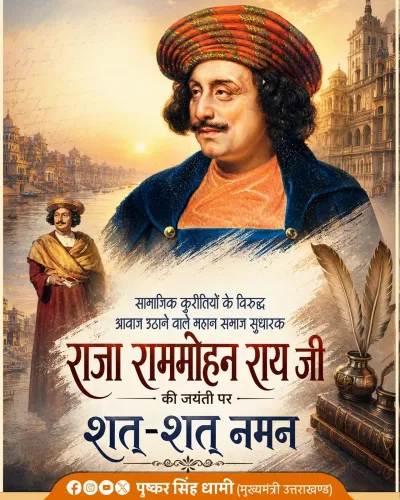
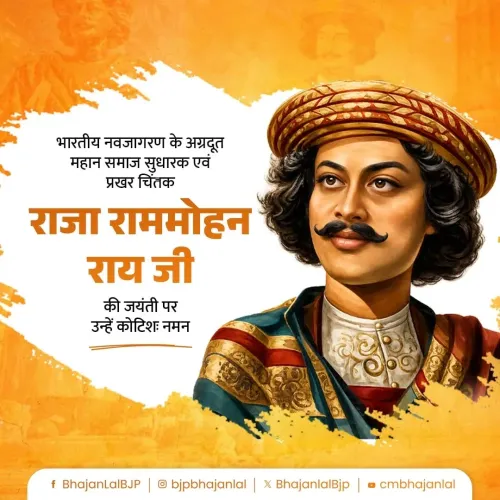
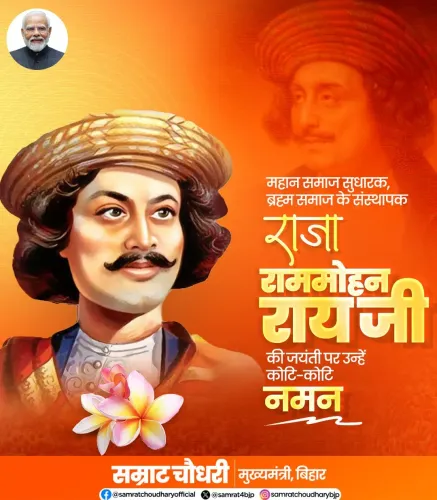
In her post, CM Gupta wrote: 'भारतीय नवजागरण के अग्रदूत और महान समाज सुधारक राजा राम मोहन राय जी की पुण्यतिथि पर विनम्र श्रद्धांजलि' — 'A humble tribute on the death anniversary of Raja Ram Mohan Roy, pioneer of the Indian renaissance and great social reformer.' She invoked his struggle against practices like sati, his advocacy for women's respect, and his push for modern education as ideas that 'continue to inspire us in building a strong India through social reform.'
The man who moved a law — and a nation
Raja Ram Mohan Roy stands as one of the most consequential figures in 19th-century Indian history. Born in 1772 in Bengal, he waged a sustained campaign against the practice of sati — the burning of widows on their husbands' funeral pyres — challenging both orthodox religious authority and colonial indifference. His relentless advocacy yielded the Bengal Sati Regulation of 1829, the colonial law that formally abolished the practice. That single legislative achievement made him a benchmark for what organised social conscience can accomplish.
Roy did not stop at abolition. He co-founded the Brahmo Samaj, a reformist socio-religious movement that rejected idolatry and casteism while championing rational inquiry and women's education — ideas that were genuinely radical in their time. His vision fused Western enlightenment thought with Indian philosophical traditions, giving Indian reformism a vocabulary it would carry into the independence movement and beyond.
A 27 September ritual across Indian politics
Roy's death anniversary on 27 September draws tributes from leaders across India's political spectrum each year — a rare instance of cross-party consensus on a historical figure. The consistency of these tributes reflects how deeply Roy's legacy is woven into India's self-conception as a progressive, pluralist democracy. CM Gupta's post fits within that annual pattern, but its specific reference to 'building a strong India through social reform' also echoes a recurring BJP framing that links historical reform to contemporary nation-building. The sentiment, expressed in restrained, reverential language, is entirely in keeping with the solemnity of the occasion.
Point of View
Making annual tributes a low-risk, high-symbolism act. CM Gupta's framing — linking Roy's legacy to 'building a strong India through social reform' — is consistent with a BJP governance narrative that seeks historical legitimacy for contemporary social policy. The ritual of 27 September tributes also signals how 19th-century reformers continue to function as moral anchors in 21st-century political messaging. What matters is not the tribute itself but what specific policy commitments, if any, leaders attach to it.
NationPress
27 Sept 2026
Frequently Asked Questions
Why is 27 September significant for Raja Ram Mohan Roy?
27 September is the death anniversary of Raja Ram Mohan Roy , who died on this date in 1833 in Bristol, England. Indian leaders across parties observe the day with tributes each year.
What did Raja Ram Mohan Roy do to end sati?
Raja Ram Mohan Roy campaigned persistently against the practice of sati — the burning of widows — through writings, petitions, and public advocacy. His efforts directly contributed to the passage of the Bengal Sati Regulation of 1829 , which banned the practice.
What is the Brahmo Samaj founded by Raja Ram Mohan Roy?
The Brahmo Samaj was a reformist socio-religious movement co-founded by Raja Ram Mohan Roy that rejected idolatry and casteism, promoted women's education, and championed rational and humanist values within Indian society.
Who is Rekha Gupta and why did she pay tribute to Raja Ram Mohan Roy?
Rekha Gupta is the Chief Minister of Delhi and a BJP leader. She posted a tribute on his death anniversary as part of a broader annual tradition among Indian political figures to honour the 19th-century social reformer.
Which law abolished sati in India?
The Bengal Sati Regulation of 1829 , passed under Governor-General Lord William Bentinck, formally abolished the practice of sati in British India, following sustained advocacy by Raja Ram Mohan Roy .