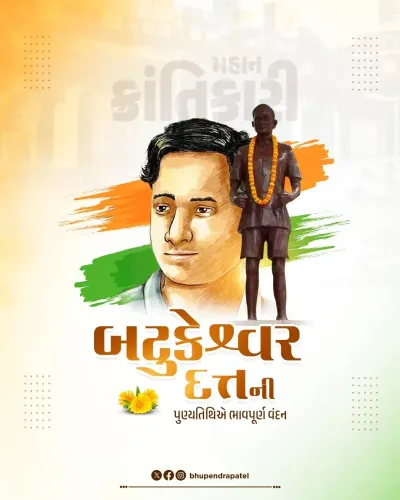
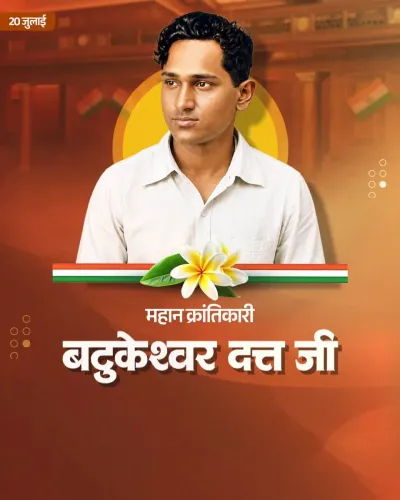
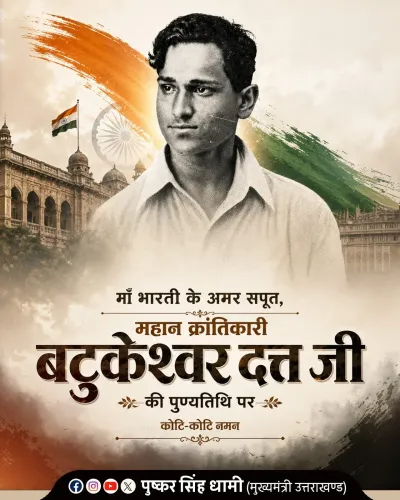
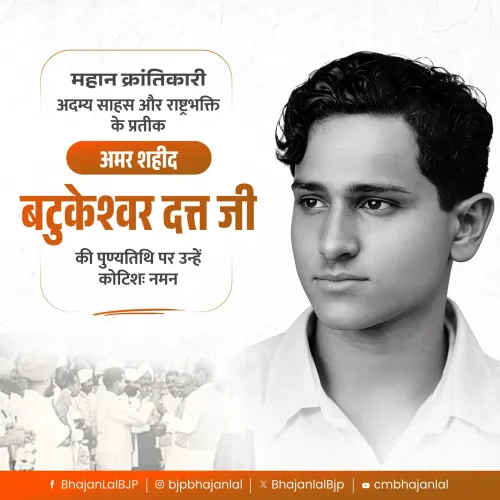
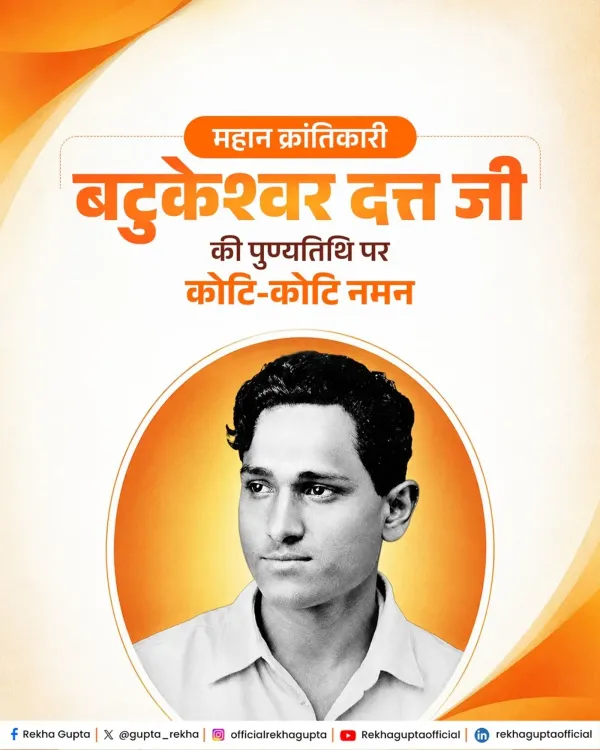
CM Rekha Gupta Pays Tribute to Revolutionary Batukeshwar Dutt
Synopsis
Delhi Chief Minister Rekha Gupta on 20 July 2026 paid tribute to revolutionary Batukeshwar Dutt on his death anniversary, honouring his 1929 Central Legislative Assembly bombing alongside Bhagat Singh as an act of protest against British colonial rule.
Key Takeaways
Delhi Chief Minister Rekha Gupta posted a tribute to Batukeshwar Dutt on his death anniversary, 20 July 2026 .
Batukeshwar Dutt and Bhagat Singh threw bombs inside the Central Legislative Assembly on 8 April 1929 to protest the Public Safety Bill and Trade Disputes Bill.
The action was a deliberate political protest — the two revolutionaries did not flee and courted arrest to publicise their cause.
Dutt was a member of the Hindustan Socialist Republican Association (HSRA) and survived imprisonment to witness Indian independence in 1947 .
He passed away on 20 July 1965 ; the anniversary is annually observed as a moment of national remembrance.
The tribute reflects the BJP 's broader pattern of honouring armed revolutionaries as part of its official nationalist narrative.
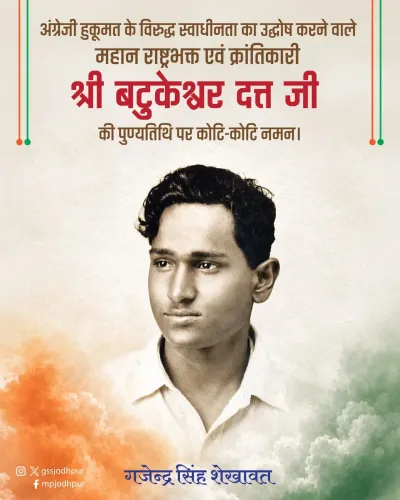
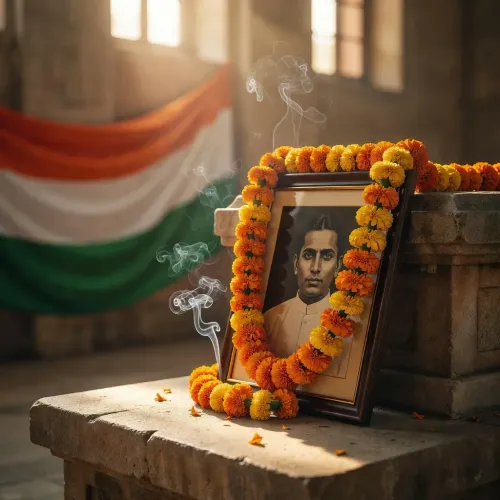
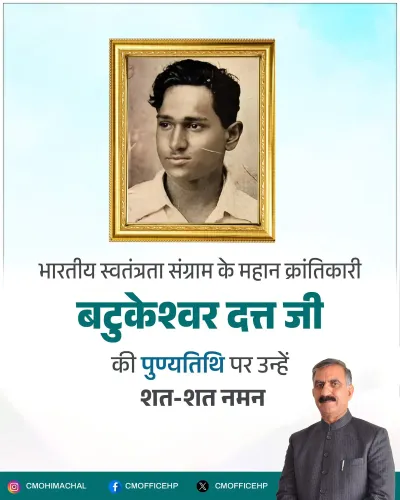
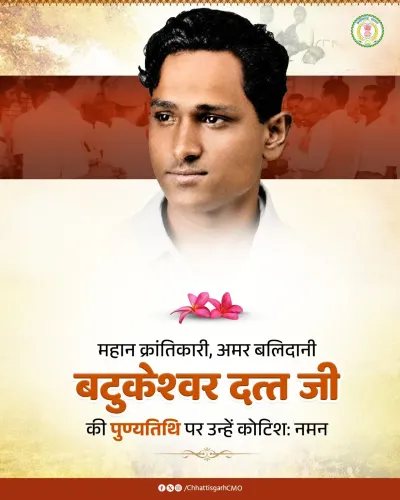
Delhi Chief Minister Rekha Gupta on Monday, 20 July 2026, paid tribute to freedom fighter Batukeshwar Dutt on his death anniversary, honouring his role in one of the most dramatic acts of protest against British colonial rule in India's independence movement.
Posting on X in Hindi, Chief Minister Gupta described Dutt as a 'mahan krantikari aur maa Bharati ke amar sapoot' ('great revolutionary and immortal son of Mother India'), and said his 'unparalleled courage, supreme sacrifice, and patriotism will forever remain a source of inspiration for every citizen of the country.'
Context
Batukeshwar Dutt was a prominent member of the Hindustan Socialist Republican Association (HSRA), the revolutionary organisation that sought to overthrow British rule through direct action. On 8 April 1929, Dutt and fellow revolutionary Bhagat Singh threw low-intensity bombs inside the Central Legislative Assembly in Delhi — the colonial-era parliament — and showered the hall with leaflets. The act was designed not to cause casualties but to make a political statement, with the two men deliberately courting arrest.
The protest was directed against the Public Safety Bill and the Trade Disputes Bill, legislation the British administration sought to use to suppress labour movements and political dissent. Dutt and Singh famously did not flee after the explosion, choosing instead to be arrested and put on trial so their message could reach a wider audience.
Policy Backdrop
Dutt was subsequently tried and sentenced to transportation for life, spending years in the Andaman Cellular Jail. Unlike Bhagat Singh, who was hanged in 1931, Dutt survived imprisonment and lived to see Indian independence in 1947. He passed away on 20 July 1965, and his death anniversary is observed each year as an occasion for public remembrance of the HSRA's contribution to the independence struggle.
The Central Legislative Assembly building in New Delhi where the 1929 action took place is today known as the Constitution Hall, part of the old Parliament building complex, lending the site continued historical and symbolic significance for Indian legislators and citizens alike.
Stakeholders and Impact
BJP-led governments and leaders have consistently integrated armed revolutionaries of the independence movement — particularly those associated with the HSRA such as Bhagat Singh, Sukhdev, Rajguru, and Batukeshwar Dutt — into official nationalist narratives. Such tributes signal an effort to claim a broad spectrum of the independence movement's legacy, alongside figures associated with non-violent resistance.
For Delhi, where the historical Central Legislative Assembly stood, the tribute carries a particular local resonance. Chief Minister Gupta's post amplifies the anniversary to a national audience, with the message directed at youth and citizens as a call to remember sacrifice and patriotism.
What's Next
State-level commemorations at memorials and institutions linked to HSRA revolutionaries are likely around this anniversary. References to Dutt's legacy may also surface in official education and cultural programmes as the BJP government in Delhi continues to shape its public narrative around India's freedom struggle. The broader pattern of high-profile tributes to revolutionary figures suggests this anniversary will continue to receive prominent acknowledgement in political discourse.
Point of View
Broadening the party's nationalist appeal beyond the Gandhian canon. By invoking Dutt's 'supreme sacrifice' and 'unparalleled courage,' the post connects the ruling party in Delhi to a legacy of radical anti-colonial resistance that resonates strongly with youth and working-class audiences. The choice of Dutt — less celebrated than Bhagat Singh in mainstream discourse — signals an effort to deepen, not just repeat, this narrative. As Delhi's government shapes its cultural and educational programmes, such tributes are likely to find institutional expression beyond social media.
NationPress
21 Jul 2026
Frequently Asked Questions
Who was Batukeshwar Dutt?
Batukeshwar Dutt was an Indian revolutionary and member of the Hindustan Socialist Republican Association (HSRA) who, along with Bhagat Singh, threw bombs inside the Central Legislative Assembly in Delhi on 8 April 1929 to protest British colonial legislation. He survived imprisonment and lived to see Indian independence, passing away on 20 July 1965.
Why did Batukeshwar Dutt bomb the Central Legislative Assembly?
Dutt and Bhagat Singh bombed the Central Legislative Assembly in 1929 to protest the Public Safety Bill and the Trade Disputes Bill, which were seen as tools to suppress political dissent and labour movements. The act was intended as a symbolic statement; the two men deliberately stayed to be arrested.
When is Batukeshwar Dutt's death anniversary?
Batukeshwar Dutt's death anniversary falls on 20 July; he passed away on 20 July 1965.
Why did Delhi CM Rekha Gupta pay tribute to Batukeshwar Dutt?
Delhi Chief Minister Rekha Gupta posted a tribute on X on 20 July 2026 to mark Batukeshwar Dutt's death anniversary, calling him a great revolutionary and saying his courage and patriotism would forever inspire every citizen of India.