CM Rekha Gupta Welcomes Cabinet Nod for Delhi Tunnel
Synopsis
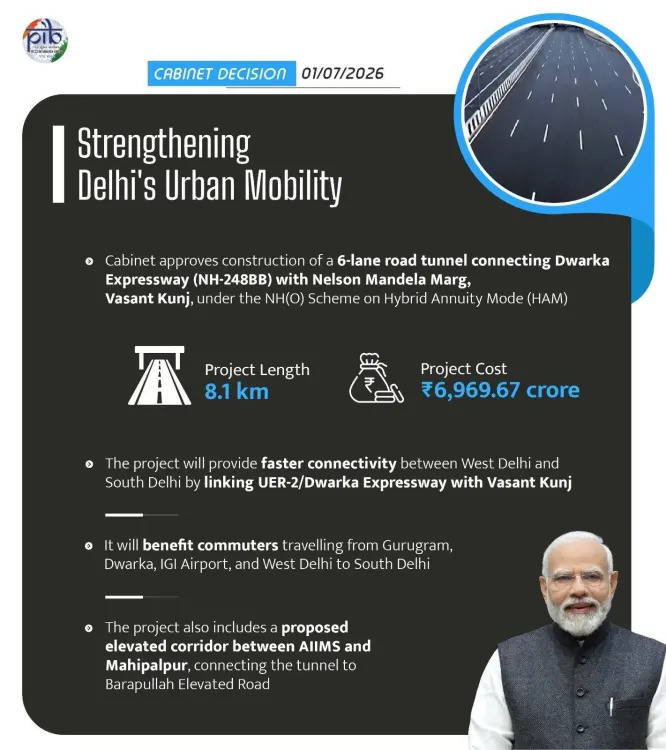
The Union Cabinet has approved an 8.1 km, 6-lane tunnel linking Dwarka Expressway (NH-248BB) to Vasant Kunj, with an elevated AIIMS–Mahipalpur corridor, at ₹6,969.67 crore. Delhi CM Rekha Gupta welcomed the decision as a transformative step for the capital's connectivity and traffic management.
Key Takeaways
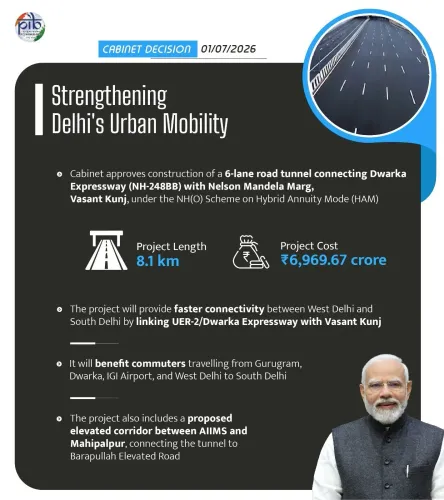
The Union Cabinet approved construction of an 8.1 km, 6-lane tunnel connecting Dwarka Expressway (NH-248BB) to Vasant Kunj (Nelson Mandela Marg) .
The project is estimated to cost ₹6,969.67 crore .
A proposed elevated corridor between AIIMS and Mahipalpur will link the tunnel to the existing Barapullah Elevated Road .
The project aims to ease travel for commuters between Gurugram , Dwarka , IGI Airport , and south Delhi .
Delhi CM Rekha Gupta expressed gratitude to PM Narendra Modi on behalf of Delhi residents.
The approval aligns with the Centre's Bharatmala Pariyojana framework for NCR connectivity.
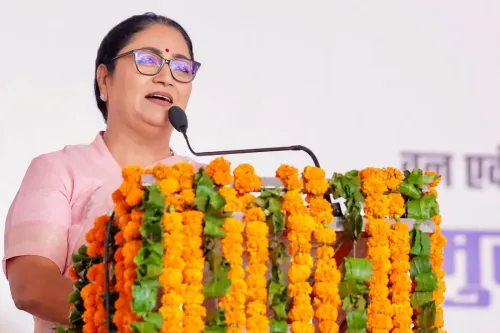
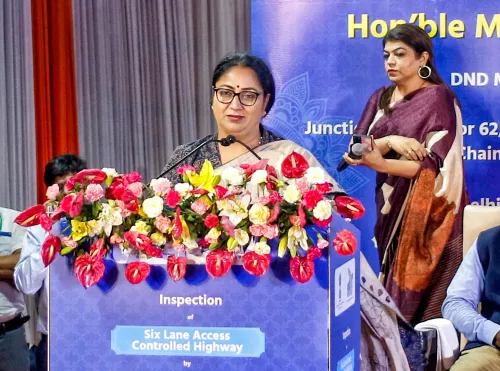
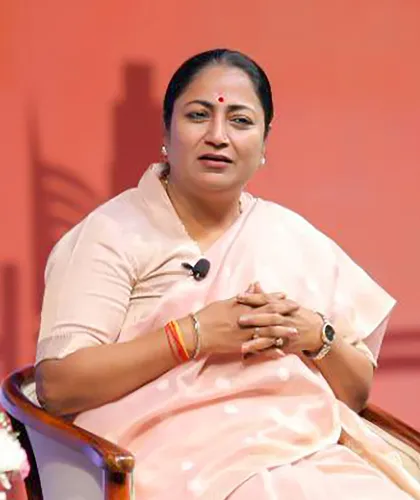
Delhi Chief Minister Rekha Gupta on Wednesday, 1 July 2026 welcomed the Union Cabinet's approval of an 8.1-kilometre, 6-lane tunnel connecting Dwarka Expressway (NH-248BB) to Vasant Kunj (Nelson Mandela Marg), describing it as a landmark step for the capital's infrastructure and traffic management.
Context
Posting on X, CM Gupta stated that the Union Cabinet, under the leadership of Prime Minister Narendra Modi, had approved the tunnel project aimed at strengthening Delhi's connectivity. In her post, she wrote — 'केंद्रीय कैबिनेट ने द्वारका एक्सप्रेसवे (NH-248BB) को वसंत कुंज (नेल्सन मंडेला मार्ग) से जोड़ने वाली 8.1 किमी लंबी 6-लेन टनल के निर्माण को मंजूरी दी है' — ('The Union Cabinet has approved the construction of an 8.1 km, 6-lane tunnel connecting Dwarka Expressway (NH-248BB) to Vasant Kunj (Nelson Mandela Marg)'). She expressed gratitude to the Prime Minister on behalf of all Delhi residents for the decision.
The approved project is estimated to cost ₹6,969.67 crore. It is intended to ease travel between western Delhi and south Delhi, benefiting millions of daily commuters travelling between Gurugram, Dwarka, IGI Airport, and south Delhi localities.
Policy Backdrop
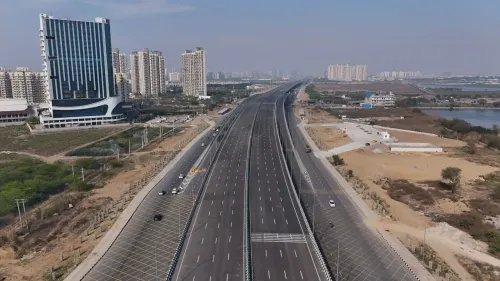
Dwarka Expressway (NH-248BB) was taken up as part of the Bharatmala Pariyojana, the Centre's flagship national highway development programme launched in the mid-2010s to improve connectivity across the National Capital Region. The expressway has been a key artery linking Delhi and Gurugram, and the tunnel is positioned as the next phase in expanding that corridor southward.
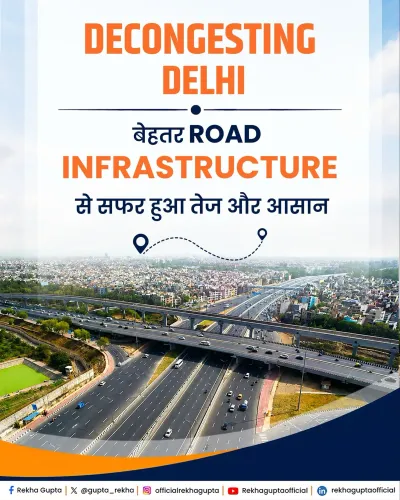
The Union government has increasingly prioritised multi-modal corridor projects — combining tunnels, elevated roads, and expressways — to address chronic congestion in the NCR. The latest approval fits into a broader pattern of Centre-led urban transport investments in Delhi even as the city operates under a directly elected state government.
Stakeholders and Impact
Beyond the tunnel itself, the Cabinet approval also includes a proposed elevated corridor between AIIMS and Mahipalpur, which will connect the tunnel to the existing Barapullah Elevated Road. This linkage is designed to create a continuous, high-speed route threading through several of Delhi's most congested zones.
Daily commuters between Gurugram, Dwarka, Indira Gandhi International Airport, and residential and commercial hubs in south Delhi stand to be the primary beneficiaries. The corridor is also expected to reduce pressure on surface roads that currently absorb a significant share of cross-city traffic.
What's Next
The project now moves toward finalisation of a detailed project report, land acquisition, and the fixing of a construction timeline for both the 8.1 km tunnel and the AIIMS–Mahipalpur elevated corridor. These administrative and engineering steps will determine when ground-breaking work can begin in earnest.
If executed on schedule, the tunnel and its connecting elevated section could fundamentally reshape east-west and north-south traffic flows across the capital, offering a template for similar sub-surface infrastructure in other congested NCR corridors.
Point of View
Arriving at a moment when the BJP governs both the state and the Centre — an alignment that historically accelerates clearances and funding for capital infrastructure. CM Rekha Gupta's public acknowledgement of PM Modi's leadership is as much a political signal as an administrative update, reinforcing the BJP's narrative of coordinated governance in Delhi after years of Centre-state friction. The inclusion of the AIIMS–Mahipalpur elevated corridor suggests a systems-level approach rather than a standalone fix, connecting multiple existing corridors into a coherent network. How swiftly the project moves from Cabinet nod to ground-breaking will be the real test of this political alignment's delivery capacity.
NationPress
1 Jul 2026
Frequently Asked Questions
What is the Dwarka Expressway tunnel project approved by the Cabinet?
The Union Cabinet approved an 8.1 km, 6-lane tunnel connecting Dwarka Expressway (NH-248BB) to Vasant Kunj via Nelson Mandela Marg in south Delhi, at an estimated cost of ₹6,969.67 crore.
How will the Delhi tunnel project benefit commuters?
The tunnel will reduce travel time and congestion for commuters moving between Gurugram, Dwarka, IGI Airport, and south Delhi, easing pressure on existing surface roads.
What is the AIIMS–Mahipalpur elevated corridor?
It is a proposed elevated road section forming part of the same project, designed to connect the new tunnel to the existing Barapullah Elevated Road, creating a continuous high-speed corridor.
What is Bharatmala Pariyojana and how does it relate to this project?
Bharatmala Pariyojana is the Union government's national highway development programme launched in the mid-2010s; Dwarka Expressway (NH-248BB) was taken up under this scheme to improve NCR connectivity.
What did Delhi CM Rekha Gupta say about the Cabinet decision?
CM Rekha Gupta welcomed the approval on X, thanking PM Narendra Modi on behalf of all Delhi residents and calling it a forward-looking decision for Delhi's development and traffic management.