CM Revanth Seeks 11.56 Lakh PMAY-G Houses for Telangana
Synopsis
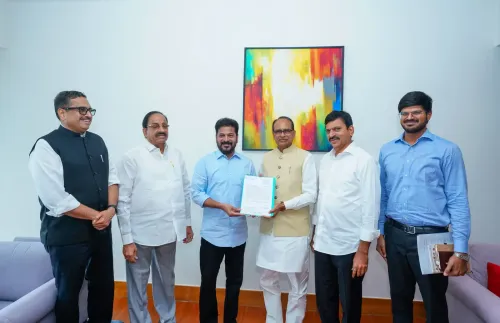
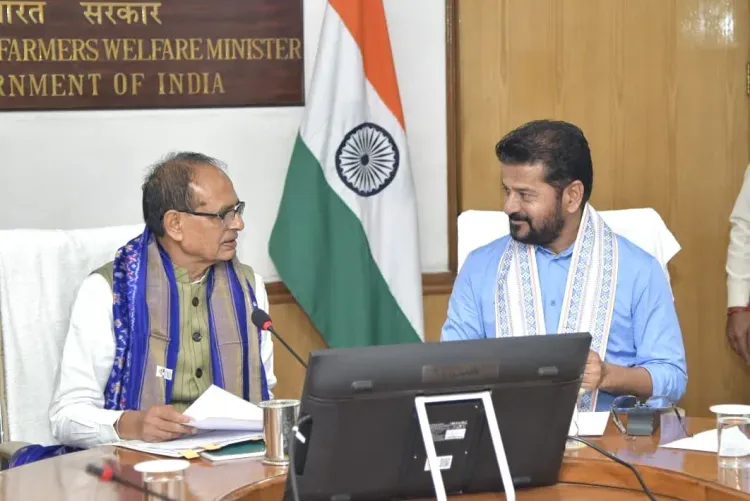
Chief Minister Revanth Reddy met Union Minister Shivraj Singh Chouhan in New Delhi on 28 July 2026, requesting allocation of over 11.56 lakh PMAY-G houses for Telangana and seeking expanded rural employment works under VBGRAMG to address drought-hit communities.
Key Takeaways
CM Revanth Reddy formally requested 11,56,915 PMAY-G houses for Telangana during a meeting with Union Minister Shivraj Singh Chouhan at Krishi Bhavan, New Delhi, on 28 July 2026 .
The state used the Centre's own Awaas+ app to survey and identify eligible rural families, lending official credibility to the demand figure.
The CM alleged the previous state government failed to utilise PMAY-G for ten years , creating a severe backlog of rural housing demand.
Indiramma Indlu , Telangana's state housing scheme, is designed to run in convergence with PMAY-G and depends on fresh central sanction to scale.
The CM sought inclusion of drought-resilience works — sericulture sheds, moisture trenches, bamboo groves, flood-damaged land restoration — under VBGRAMG for SC/ST communities and marginal farmers .
Chouhan responded positively and was invited to visit Telangana for a ground-level assessment; no formal central decision has been announced yet.
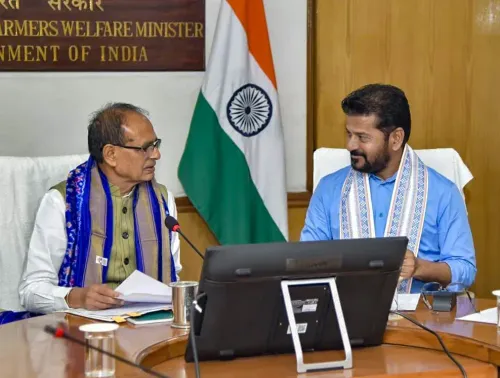
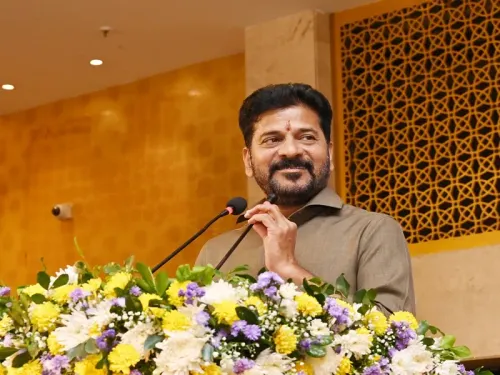
Ten years of lost opportunity — that is how Chief Minister Revanth Reddy framed Telangana's rural housing deficit when he sat down with Union Minister Shivraj Singh Chouhan at Krishi Bhavan, New Delhi, on Tuesday, 28 July 2026. The Congress government is now pushing hard to recover that ground, formally requesting the Centre to allocate 11.56 lakh houses under the Pradhan Mantri Awas Yojana-Gramin (PMAY-G).
A decade of unmet demand, now on the Centre's desk
The Chief Minister's Office of Telangana stated that the previous state government failed to utilise PMAY-G allocations over the past ten years, leaving rural poor families without pucca homes. The current administration used the Centre's own Awaas+ app — a beneficiary-survey tool developed by the Ministry of Rural Development — to conduct a fresh enumeration. That survey identified 11,56,915 eligible rural families across the state. CM Revanth presented this figure directly to Minister Chouhan, urging the earliest possible allocation.
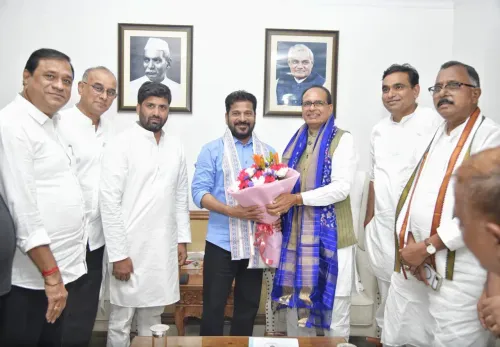
The meeting was part of a broader Delhi visit in which the Chief Minister was accompanied by eight Members of Parliament and senior officials including Ex-Officio Special Secretary K. Ramakrishna Rao and Secretary (Coordination) Advait Kumar Singh. The multi-MP delegation was a deliberate signal of political weight behind the demand.
Indiramma Indlu and the state's housing push
CM Revanth briefed Chouhan on Indiramma Indlu, the state's flagship rural housing programme launched after the Congress government took office in December 2023. The scheme is designed to dovetail with PMAY-G, and the state wants central sanction to unlock the full pipeline. Without fresh central allocations, the programme cannot scale to meet the backlog the survey has now documented.
The Chief Minister also reminded the Union Minister that under MGNREGS, beneficiaries of housing schemes were previously entitled to up to 90 days of wage work during construction. He urged that the same convergence be permitted under the Viksit Bharat Guarantee for Rozgar and Ajeevika Mission (Gramin) — VBGRAMG, the newer employment framework, so that house-building itself becomes a source of guaranteed income for the rural poor.
El Niño, drought, and the case for expanded rural works
Beyond housing, the CM made a pointed case for expanding the basket of permissible works under VBGRAMG in light of El Niño-driven rainfall deficits hitting Telangana's agricultural districts. He requested that works such as vegetable pandals, fodder plots, mulberry plantation and sericulture sheds, bamboo groves, moisture-conservation trenches on hill slopes, and rehabilitation of flood- and sand-silt-damaged farmland be added to the scheme's approved list.
The ask is explicitly targeted at the state's most vulnerable — SC and ST communities, small and marginal farmers, and agricultural labourers — who lose wage income when the monsoon fails. Crop diversification support, the CM argued, needs to be embedded in the employment guarantee framework itself, not treated as a separate agricultural intervention.
Chouhan's response and an invitation to Telangana
The Chief Minister's Office said Chouhan responded positively to the concerns raised on both Indiramma Indlu and employment works. CM Revanth also extended a formal invitation to the Union Minister to visit Telangana for a ground-level assessment of conditions — a move that, if accepted, would keep the pressure on the Centre to act.
The ball is now in New Delhi's court. A formal central sanction for 11.56 lakh houses would be one of the largest single-state allocations under PMAY-G in recent years — and for Telangana's rural poor, long overdue.
Point of View
The Centre's own Awaas+ survey tool — to build an irrefutable case after years of alleged underutilisation by its predecessor. The multi-MP Delhi delegation signals the Congress is framing rural housing as a political deliverable ahead of local elections, not merely a welfare obligation. The simultaneous ask for VBGRAMG flexibility reflects a wider pattern of state governments seeking to bend centrally sponsored scheme rules to fit local climate and livelihood realities — a negotiation that will define centre-state relations on rural welfare for the rest of this decade. The Centre's response will be watched closely by other states with similar PMAY-G backlogs.
NationPress
27 Oct 2026
Frequently Asked Questions
What is PMAY-G and how many houses did Telangana request?
PMAY-G (Pradhan Mantri Awas Yojana-Gramin) is the central government's rural housing scheme launched in 2016. Telangana Chief Minister Revanth Reddy requested allocation of 11,56,915 houses under the scheme during a meeting with Union Minister Shivraj Singh Chouhan on 28 July 2026 .
What is Indiramma Indlu scheme in Telangana?
Indiramma Indlu is Telangana's state rural housing programme launched by the Congress government after it came to power in December 2023 . It is designed to work in convergence with PMAY-G to build homes for the rural poor.
Why did Telangana miss out on PMAY-G benefits for ten years?
CM Revanth Reddy told Union Minister Chouhan that the previous BRS state government failed to utilise PMAY-G allocations over the past ten years , preventing rural poor families from building their own homes and creating a large backlog of demand.
What is the Awaas+ app and how was it used in Telangana?
Awaas+ is a mobile application developed by the Union Ministry of Rural Development for beneficiary surveys under PMAY-G. Telangana used it to identify 11,56,915 eligible rural families , forming the basis of the state's allocation request.
What additional demands did CM Revanth make on rural employment?
CM Revanth requested that drought-resilience works — including sericulture sheds, vegetable gardens, bamboo groves, moisture-conservation trenches, and flood-damaged land restoration — be added to the VBGRAMG scheme. He also sought permission for housing beneficiaries to work up to 90 days under the scheme during home construction, similar to earlier MGNREGS provisions.