CM Rio backs partnership to train farmers, protect Nagaland pig breeds
Synopsis
Nagaland Chief Minister Neiphiu Rio on 14 July 2026 voiced support for a partnership to train farmers and veterinarians and establish a centre dedicated to protecting the state's indigenous pig breeds, blending modernisation with conservation.
Key Takeaways
CM Neiphiu Rio publicly endorsed a new partnership targeting Nagaland's livestock sector on 14 July 2026 .
The partnership proposes training programmes for farmers, veterinarians, and technical professionals in the state.
A dedicated Centre for indigenous pig breed protection and promotion is to be established under the initiative.
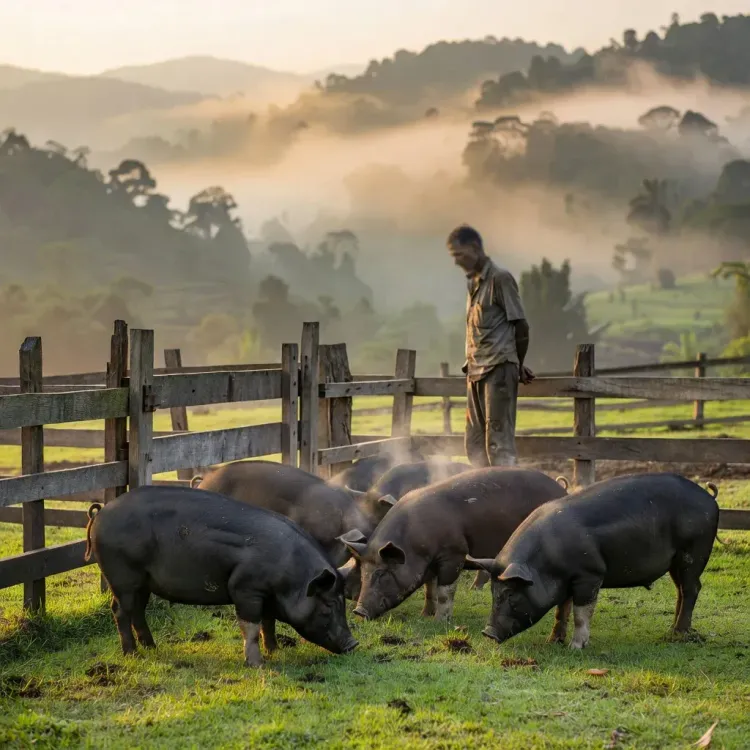
Pig rearing is a cornerstone of tribal rural livelihoods and cultural identity across Nagaland .
The initiative aligns with the National Livestock Mission launched in 2014 to boost livestock productivity and conserve indigenous breeds.
The proposed centre could serve as a replicable model for other northeastern states balancing modernisation with biodiversity conservation.
Nagaland Chief Minister Neiphiu Rio on Tuesday, 14 July 2026, expressed strong support for a new partnership aimed at training farmers, veterinarians, and technical professionals in the state, while also establishing a dedicated centre to protect and promote Nagaland's indigenous pig breeds. The announcement, made via a reply on X, underscores the state government's intent to balance agricultural modernisation with the conservation of traditional livestock.
Context
In his post, Chief Minister Rio stated: 'We are encouraged that this partnership will invest in training and educating our farmers, veterinarians, and technical professionals, while also establishing a Centre dedicated to protecting and promoting Nagaland's indigenous pig breeds, balancing innovation with conservation.' The statement signals official endorsement of what appears to be a multi-stakeholder collaboration targeting the livestock sector in the state.
Pig rearing is deeply embedded in the social and economic fabric of Nagaland, a northeastern state with a predominantly tribal population. Indigenous breeds are not merely a source of livelihood but carry cultural significance across communities, making their conservation a matter of both economic and heritage importance.
Policy Backdrop
The initiative aligns with the National Livestock Mission, the central government scheme launched in 2014 to enhance livestock productivity and support the conservation of indigenous breeds across Indian states. Piggery development in the Northeast has been a specific focus area under this framework, with states receiving support for modernisation efforts that do not displace local genetic stock.
Nagaland has historically integrated pig rearing into its tribal economies, and successive state governments have sought to modernise the sector without eroding biodiversity. The proposed dedicated centre would, if established, represent a structured institutional effort to achieve that dual mandate — skill development alongside breed preservation.
Stakeholders and Impact
Nagaland's farmers and veterinarians stand as the primary beneficiaries of the envisaged training programmes. Capacity building at the veterinary and technical level is considered critical to improving herd health, productivity, and disease management in smallholder pig-rearing households across the state's districts.
The proposed conservation centre would serve a broader ecological and economic purpose, safeguarding indigenous pig breeds that are adapted to the region's terrain and climate. Such breeds often carry disease resistance and nutritional traits that commercially introduced varieties lack, making their preservation valuable beyond Nagaland itself.
What's Next
Attention will now turn to the formal structure of the partnership — including which institutions or agencies are involved — and the timeline for establishing the dedicated conservation centre. Linkages with existing veterinary colleges or central animal husbandry programmes under the National Livestock Mission could accelerate implementation and provide the technical backbone the initiative requires.
If the centre becomes operational, it could serve as a replicable model for other northeastern states seeking to blend livestock modernisation with indigenous breed conservation, reinforcing India's broader policy emphasis on rural income growth and biodiversity protection in tandem.
Point of View
But by building institutions around them. This positions the state within a broader national conversation about how northeastern economies can absorb central scheme funding while retaining their biodiversity edge. The proposed conservation centre, if it materialises, would give Nagaland a rare institutional anchor in a sector that has long relied on informal knowledge transmission. The move also reflects the NDPP government's consistent messaging around rural welfare as a political priority ahead of future electoral cycles.
NationPress
14 Jul 2026
Frequently Asked Questions
What did Nagaland CM Neiphiu Rio announce about pig farming?
CM Neiphiu Rio expressed support for a new partnership that will train farmers, veterinarians, and technical professionals in Nagaland and establish a dedicated centre to protect and promote the state's indigenous pig breeds.
Why are indigenous pig breeds important in Nagaland?
Indigenous pig breeds are central to the livelihoods and cultural traditions of Nagaland's tribal communities. They are adapted to local terrain and climate, often carrying disease resistance and nutritional traits that commercial breeds lack.
What is the National Livestock Mission and how does it relate to Nagaland?
The National Livestock Mission is a central government scheme launched in 2014 to improve livestock productivity and conserve indigenous breeds. Nagaland's piggery development and breed conservation efforts align with the scheme's objectives for northeastern states.
Who will benefit from the Nagaland livestock partnership?
Nagaland's farmers, veterinarians, and technical professionals are the primary beneficiaries, gaining access to structured training programmes. Rural pig-rearing households across the state's districts stand to see improvements in herd health and productivity.
What is the significance of a dedicated centre for Nagaland's pig breeds?
A dedicated conservation centre would provide an institutional framework to safeguard indigenous breeds, support research, and potentially serve as a model for other northeastern states seeking to balance livestock modernisation with biodiversity preservation.