CM Rio meets Dimapur Urban Council Chairmen Federation
Synopsis
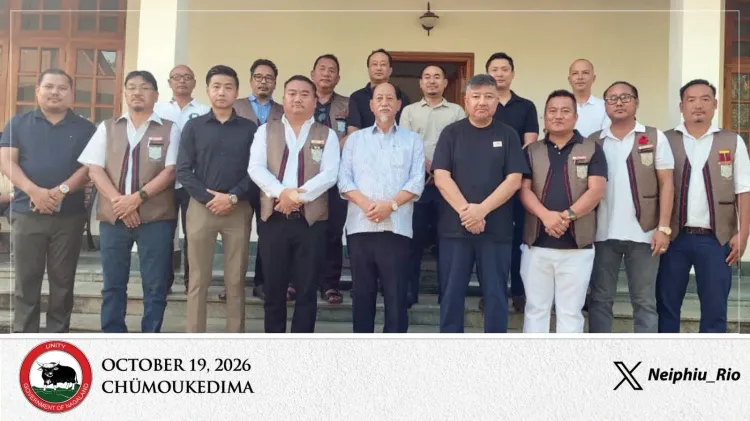
Nagaland Chief Minister Neiphiu Rio met the Dimapur Urban Council Chairmen Federation on October 19, 2026, commending the body's role in uniting local urban leaders and strengthening community engagement across Nagaland's largest city.
Key Takeaways
CM Neiphiu Rio met the Dimapur Urban Council Chairmen Federation (DUCCF) on October 19, 2026 .
Rio praised the federation's commitment to fostering unity among urban council leaders in Dimapur .
Dimapur is Nagaland's largest city and commercial hub, home to multiple tribal groups and migrant communities.
The DUCCF serves as a collective coordination body for urban council chairmen across Dimapur.
No specific policy outcomes or funding announcements have been confirmed following the meeting.
The engagement reflects the NDPP government's broader approach of interfacing with local urban bodies to bridge the gap between state policy and community delivery.
Nagaland Chief Minister Neiphiu Rio sat down with leaders of the Dimapur Urban Council Chairmen Federation (DUCCF) on Monday, October 19, 2026 — a meeting the Chief Minister described as a pleasure, underscoring his administration's emphasis on grassroots urban governance in the state's largest and most commercially active city.
Rio lauded the federation's work in his post, saying: 'I appreciate their commitment to fostering unity among urban council leaders and strengthening community engagement for the collective welfare and development of our people.' The words signal more than courtesy — they reflect a deliberate outreach to a tier of local leadership that often sits between the state government and Nagaland's complex web of tribal and community institutions.
Why Dimapur's urban councils matter
Dimapur is Nagaland's commercial nerve centre and its most ethnically diverse settlement, home to multiple tribal groups alongside a significant migrant population. Urban councils here carry real administrative weight, mediating local disputes, overseeing civic amenities, and channelling community concerns upward to the state. The DUCCF brings chairmen from these councils under a single coordination body, giving them a collective voice that a state government can engage with at scale.
In Nagaland, where traditional village councils have operated in parallel with modern municipal structures for decades, bridging that divide is a persistent governance challenge. Rio's Nationalist Democratic Progressive Party (NDPP) government, in office since 2018, has made periodic engagement with urban local bodies a visible part of its administrative posture — recognising that state-level development targets can stall without buy-in from hyper-local leadership.
Grassroots unity as a governance tool
The DUCCF's stated focus — fostering unity among urban council leaders — speaks directly to a fault line that administrators in Nagaland know well: fragmentation. When council chairmen operate in silos, coordination on everything from road maintenance to welfare scheme delivery breaks down. A federation that aligns these leaders, and that secures a direct audience with the Chief Minister, is positioned to accelerate that last-mile delivery.
No specific policy commitments or development fund allocations were announced following the meeting, and the agenda items discussed remain unconfirmed publicly. But the optics of the engagement matter: for urban council leaders in Dimapur, visibility at the Chief Minister's level is itself a form of institutional affirmation.
Whether this meeting translates into concrete coordination frameworks or funding announcements for Dimapur's urban bodies will be the real measure of its impact.
Point of View
Direct Chief Ministerial access for urban council federations is a low-cost, high-signal governance investment. The move keeps local leaders inside the political tent ahead of any future urban development funding decisions. Whether the optics translate into structural change — clearer coordination mandates, dedicated urban local body budgets — will define its real legacy.
NationPress
19 Oct 2026
Frequently Asked Questions
What is the Dimapur Urban Council Chairmen Federation (DUCCF)?
The DUCCF is a federation of urban council chairmen in Dimapur, Nagaland, formed to coordinate among local urban leaders and collectively represent community concerns to higher levels of government.
Why did CM Neiphiu Rio meet the DUCCF?
CM Rio met the DUCCF to engage with urban council leaders in Dimapur, expressing appreciation for their work in fostering unity and strengthening community participation in local governance and development.
What is Dimapur's significance in Nagaland?
Dimapur is Nagaland's largest city and its primary commercial hub, distinguished by a diverse population of multiple tribal groups and migrant communities, making urban governance there especially complex.
What party does Nagaland CM Neiphiu Rio lead?
Neiphiu Rio leads the Nationalist Democratic Progressive Party (NDPP) and has served as Chief Minister of Nagaland since 2018.
Were any specific decisions announced after Rio's meeting with DUCCF?
No specific policy commitments, funding allocations, or agenda outcomes have been publicly confirmed following the October 19 meeting.