CM Rio Participates in Houselisting & Housing Census

Synopsis
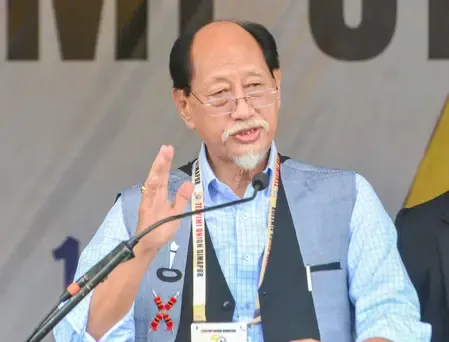
Nagaland Chief Minister Neiphiu Rio on 2 July 2026 participated in the Houselisting and Housing Census at his official residence, publicly urging all households in the state to cooperate with enumerators and share accurate data as India conducts its first decennial census exercise in over fifteen years.
Key Takeaways
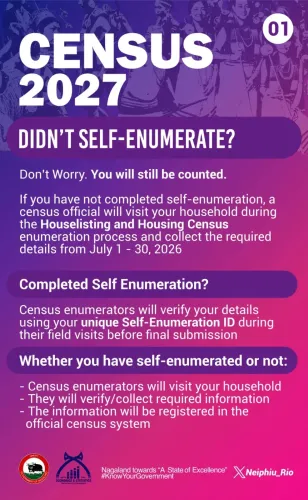
CM Neiphiu Rio underwent the Houselisting and Housing Census at his official residence in Kohima on 2 July 2026 .
He publicly urged every Nagaland household to cooperate with enumerators and share accurate information.
The Houselisting and Housing Census is the first phase of India's decennial census, governed by the Census Act, 1948 .
India's last completed census was in 2011 ; the 2021 Census was deferred due to the COVID-19 pandemic .
Census data will inform constituency delimitation, welfare-scheme targeting, and federal fund devolution across all states including Nagaland .
Northeastern states face distinct logistical challenges in enumeration, making leadership-level endorsement a key mobilisation tool.
Nagaland Chief Minister Neiphiu Rio on Thursday, 2 July 2026, participated in India's Houselisting and Housing Census exercise at his official residence in Kohima, urging every household across the state to cooperate with enumerators and provide accurate information.
Context
Posting on X, CM Rio wrote that the Houselisting and Housing Census was carried out at his official residence, adding: 'I urge every household to cooperate with enumerators, share accurate info. and support this important exercise.' He also expressed appreciation for the 'dedication and efforts of everyone involved' and wished them the best, tagging the exercise with #OurCensus.
By publicly submitting to the enumeration at his own residence, Rio offered a visible signal of institutional endorsement — a gesture that carries particular weight in Nagaland, a northeastern state with diverse tribal populations and special constitutional provisions under Article 371A.
Policy Backdrop
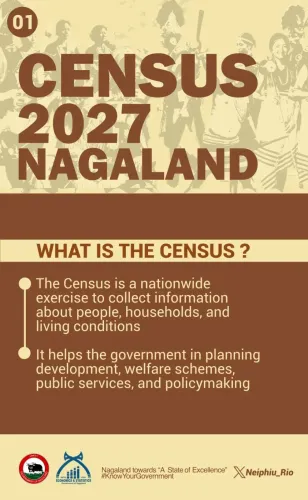
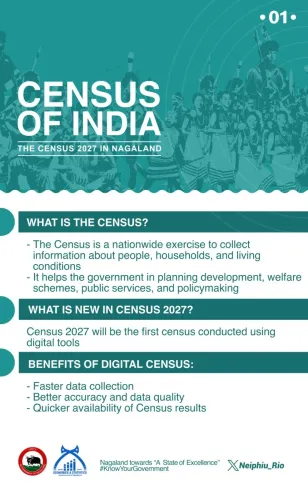
The Houselisting and Housing Census is the first phase of India's decennial census, collecting data on housing stock, amenities, and household composition before the population enumeration phase. The exercise is conducted by the Office of the Registrar General and Census Commissioner of India under the Ministry of Home Affairs, drawing its legal authority from the Census Act, 1948.
India's last completed census was in 2011. The 2021 Census was postponed due to the COVID-19 pandemic and has not been completed since, making the current exercise the first decennial enumeration in over a decade and a half. The data gathered will underpin delimitation of constituencies, targeting of welfare schemes, and federal fund devolution formulae.
Stakeholders and Impact
For Nagaland, the census presents logistical challenges characteristic of the northeastern region — difficult terrain, dispersed settlements, and community structures that require targeted outreach. Public endorsement by chief ministers forms part of the standard mobilisation strategy to boost household participation and data accuracy.
Census enumerators, state government officials, and millions of households across Nagaland are the immediate stakeholders. Accurate data from the state is critical for updating welfare-scheme beneficiary lists, infrastructure planning, and the allocation of central funds to one of India's smaller but constitutionally distinct states.
What's Next
Following the Houselisting and Housing Census phase, subsequent phases of the decennial census — including the population enumeration round — are expected to roll out across remaining states. Observers will watch for state-specific notifications on data-collection timelines and any community-level outreach programmes that Nagaland's government may announce to sustain the momentum generated by the Chief Minister's public participation.
Point of View
But it carries added strategic significance in Nagaland, where community trust and leadership signals historically determine ground-level compliance with state-directed exercises. The move comes as India attempts to close a census gap of over fifteen years — an unusually long hiatus that has left welfare-scheme databases and delimitation frameworks running on dated figures. For a state with Article 371A protections and complex tribal governance structures, accurate census data is not merely administrative — it shapes political representation and resource allocation for years ahead. Rio's visible endorsement may also be read as an effort to pre-empt community-level resistance or apathy that has occasionally complicated enumeration drives in the Northeast.
NationPress
2 Jul 2026
Frequently Asked Questions
What is the Houselisting and Housing Census in India?
The Houselisting and Housing Census is the first phase of India's decennial census, collecting data on housing stock, household amenities, and composition before the main population count. It is conducted by the Office of the Registrar General and Census Commissioner under the Ministry of Home Affairs.
Why has India's census been delayed?
India's 2021 Census was postponed due to the COVID-19 pandemic and has not been completed since, making the current exercise the first decennial enumeration attempt in over fifteen years. The last completed census was in 2011.
Why did Nagaland CM Neiphiu Rio participate in the census?
CM Rio participated in the Houselisting and Housing Census at his official residence on 2 July 2026 to set a public example and urge all Nagaland households to cooperate with enumerators and share accurate information.
What is the importance of census data for Nagaland?
Census data determines constituency delimitation, welfare-scheme beneficiary lists, infrastructure planning, and the allocation of central government funds — all of which directly affect Nagaland's development and political representation.
What is Article 371A and how does it relate to Nagaland's census?
Article 371A of the Indian Constitution grants special protections to Nagaland's customary laws and practices. The state's distinct tribal governance structures and terrain make accurate census enumeration particularly complex, requiring targeted outreach and leadership-level endorsement.