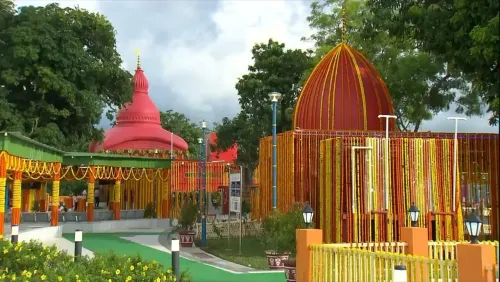
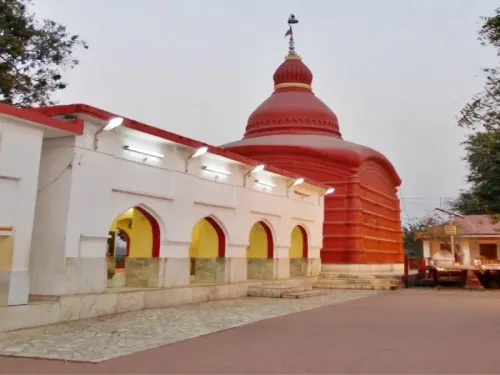
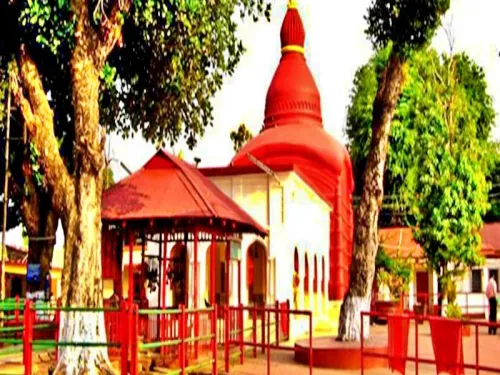
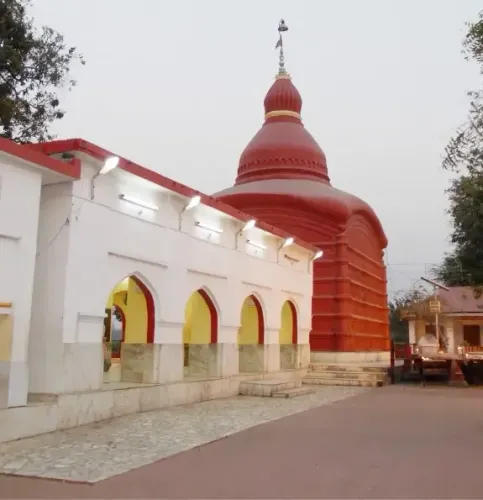
CM Manik Saha presents Tripura Sundari Temple frame to PM Modi
Synopsis
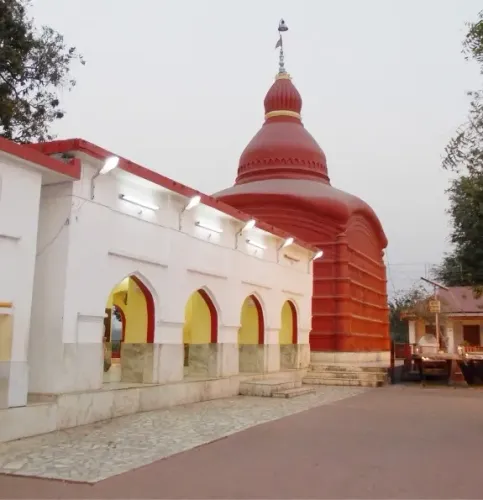
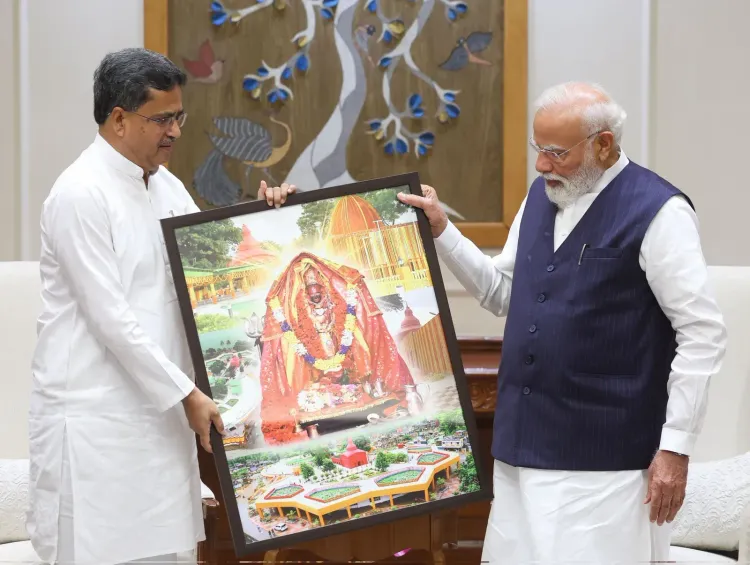
Tripura Chief Minister Dr. Manik Saha presented PM Narendra Modi with a photo frame of the Mata Tripura Sundari Temple, redeveloped under the PRASAD Scheme, highlighting the site's growing appeal to pilgrims and tourists from across India.
Key Takeaways
Manik Saha presented PM Narendra Modi with a photo frame of the Mata Tripura Sundari Temple and its redeveloped premises on 26 May 2026 .
The temple in Udaipur, Tripura is one of the 51 Shakti Peethas and a major pilgrimage destination in the Northeast.
The redevelopment was carried out under the PRASAD Scheme (Pilgrimage Rejuvenation and Spiritual Augmentation Drive), launched by the Ministry of Tourism in 2014-15 .
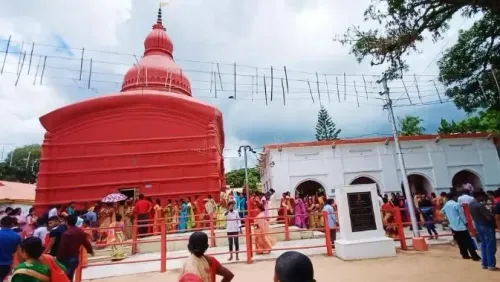
The site is now drawing devotees and tourists from across India, boosting its spiritual, cultural, and economic significance.
The project is part of a broader central government push to develop pilgrimage infrastructure and promote domestic tourism, particularly in the Northeastern region .
Tripura Chief Minister Dr. Manik Saha on Tuesday, 26 May 2026, presented Prime Minister Narendra Modi with a photo frame of the sacred Mata Tripura Sundari Temple and its redeveloped premises, highlighting the transformation of the ancient Shakti Peetha under the central government's PRASAD Scheme. The gesture underscored the growing religious tourism footfall at the Udaipur, Tripura site, which has been drawing devotees and visitors from across the country.
Context
In his post, Dr. Manik Saha described himself as 'fortunate' to present the photo frame to the Prime Minister, noting that the temple is 'now drawing devotees and tourists from across the nation for Mata's darshan, strengthening its spiritual and cultural significance.' The Mata Tripura Sundari Temple, located in Udaipur in southern Tripura, is one of the 51 Shakti Peethas revered in Hindu tradition and has long been a major pilgrimage destination in the Northeast.
The presentation appears to have taken place during a meeting between the Chief Minister and the Prime Minister, reflecting the state government's effort to showcase development outcomes to the central leadership. Such exchanges also serve as a channel for states to highlight the on-ground impact of centrally sponsored schemes.
Policy Backdrop
The PRASAD Scheme — Pilgrimage Rejuvenation and Spiritual Augmentation Drive — was launched by the Ministry of Tourism in 2014-15 with the objective of developing and beautifying pilgrimage destinations across India. The scheme funds infrastructure upgrades including entry plazas, pathways, lighting, sanitation, and visitor amenities at identified religious sites, integrating them into the national tourism grid.
The redevelopment of the Mata Tripura Sundari Temple precinct under this scheme represents one of the scheme's interventions in the Northeastern region, where improving the visibility and accessibility of cultural and religious heritage sites has been a stated policy priority. Across India, the PRASAD Scheme has covered dozens of sites, from major pilgrimage towns to relatively lesser-known regional centres, as part of a broader push to promote domestic tourism and heritage conservation.
Stakeholders and Impact
The primary beneficiaries of the temple's redevelopment are the devotees and pilgrims who visit for the darshan of Mata Tripura Sundari, as well as the local communities in and around Udaipur whose livelihoods are linked to the pilgrimage economy — including shopkeepers, priests, transport operators, and hospitality providers. Improved facilities typically translate into longer visitor stays and higher per-visitor spending, with a multiplier effect on the local economy.
For Tripura as a state, enhanced visibility of its premier religious site feeds into a wider tourism strategy. The Northeast, historically underrepresented in India's mainstream tourism narrative, stands to gain from such projects that place its cultural assets on the national map and encourage inbound travel from other states.
What's Next
The spotlight on the Mata Tripura Sundari Temple's transformation is likely to encourage further advocacy for PRASAD and related scheme coverage for other religious and heritage sites in Tripura and neighbouring northeastern states. Tourism ministry updates on scheme outcomes, as well as any fresh allocations under PRASAD for the region, will be closely watched by state governments and local stakeholders alike.
As domestic pilgrimage tourism continues its post-pandemic recovery and expansion, projects like the Tripura Sundari precinct redevelopment signal the central government's sustained interest in weaving together cultural heritage, infrastructure investment, and regional development into a single policy narrative.
Point of View
Ground-level results. It fits a well-established pattern in BJP-governed states where Chief Ministers use cultural and heritage projects as proof-of-delivery moments with the central leadership. For Tripura, a state that has historically struggled for national visibility, anchoring its development story to a revered Shakti Peetha carries both religious resonance and tourism-economy logic. The episode also reflects the Centre's broader strategy of using pilgrimage infrastructure as a soft-power instrument to integrate the Northeast more firmly into the national mainstream.
NationPress
21 Sept 2026
Frequently Asked Questions
What is the Mata Tripura Sundari Temple?
The Mata Tripura Sundari Temple is an ancient Hindu shrine located in Udaipur, Tripura , and is one of the 51 Shakti Peethas revered in Hindu tradition. It is the most prominent pilgrimage site in Tripura, drawing devotees from across India.
What is the PRASAD Scheme?
The PRASAD Scheme — Pilgrimage Rejuvenation and Spiritual Augmentation Drive — is a central government initiative launched by the Ministry of Tourism in 2014-15 to upgrade infrastructure and amenities at major religious and pilgrimage sites across India.
Why did CM Manik Saha meet PM Modi?
Tripura Chief Minister Dr. Manik Saha presented PM Narendra Modi with a photo frame of the Mata Tripura Sundari Temple to highlight the site's transformation under the PRASAD Scheme and its increasing draw for pilgrims and tourists.
How has the PRASAD Scheme benefited Tripura?
Under the PRASAD Scheme , the Mata Tripura Sundari Temple precinct in Udaipur has been redeveloped with improved facilities and premises, leading to increased footfall from devotees and tourists and boosting the local pilgrimage economy.
Which other northeastern states have PRASAD Scheme projects?
The PRASAD Scheme has been extended to multiple states including sites in the Northeast as part of efforts to improve connectivity and visibility of pilgrimage centres in the region. Specific allocations for other northeastern states are subject to Ministry of Tourism announcements.