CM Sai approves fertilizer sub-committee for Chhattisgarh farmers
Synopsis
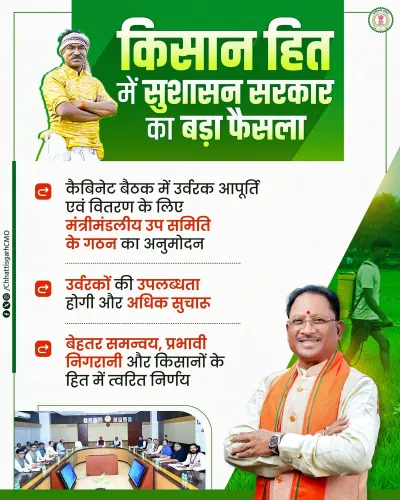
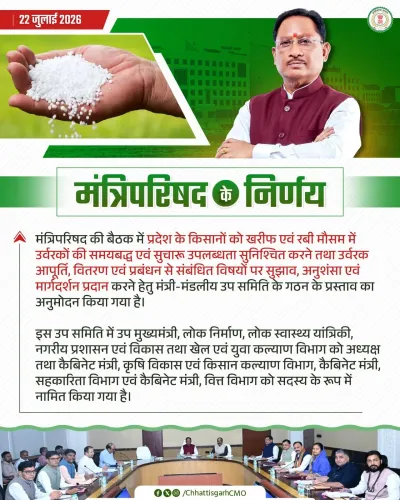
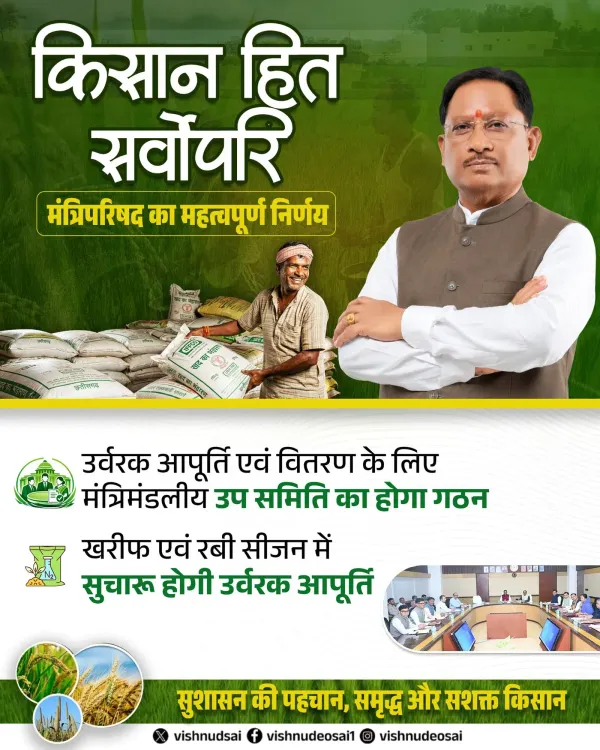
Chhattisgarh CM Vishnu Deo Sai has approved a Cabinet Sub-Committee to oversee fertilizer availability, supply, and distribution for farmers during Kharif and Rabi seasons, aiming to eliminate input shortfalls and ensure uninterrupted agricultural activity across the state.
Key Takeaways
CM Vishnu Deo Sai announced cabinet approval for a Cabinet Sub-Committee dedicated to fertilizer supply management on 22 July 2026 .
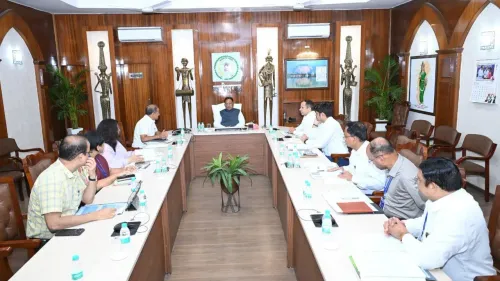
The sub-committee will review fertilizer availability, supply, distribution, and management for both Kharif and Rabi seasons.
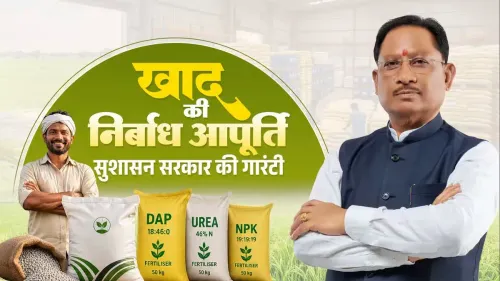
The stated goal is to ensure every farmer in Chhattisgarh receives fertilizer on time, preventing disruption to agricultural activity.
The move supplements the Central government's Nutrient Based Subsidy scheme with a state-level executive oversight layer.
Chhattisgarh's action mirrors similar sub-committees formed in other agrarian states to address seasonal input shortfalls.
The sub-committee's first review and any revised allocation orders ahead of Kharif 2026 will be the earliest indicator of its effectiveness.
Chhattisgarh Chief Minister Vishnu Deo Sai announced on Wednesday, 22 July 2026 that his government has approved the formation of a Cabinet Sub-Committee to ensure timely fertilizer supply to farmers across the state during both Kharif and Rabi seasons.
Context
Posting in Hindi on X, CM Sai declared: 'समृद्ध और सशक्त किसान, सुशासन की पहचान' ('A prosperous and empowered farmer is the hallmark of good governance'), adding that 'the trust of the food-providers is our greatest capital.' The post formally announced cabinet approval for the sub-committee, framing it as a governance commitment to the state's farming community.
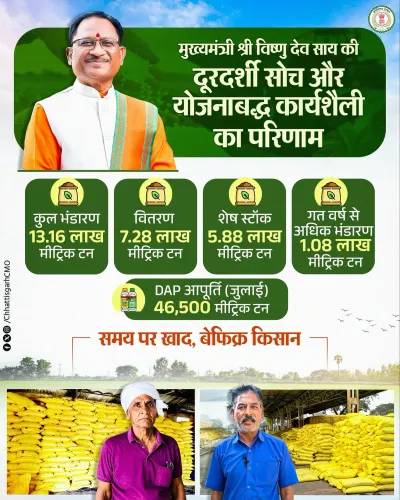
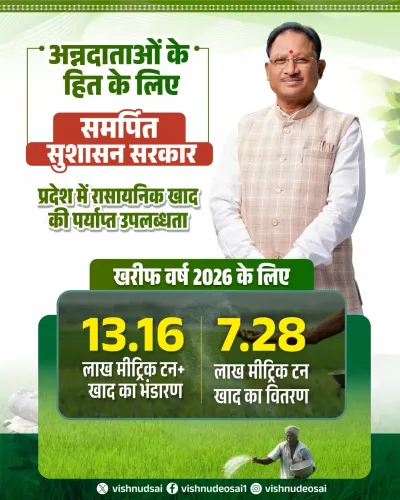
The sub-committee will conduct continuous reviews of fertilizer availability, supply, distribution, and management — with the stated goal that every farmer in Chhattisgarh receives fertilizer on time and agricultural work proceeds without disruption.
Policy Backdrop
The Central government has operated the Nutrient Based Subsidy (NBS) scheme since 2010, which regulates fertilizer pricing and guides state-level allocation. However, translating national allocations into timely district-level supplies has historically required active state-level oversight, particularly ahead of the critical sowing windows.
Chhattisgarh, a predominantly agrarian state in central India, depends heavily on paddy cultivation in Kharif and wheat and pulses in Rabi. Fertilizer shortfalls during peak sowing periods have in the past disrupted planting schedules and affected yields, making input security a recurring political and administrative priority.
Stakeholders and Impact
The primary beneficiaries are Chhattisgarh's farming households, who depend on urea and other fertilizers at precise points in the crop cycle. Fertilizer cooperatives and district supply chains will fall under the sub-committee's review mandate, creating a formal accountability layer above existing distribution networks.
The Bharatiya Janata Party government, which came to power in Chhattisgarh after the 2023 assembly elections, has consistently positioned agricultural input security as a flagship governance priority. The sub-committee mechanism reinforces that messaging ahead of the monsoon Kharif season, when demand for fertilizers peaks sharply across the state's farming districts.
Similar oversight bodies have been constituted in other agrarian states in recent years to mitigate supply disruptions, suggesting Chhattisgarh is aligning with a broader national pattern of state-level executive intervention to supplement central subsidy frameworks.
What's Next
The first tangible test for the sub-committee will be its initial review report and any revised allocation orders issued before the current Kharif 2026 season reaches peak fertilizer demand. The committee's functioning and findings are also likely to be raised during the state assembly's upcoming monsoon or winter session, where opposition parties may seek accountability on supply timelines and district-level coverage.
If the sub-committee succeeds in reducing seasonal shortfalls, it could become a template for institutionalised agricultural input monitoring in Chhattisgarh — and a model cited by the BJP in its farmer-outreach narrative ahead of future electoral cycles.
Point of View
Designed to demonstrate administrative responsiveness to Chhattisgarh's large rural electorate. By institutionalising oversight above routine supply chains, the BJP government is attempting to pre-empt the seasonal fertilizer shortage narrative that opposition parties have used effectively in past cycles. The announcement fits a broader pattern in which state governments layer executive monitoring onto central subsidy schemes to claim visible credit for input security. Whether the sub-committee translates into measurable supply improvements — or remains a symbolic body — will be the key test of its governance value.
NationPress
22 Jul 2026
Frequently Asked Questions
What is the Cabinet Sub-Committee approved by Chhattisgarh CM Vishnu Deo Sai?
It is a ministerial sub-committee approved by CM Vishnu Deo Sai to continuously review and manage the availability, supply, distribution, and management of fertilizers for farmers during Kharif and Rabi seasons in Chhattisgarh.
Why is timely fertilizer supply important for Chhattisgarh farmers?
Chhattisgarh has a predominantly agrarian economy. Delays in fertilizer supply during peak sowing periods can disrupt planting schedules and reduce crop yields, directly affecting rural livelihoods across the state.
What is the Nutrient Based Subsidy scheme and how does it relate to this decision?
The Nutrient Based Subsidy scheme, operational since 2010, is a Central government programme that regulates fertilizer pricing and guides state allocations. The new sub-committee will work to ensure these central allocations reach farmers on time at the district level in Chhattisgarh.
When did the BJP come to power in Chhattisgarh?
The Bharatiya Janata Party formed the government in Chhattisgarh after the 2023 state assembly elections, with Vishnu Deo Sai as Chief Minister.
What will the Chhattisgarh fertilizer sub-committee actually do?
The sub-committee will conduct ongoing reviews of fertilizer availability, supply chains, distribution networks, and overall management to ensure every farmer in Chhattisgarh receives fertilizer on time without disruption to agricultural activities.