CM Sai calls Chhattisgarh paddy procurement a national model
Synopsis
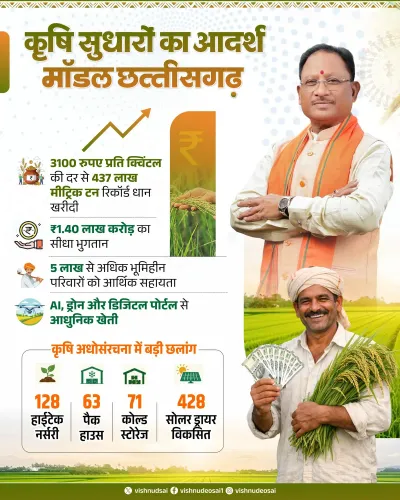
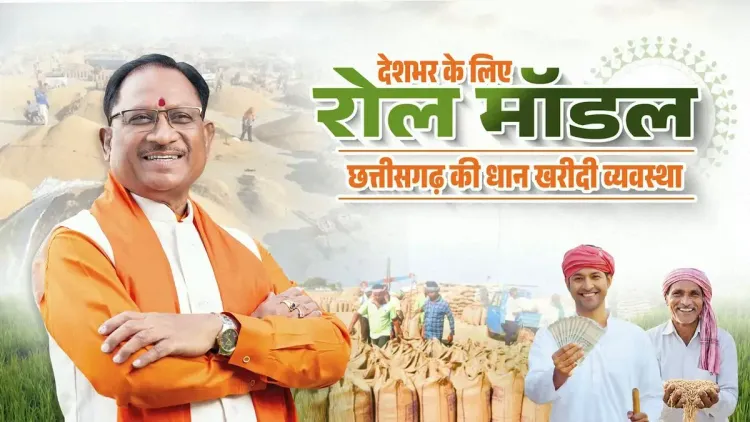
Chhattisgarh CM Vishnu Deo Sai has declared the state's paddy procurement system a national model, citing transparent processes, digital delivery, and assured MSP payments. He said other states studying the model validates farmer-centred governance as the foundation of a developed Chhattisgarh.
Key Takeaways
CM Vishnu Deo Sai described Chhattisgarh's paddy procurement model as a benchmark for the entire country on 27 July 2026 .
The model rests on three pillars: transparent systems , digital processes , and assured Minimum Support Price payments to farmers.
Chhattisgarh has operated under the Decentralised Procurement Scheme since the state's formation in 2000 , procuring over 10 million tonnes of paddy in recent seasons.
CM Sai claimed other states are studying the model, though no formal inter-state agreements have been confirmed in public records.
The 2026 kharif procurement season will be the next major test of the state's digital agricultural infrastructure.
Chhattisgarh Chief Minister Vishnu Deo Sai on Monday, 27 July 2026, declared that the state's paddy procurement system has become a benchmark for the rest of India, citing its transparent processes, digital infrastructure, and assured minimum-support-price payments to farmers.
Context
Posting on X in Hindi, CM Sai said: 'Chhattisgarh ka dhan kharidi model aaj pure desh ke liye ek misal ban raha hai' ['Chhattisgarh's paddy procurement model is today becoming an example for the entire country']. He credited the state government's transparent system, digital processes, and policy of ensuring farmers receive a fair price for their produce. He added that other states studying this model is proof that 'farmer-centred good governance is the strong foundation of a prosperous agricultural system and a developed Chhattisgarh.'
Chhattisgarh is one of India's largest paddy-producing states. Since its formation in November 2000, the state has operated a paddy procurement system as an agent of the Food Corporation of India (FCI) under the Decentralised Procurement Scheme, which was introduced nationally in 1997–98. Annual procurement in recent seasons has exceeded 10 million tonnes.
Policy Backdrop
The Decentralised Procurement Scheme allows state governments to procure paddy directly from farmers at the Minimum Support Price (MSP) fixed by the Union government and then supply it to the FCI for central pool stocks. This arrangement gives states operational flexibility while keeping procurement within a nationally mandated price framework.
The broader push toward digital delivery in agricultural procurement mirrors national-level efforts such as direct benefit transfers and the PM-KISAN scheme, which together aim to reduce intermediary leakage and ensure payments reach farmers directly. CM Sai's BJP government, which took office in December 2023 after winning the state assembly elections, has positioned digitisation of procurement as a flagship governance priority.
Stakeholders and Impact
The primary beneficiaries of the procurement model are paddy farmers across Chhattisgarh's rice-belt districts, who depend on state agencies to buy their kharif crop at MSP rates. State procurement agencies serve as the operational backbone, managing logistics, payment timelines, and data systems.
The Chief Minister's assertion that other states are studying the model reflects the competitive federalism dynamic in Indian agriculture policy, where state-level innovations are increasingly examined for replication. However, no formal study-visit agreements or official delegations from other states have been confirmed in public records at the time of this report.
What's Next
Attention will now turn to the 2026 kharif paddy procurement season, when the state's systems will face their next large-scale test. Any formal announcements of inter-state study visits or memoranda of understanding would lend institutional weight to CM Sai's claim that the Chhattisgarh model is being actively adopted beyond the state's borders. The performance of digital payment timelines and the volume of farmers registered under the procurement portal are likely to be the key metrics watched by both the state government and the Union agriculture ministry.
Point of View
Reinforcing the party's farmer-outreach positioning in a state where paddy politics has historically been electorally decisive. The claim that other states are studying the model is unverified but serves to project Chhattisgarh as a policy exporter rather than a policy recipient. If the 2026 kharif numbers validate the system's scale and efficiency, the political dividend could extend well beyond the state.
NationPress
27 Jul 2026
Frequently Asked Questions
What is the Chhattisgarh paddy procurement model?
It is a state-run system that buys paddy directly from farmers at the government-fixed Minimum Support Price using digital processes and transparent payment mechanisms, operating under the national Decentralised Procurement Scheme since 2000.
Why is Vishnu Deo Sai calling Chhattisgarh's paddy model a national example?
CM Sai says the model's transparent, digitised procurement and assured MSP payments have strengthened farmer trust, and he claims other states are studying it for possible replication — though no formal agreements have been publicly confirmed.
Which states are studying Chhattisgarh's paddy procurement system?
CM Sai's post states that other states are examining the model, but no specific states or formal study-visit agreements have been confirmed in public records at the time of this report.
What is the Minimum Support Price for paddy in Chhattisgarh?
The MSP for paddy is fixed by the Union government each season; Chhattisgarh procures at that centrally mandated price through state agencies acting as agents of the Food Corporation of India.
How much paddy does Chhattisgarh procure each year?
In recent kharif seasons, Chhattisgarh's annual paddy procurement has exceeded 10 million tonnes , making it one of India's largest state-level procurement operations.