CM Sai Orders Adequate Diesel Supply for Kharif Farmers in Chhattisgarh
Synopsis
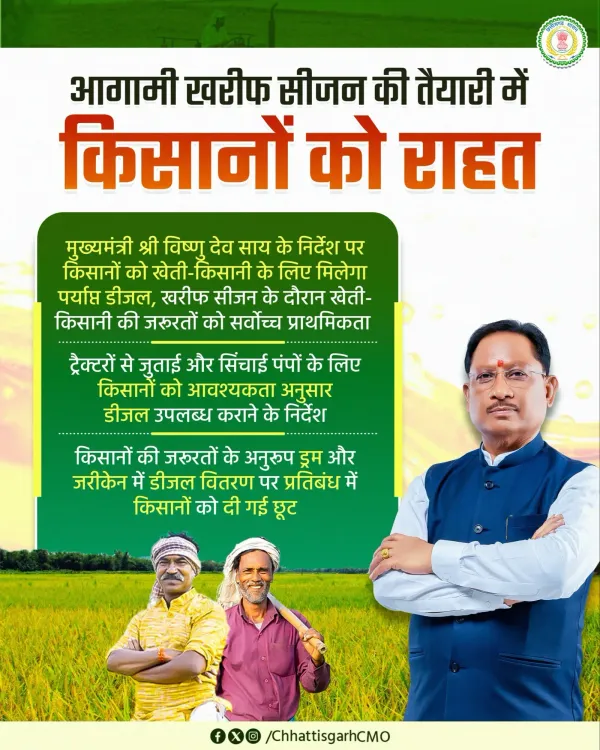
Chief Minister Vishnu Deo Sai has ordered smooth diesel availability for tractors and irrigation pumps in Chhattisgarh, granting a seasonal exemption to drum and jerry-can fuel restrictions so kharif tillage, sowing, and irrigation work proceeds without disruption.
Key Takeaways
CM Vishnu Deo Sai issued a directive on 25 May 2026 ensuring adequate diesel for kharif farming operations in Chhattisgarh .
The order covers diesel for both tractors used in field tillage and irrigation pumps used for pre-sowing watering.
A seasonal exemption has been granted to the existing ban on fuel supply in drums and jerry cans, specifically for agricultural use.
The directive aims to prevent disruption to tillage, sowing, and irrigation work during the critical kharif preparation window.
The move fits a recurring pattern of state-level fuel logistics support ahead of the June–July monsoon sowing season across India.
District-level rollout and June–July 2026 sowing progress will determine the on-ground impact of the order.
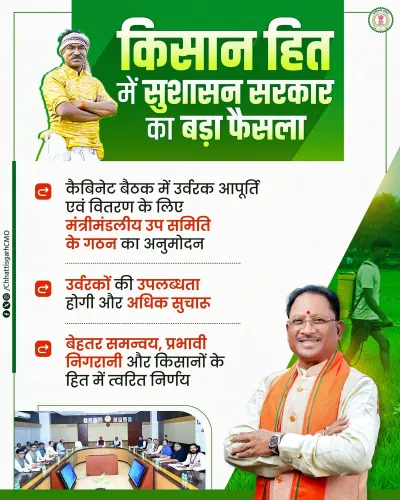
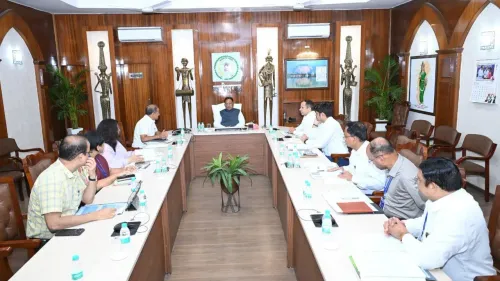
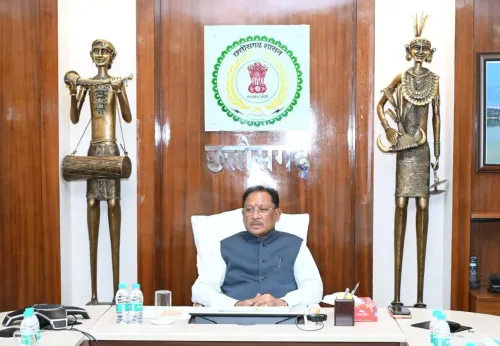
The Chief Minister's Office of Chhattisgarh announced on Monday, 25 May 2026 that Chief Minister Vishnu Deo Sai has directed authorities to ensure adequate and uninterrupted diesel supply to farmers ahead of the kharif sowing season, covering fuel needs for tractors used in tillage as well as irrigation pumps.
Context
The CMO post, written in Hindi, states that CM Sai has issued clear instructions — 'खेतों की जुताई के लिए ट्रैक्टरों तथा सिंचाई पंपों हेतु किसानों को आवश्यकता अनुसार डीजल की सुगम उपलब्धता सुनिश्चित की जाए' ('Smooth availability of diesel as required must be ensured for farmers for tractors used in field tillage and irrigation pumps') — so that farming operations are not disrupted. The directive specifically addresses the existing ban on fuel supply in drums and jerry cans, granting a seasonal exemption for agricultural use during the kharif preparation window.
Policy Backdrop
Restrictions on dispensing diesel in portable containers such as drums and jerry cans are a standard regulatory measure across Indian states, aimed at preventing diversion of subsidised fuel to non-agricultural or commercial uses. However, these restrictions frequently create bottlenecks for smallholder farmers in remote areas who cannot bring tractors or pump sets directly to petrol stations. Chhattisgarh, a central Indian state with a predominantly agrarian economy, relies heavily on timely mechanised tillage and pump-based irrigation to meet its kharif sowing targets for paddy, soybean, and coarse cereals.
Indian states routinely issue such seasonal exemptions ahead of the June–July sowing window to prevent delays in field preparation. The pattern reflects a broader national concern about ensuring that fuel-supply logistics do not become a limiting factor in achieving foodgrain production targets.
Stakeholders and Impact
The primary beneficiaries are kharif farmers — particularly smallholders and marginal cultivators across Chhattisgarh who depend on diesel-run tractors for ploughing and diesel-powered pumps for pre-sowing irrigation. For these farmers, even a short disruption in fuel availability during the critical tillage and sowing window can delay the crop calendar by days, directly affecting yield outcomes. The directive signals that the state government is treating fuel logistics as an essential agricultural input, on par with seeds and fertilisers.
The move also has implications for district-level fuel retailers and supply-chain administrators, who will need to operationalise the exemption framework quickly given the narrow pre-monsoon window available for field preparation.
What's Next
The practical impact of CM Sai's directive will depend on how swiftly district administrations and fuel-outlet operators implement the exemption at the ground level. Observers will watch whether the state agriculture department follows up with supplementary measures such as input subsidies, crop-loan facilitation, or seed distribution drives to complement the diesel access order. Sowing progress reports for paddy and coarse cereals in June–July 2026 will serve as the clearest indicator of whether the directive translated into timely field operations across the state's farming districts.
Point of View
Operationally focused intervention that addresses a well-known last-mile bottleneck in rural fuel distribution rather than announcing fresh financial outlays. By framing the move as a seasonal exemption to an existing restriction, the government avoids a permanent policy change while still signalling responsiveness to farmers ahead of a politically sensitive sowing season. The order fits into a broader pattern of BJP-governed states using administrative directives to demonstrate farm-sector attentiveness, particularly in a state like Chhattisgarh where agrarian welfare has historically been a key electoral variable. The real test will be district-level execution speed given the narrow pre-monsoon window.
NationPress
19 Sept 2026
Frequently Asked Questions
Why has CM Vishnu Deo Sai ordered diesel supply for farmers in Chhattisgarh?
CM Sai issued the directive to ensure that kharif season preparations — including field tillage, sowing, and irrigation — are not disrupted by a shortage of diesel for tractors and pump sets ahead of the June–July 2026 sowing window.
What is the drum and jerry-can fuel ban and how does the exemption help farmers?
Indian states restrict diesel dispensing in portable drums and jerry cans to prevent diversion of fuel. The seasonal exemption allows farmers who cannot bring machinery directly to fuel stations to collect diesel in containers for agricultural use during the kharif season.
Who benefits from Chhattisgarh's kharif diesel supply order?
Kharif farmers across Chhattisgarh — especially smallholders and marginal cultivators — who rely on diesel-powered tractors for ploughing and diesel-run pumps for irrigation are the primary beneficiaries.
When is the kharif sowing season in Chhattisgarh?
Kharif sowing in Chhattisgarh typically takes place between June and July , coinciding with the onset of the southwest monsoon, with paddy and coarse cereals as the main crops.
What other support might Chhattisgarh farmers receive alongside the diesel exemption?
The state agriculture department may follow up with supplementary measures such as input subsidies, crop-loan facilitation, or seed distribution drives, though no such announcements have been confirmed as of this report.