CM Sai Ensures Fertilizer Supply for Chhattisgarh Kharif Season
Synopsis
Chhattisgarh Chief Minister Vishnu Deo Sai announced on 8 July 2026 that all arrangements for adequate fertilizer supply have been made ahead of the Kharif season, pledging timely access for every farmer to boost production and incomes across the state.
Key Takeaways
CM Vishnu Deo Sai announced on 8 July 2026 that Chhattisgarh has made all necessary arrangements for fertilizer availability ahead of the Kharif season .
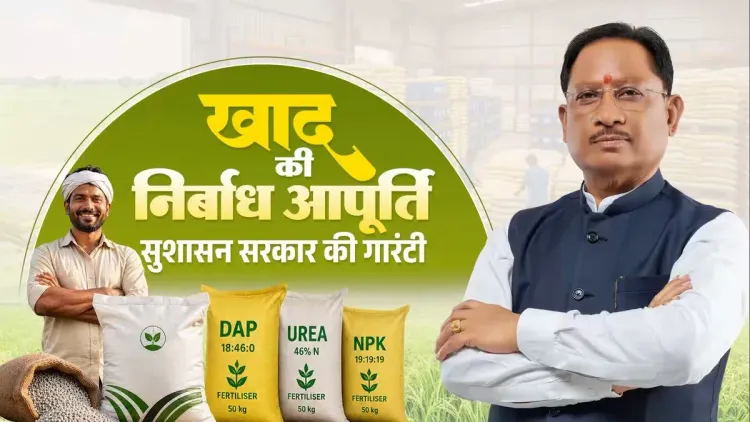
The government's stated goal is to ensure every farmer receives fertilizer on time, enabling uninterrupted farming and higher income.
Chhattisgarh is a paddy-dominant state where timely fertilizer supply is critical to the main crop season.
India's Nutrient Based Subsidy regime (since 2010) moderates retail fertilizer prices through central subsidies coordinated with state governments.
Pre-season stocking efforts were intensified nationally after global fertilizer price disruptions in 2022 .
The July–August sowing window will be the key test of whether on-ground supply matches the government's assurances.
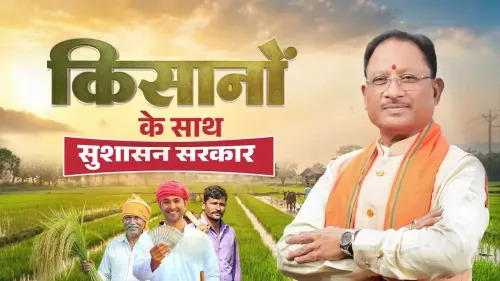
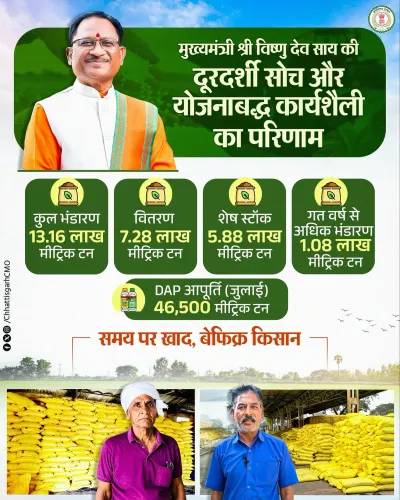
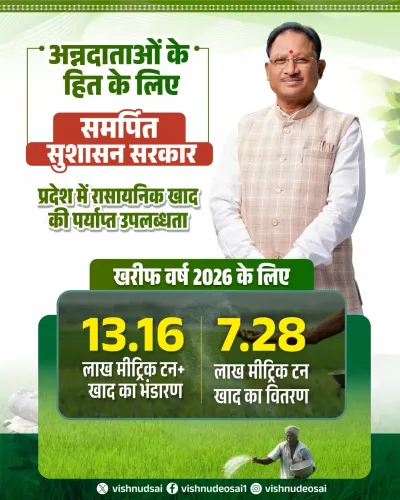
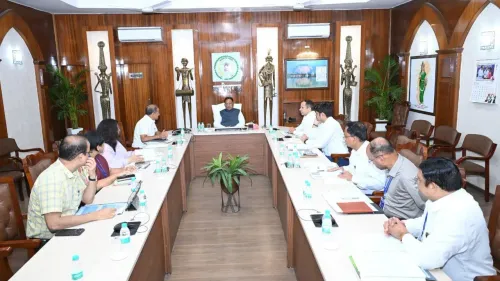
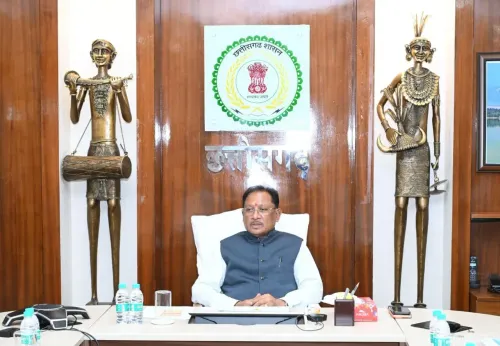
Chhattisgarh Chief Minister Vishnu Deo Sai on Wednesday, 8 July 2026, reaffirmed his government's commitment to farmers by announcing that all necessary arrangements have been made to ensure adequate fertilizer availability across the state ahead of the Kharif season.
Posting in Hindi on X, CM Sai wrote: 'अन्नदाताओं का हित, उनकी सुविधा और उनकी समृद्धि ही सुशासन सरकार का संकल्प है' — 'The welfare, convenience and prosperity of the 'annadatas' (food providers/farmers) is the resolve of a good-governance government.' He added that the state's continuous effort is to ensure every farmer receives fertilizer on time, that farming proceeds without any obstruction, and that better production leads to an increase in their income.
Context
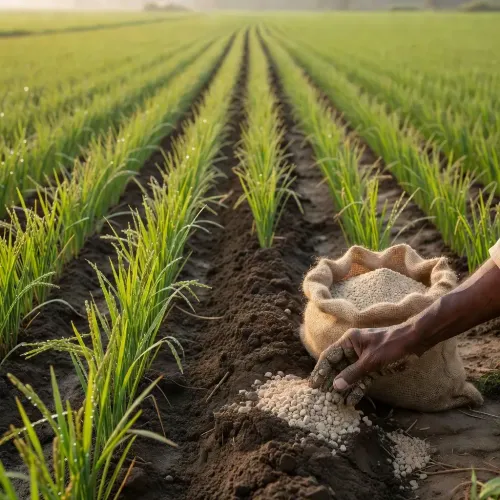
Chhattisgarh is a paddy-dominant state in central India where agriculture sustains a large share of the population. The Kharif sowing window, which opens with the onset of the monsoon in June–July, is the most critical period for input availability. A shortage of fertilizers during planting can directly reduce yields and farmer incomes.
The Chief Minister's announcement signals that the state government has completed its pre-season administrative review and logistics planning to prevent supply disruptions at the district and village level.
Policy Backdrop
India's Nutrient Based Subsidy (NBS) regime, in operation since 2010, moderates retail fertilizer prices by channelling central subsidies to manufacturers and importers. State governments coordinate with the Centre to draw allocated stocks and distribute them through cooperative and private retail networks before each crop season.
The urgency of pre-season stocking intensified after global fertilizer price shocks in 2022, which disrupted supply chains across rice-growing states. Since then, state agriculture departments have been expected to complete procurement and warehousing well before monsoon onset. CM Sai's government, which assumed office in December 2023, has consistently aligned its agricultural input policies with central directives, including the PM-KISAN income support scheme launched nationally in 2019.
Stakeholder Impact
Farmers in Chhattisgarh — particularly smallholders growing paddy — stand to benefit most directly if fertilizer stocks are in place before transplanting begins. Timely access to urea and other nutrients is closely correlated with crop yields and, by extension, household income for rural families.
The state's assurance also carries significance for input dealers and cooperative societies, who must manage last-mile distribution across the state's rural and forested districts. Smooth supply reduces the risk of black-market pricing, which has historically burdened marginal farmers during peak demand periods.
What's Next
Attention will now shift to the state agriculture department's stock and distribution reports during the July–August sowing window, which will indicate whether on-ground availability matches the government's assurances. Any supplementary fertilizer allocations or farmer-support measures are likely to feature in the next state budget session. Consistent delivery on this commitment will be a key benchmark for the Sai government's rural governance record ahead of future electoral cycles.
Point of View
High-visibility signal to the rural voter base. For Chhattisgarh, where paddy farming is both an economic and cultural cornerstone, fertilizer availability is a politically sensitive issue that past governments have been criticised over. The post also reflects the Sai administration's broader strategy of framing routine administrative preparedness as 'good governance' — a narrative tool that resonates strongly in a state with a large agrarian population. Whether the commitment translates into measurable ground-level impact will depend on district-level logistics that remain to be publicly reported.
NationPress
8 Jul 2026
Frequently Asked Questions
What did Chhattisgarh CM Vishnu Deo Sai announce about farmers?
CM Vishnu Deo Sai announced on 8 July 2026 that all necessary arrangements have been made to ensure adequate fertilizer availability across Chhattisgarh ahead of the Kharif season, with the aim of ensuring timely supply to every farmer.
Why is fertilizer supply important before the Kharif season in Chhattisgarh?
The Kharif season, which begins with the monsoon in June–July, is the primary crop season in Chhattisgarh where paddy is the dominant crop. A shortage of fertilizers during planting can directly reduce yields and farmer incomes.
What is India's Nutrient Based Subsidy regime?
India's Nutrient Based Subsidy (NBS) regime, in operation since 2010, moderates retail fertilizer prices by channelling central government subsidies to manufacturers and importers, helping keep costs manageable for farmers.
When did Vishnu Deo Sai become Chief Minister of Chhattisgarh?
Vishnu Deo Sai became Chief Minister of Chhattisgarh in December 2023 after the BJP's victory in the state assembly elections.
What should we watch for after CM Sai's fertilizer announcement?
The key indicators to watch are the state agriculture department's stock and distribution reports during the July–August sowing window and any supplementary fertilizer allocations that may be announced in the next state budget session.