CM Sai Hails Bastar Rail Link as Dawn of New Era
Synopsis
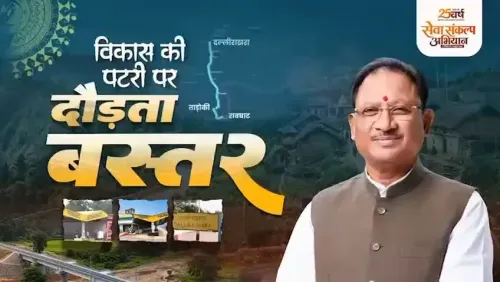
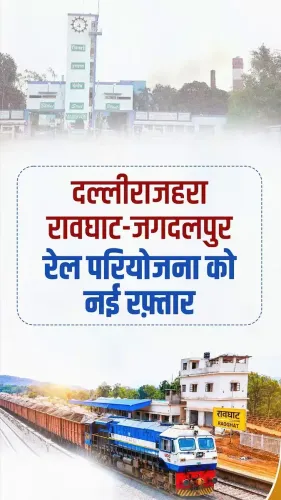
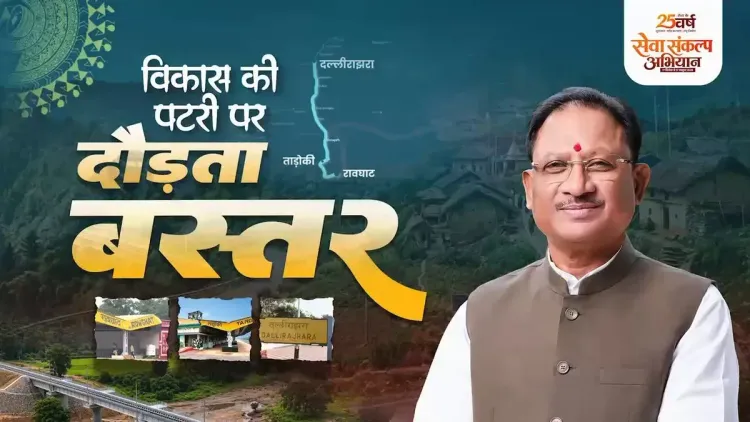
Chhattisgarh CM Vishnu Deo Sai marks the completion of the Tadoki–Raoghat section of the Dalli Rajhara–Raoghat Rail Project, calling it a new beginning for the long-insurgency-hit Bastar region and thanking PM Modi and Railway Minister Vaishnaw.
Key Takeaways
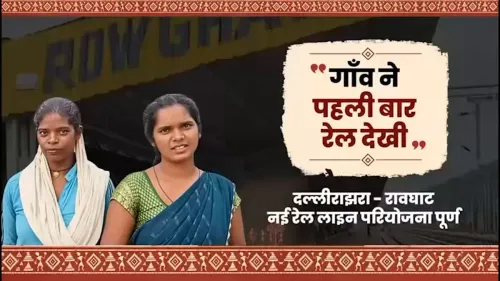
The Tadoki–Raoghat section of the Dalli Rajhara–Raoghat Rail Project has been completed, a long-pending milestone for southern Chhattisgarh.
Bastar , historically affected by Naxalite insurgency and geographic isolation, is the primary beneficiary of the expanded rail connectivity.
CM Vishnu Deo Sai cited gains in education, healthcare, tourism, trade, and employment as direct outcomes of improved rail access.
The project aligns with the Modi government's strategy of pairing rail and road expansion in insurgency-hit mineral belts with security operations.
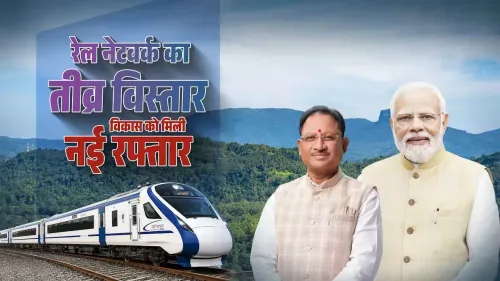
PM Narendra Modi and Railways Minister Ashwini Vaishnaw were personally thanked by the CM for enabling the project's progress.
The corridor also serves freight movement for Bastar's iron-ore-rich terrain, promising economic multipliers beyond passenger travel.
A railway line through one of India's most insurgency-scarred landscapes is more than steel and sleepers — it is a statement. Chhattisgarh Chief Minister Vishnu Deo Sai on Sunday, September 27, 2026 celebrated the completion of the Tadoki–Raoghat section of the long-pending Dalli Rajhara–Raoghat Rail Project, calling it a turning point for Bastar, a region that has lived under the shadow of Naxalite violence for decades.
Decades in the Making: What the Tadoki–Raoghat Section Means
The Dalli Rajhara–Raoghat rail corridor has been a long-pending ambition, sanctioned in phases since the early 2000s to connect mineral-rich southern Chhattisgarh with the national rail network. The project was always dual-purpose: unlock the region's vast iron-ore reserves for freight, and — critically — end the geographic isolation that insurgents had long exploited. The completion of the Tadoki–Raoghat section marks one of the most consequential stretches of that project finally falling into place.
CM Sai framed it in terms that went well beyond logistics. 'Kuch yatraen sirf ek jagah se doosri jagah tak nahin le jaatin' ('Some journeys don't just take you from one place to another'), he wrote — they open doors of possibility for an entire region. That line carries deliberate weight when the region in question is Bastar.
Bastar's Long Isolation and the Rail Gamble
Bastar district in southern Chhattisgarh has for years ranked among the most underdeveloped pockets of central India, its chronic poverty deepened by decades of Naxalite insurgency that made road-building dangerous and investment scarce. Successive governments — both at the Centre and in Raipur — identified rail and road connectivity as the structural fix: bring in reliable access, and schools, hospitals, markets, and jobs would follow. The logic was not merely developmental; it was security doctrine. An integrated region is harder to isolate, harder to radicalise.
The Modi government's infrastructure push from 2014 onwards prioritised exactly these insurgency-hit mineral belts, pairing rail investment with stepped-up security operations. Union Railways Minister Ashwini Vaishnaw, whom CM Sai thanked personally along with Prime Minister Narendra Modi, has been the administrative engine behind project approvals and funding flows for Chhattisgarh's rail expansion.
What the New Link Unlocks for Bastar's People
CM Sai listed the downstream gains with specificity: easier access to education, healthcare, tourism, trade, and employment. Each of those words carries real stakes in a district where students have historically had to travel long distances for college, patients for specialist care, and traders for markets. A reliable rail connection compresses those distances — and compresses the sense of abandonment that has fuelled discontent for a generation.
The broader Dalli Rajhara–Raoghat corridor also serves the freight economy. Bastar sits atop significant iron-ore deposits; better rail access means those resources can move more efficiently, generating royalties and local employment in mining and ancillary industries. The development dividend, if realised, could shift Bastar's economic profile in ways road improvements alone never managed.
A region once defined by what it lacked — safety, connectivity, opportunity — now has a railway line as proof that the equation is changing. Whether the trains that run through Bastar carry students, patients, tourists, or ore, the track itself tells the story: Bastar is no longer at the end of the line.
Point of View
However, is whether this rail link accelerates measurable change in Bastar's human-development indicators, or remains a symbolic headline in a region that has seen many promises pass through.
NationPress
27 Sept 2026
Frequently Asked Questions
What is the Dalli Rajhara–Raoghat Rail Project?
The Dalli Rajhara–Raoghat Rail Project is a long-pending rail corridor in Chhattisgarh designed to connect the mineral-rich southern parts of the state — particularly Bastar — to the broader national rail network, serving both passenger access and iron-ore freight movement.
Why is Bastar railway connectivity significant?
Bastar has long been one of India's most isolated and insurgency-affected districts. Improved rail connectivity is expected to ease access to education, healthcare, and markets, and is seen as a key tool to reduce the economic deprivation that Naxalite movements have historically exploited.
What is the Tadoki–Raoghat section?
The Tadoki–Raoghat section is a specific stretch of the Dalli Rajhara–Raoghat Rail Project whose completion was announced by Chhattisgarh CM Vishnu Deo Sai on September 27, 2026 , marking a significant phase of the broader corridor project.
Who is responsible for the Chhattisgarh rail expansion?
The Union Ministry of Railways under minister Ashwini Vaishnaw has overseen approvals and funding for Chhattisgarh's rail projects, with PM Narendra Modi 's government prioritising connectivity in insurgency-hit mineral belts since 2014.
How does rail connectivity help reduce Naxalism in Bastar?
Policy experts and successive governments have argued that rail and road connectivity in Naxal-affected areas integrates isolated communities into the economic mainstream, making it harder for insurgent movements to sustain influence by reducing poverty, improving access to government services, and enabling trade.