CM Sai Highlights Rail Network Boost in Chhattisgarh
Synopsis
Chhattisgarh Chief Minister Vishnu Deo Sai on 13 July 2026 highlighted rapid rail network expansion in the state, crediting the BJP's double engine government and PM Modi for connecting interior regions to trade, investment, and employment opportunities.
Key Takeaways
CM Vishnu Deo Sai posted on 13 July 2026 crediting the BJP's 'double engine government' for accelerating rail development in Chhattisgarh .
The post frames improved rail connectivity as a driver of trade, investment, and employment across the state.
Since 2014 , Union budgets have steadily raised capital expenditure on Indian Railways , including dedicated projects in Chhattisgarh .
The Amrit Bharat Stations programme is among the central schemes Chhattisgarh aligned with after the BJP formed the state government in December 2023 .
Mineral corridors and tribal districts are the primary beneficiaries of improved freight and passenger rail links in the state.
Future railway budget allocations for Chhattisgarh will be a key indicator of whether the double engine model delivers on its infrastructure promises.
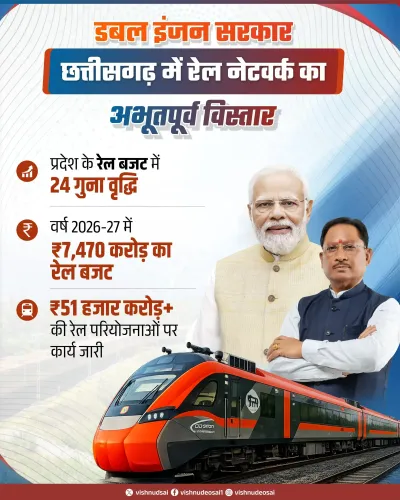
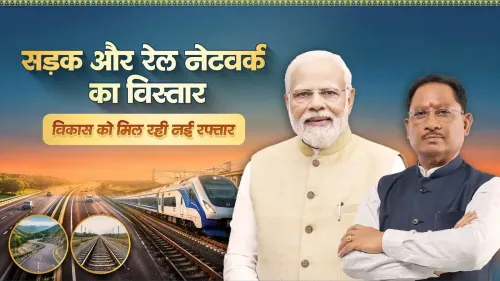
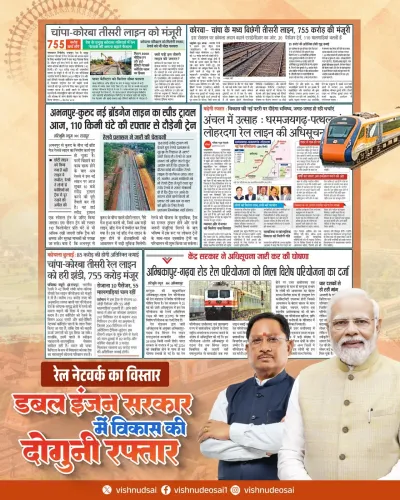
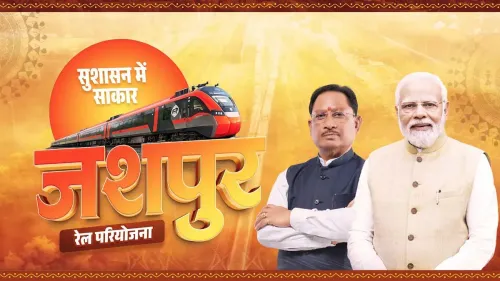
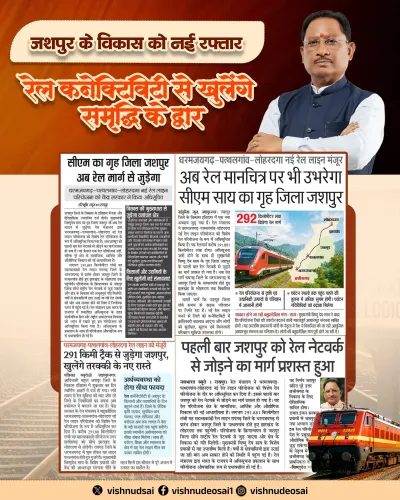
Chhattisgarh Chief Minister Vishnu Deo Sai on Monday, 13 July 2026, credited the BJP's 'double engine government' for accelerating railway development across the state, saying stronger rail connectivity is linking every region of Chhattisgarh to the mainstream of development and opening new possibilities for trade, investment, and employment.
Context
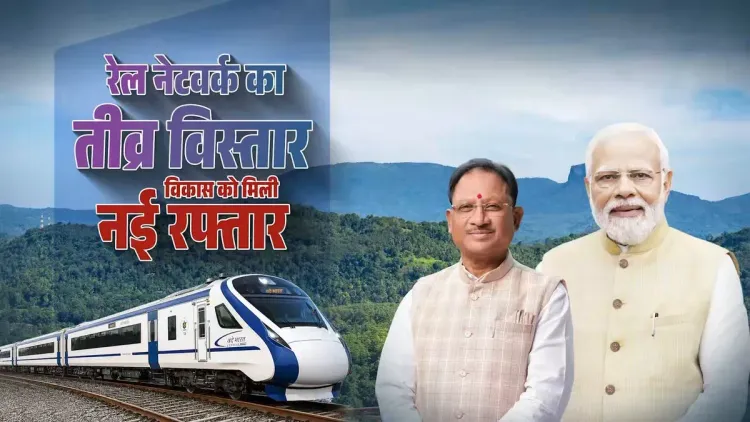
Posting on X and tagging Prime Minister Narendra Modi, CM Sai wrote — 'विकसित छत्तीसगढ़ को नई रफ्तार दे रहा मजबूत रेल नेटवर्क' ('A strong rail network is giving new momentum to a developed Chhattisgarh'). He attributed this push to the combined will of the central and state governments operating under the same political dispensation, a model the BJP describes as the 'double engine government.'
The post accompanies a video shared by the Chief Minister's office, underscoring the state government's effort to showcase infrastructure progress ahead of future electoral and policy milestones.
Policy Backdrop
Since 2014, successive Union budgets have sharply increased capital expenditure on Indian Railways, with dedicated allocations for new lines, route doubling, and station redevelopment in Chhattisgarh. The state, rich in minerals and home to significant tribal populations, has historically suffered from thin rail coverage relative to its economic potential.
In 2019–20, the Railway Ministry announced multiple projects targeting tribal districts and mineral corridors in the state as part of the National Infrastructure Pipeline. After the BJP formed the state government in December 2023, Chhattisgarh formally aligned its development priorities with central rail schemes including the Amrit Bharat Stations programme, which targets the redevelopment and modernisation of stations across the country.
Stakeholders and Impact
Improved rail connectivity in Chhattisgarh most directly benefits residents of interior and tribal districts who have relied on limited road infrastructure for movement of goods and people. For the state's mineral sector — a backbone of its economy — better freight corridors reduce logistics costs and improve competitiveness.
Investors and small traders stand to gain from reduced transit times, while daily rail passengers, particularly in underserved districts, gain access to healthcare, education, and employment centres in larger cities. The broader framing by CM Sai places rail expansion within the national Viksit Bharat 2047 vision, which treats transport infrastructure as foundational to economic transformation.
What's Next
Attention will now turn to the next railway budget cycle and whether Chhattisgarh secures fresh allocations for ongoing line projects and new station inaugurations under the Amrit Bharat programme. The state government is expected to continue amplifying rail milestones as part of its development narrative ahead of future electoral cycles.
If central allocations accelerate and new lines are commissioned, Chhattisgarh's positioning as a mineral and investment hub could receive a meaningful structural boost — making railway progress a key metric by which the double-engine model will be judged in the state.
Point of View
Where transport connectivity is positioned as the precondition for economic inclusion of interior and tribal regions. By tagging PM Modi directly, Sai also signals upward loyalty while claiming shared credit, a pattern seen consistently across BJP-governed states. The real test of this narrative will come when specific project completions and ridership or freight data can be independently verified.
NationPress
13 Jul 2026
Frequently Asked Questions
What did Chhattisgarh CM Vishnu Deo Sai say about railways?
CM Vishnu Deo Sai said that a strong rail network is giving new momentum to a developed Chhattisgarh, crediting the BJP's double engine government and PM Modi for accelerating rail connectivity across the state.
What is the double engine government in Chhattisgarh?
The 'double engine government' is a BJP term referring to the simultaneous rule of the BJP at the Centre and in a state, which the party credits for faster execution of centrally sponsored infrastructure projects including railways.
What railway projects are underway in Chhattisgarh?
Chhattisgarh has multiple railway projects targeting new lines, route doubling, and station redevelopment, including stations under the Amrit Bharat Stations programme announced by the Union government.
How does rail connectivity benefit Chhattisgarh's tribal districts?
Better rail links give tribal district residents access to healthcare, education, and jobs in larger cities, while also reducing logistics costs for the state's mineral sector and opening new trade and investment corridors.
When did the BJP form the government in Chhattisgarh?
The BJP formed the state government in Chhattisgarh in December 2023 after winning the assembly elections, with Vishnu Deo Sai sworn in as Chief Minister.