CM Sai Honours Tribal Icons at Dharamjaigarh on Janjatiya Gaurav Diwas
Synopsis
Chhattisgarh CM Vishnu Deo Sai presided over Janjatiya Gaurav Diwas in Dharamjaigarh on 15 November 2026, honouring tribal cultural contributors on Birsa Munda's birth anniversary and reaffirming his government's commitment to tribal heritage and welfare.
Key Takeaways
Chhattisgarh CM Vishnu Deo Sai attended the Janjatiya Gaurav Diwas state ceremony at Dharamjaigarh, Raigarh district on 15 November 2026 .
Distinguished individuals who contributed to the preservation of tribal art, culture and traditions were formally honoured at the event.
Janjatiya Gaurav Diwas was declared a national observance by the Government of India in 2021 to mark Birsa Munda's birth anniversary.
Birsa Munda led the Ulgulan rebellion against British colonial rule and remains a defining icon of tribal resistance and rights in India.
CM Sai reaffirmed his government's 'continuous commitment' to protecting tribal culture, traditions, dignity and welfare.
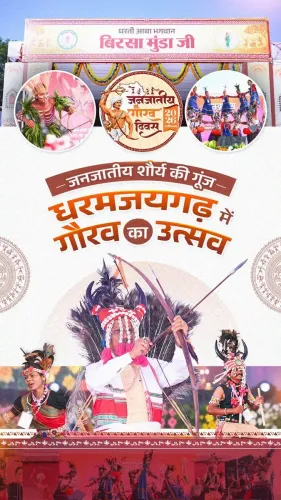
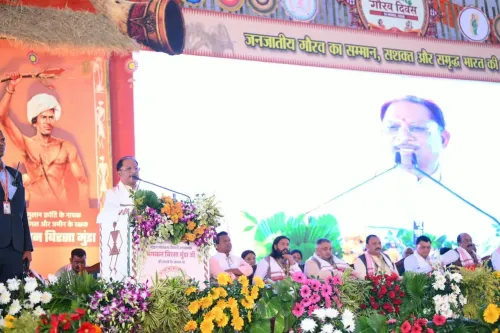
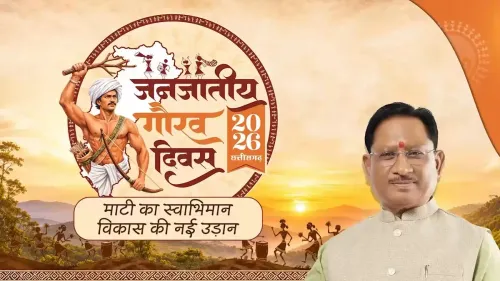
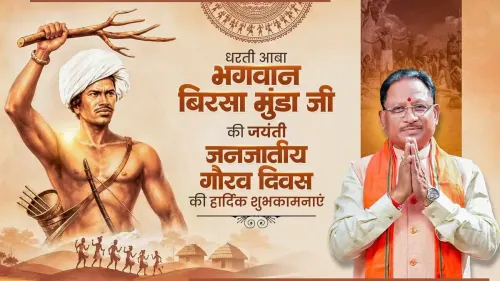
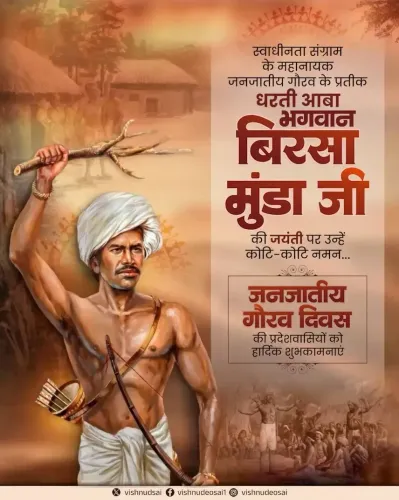
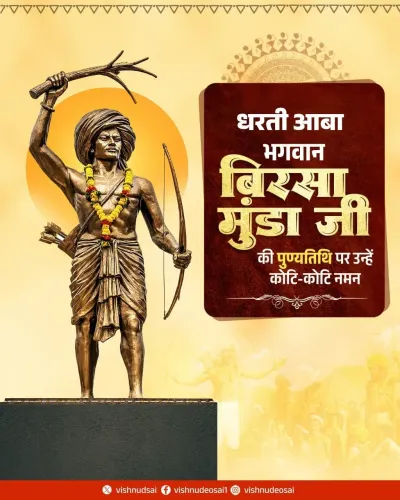
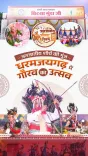
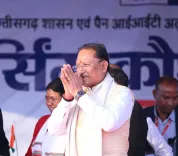
On the birth anniversary of Bhagwan Birsa Munda — the 19th-century tribal icon whose rebellion against colonial rule made him a permanent fixture in India's freedom story — Chhattisgarh Chief Minister Vishnu Deo Sai travelled to Dharamjaigarh on 15 November 2026 to preside over the state's Janjatiya Gaurav Diwas celebrations and personally honour individuals who have made outstanding contributions to the preservation and promotion of tribal culture, art, and traditions.
Birsa Munda's legacy, alive in Dharamjaigarh
Dharamjaigarh, a town in Raigarh district with deep tribal roots, became the ceremonial centre of the state's observance this year. Chief Minister Sai used the occasion to felicitate vibhutiyaan — distinguished personalities — who have dedicated themselves to safeguarding tribal heritage, a recognition that placed lived cultural contribution at the heart of the event rather than administrative achievement alone.
Posting on X in Hindi, CM Sai wrote: 'On the sacred birth anniversary of Dharti Aaba Bhagwan Birsa Munda, at today's Janjatiya Gaurav Diwas ceremony held in Dharamjaigarh, we honoured distinguished personalities who have made remarkable contributions to the preservation and promotion of the glorious traditions, art and culture of tribal society.' He added that his government 'remains continuously committed to the protection of the rich culture and traditions of tribal society, and to their dignity and welfare.'
From a 2021 declaration to a living national observance
The Government of India declared 15 November as Janjatiya Gaurav Diwas in 2021, formally embedding Birsa Munda's birth anniversary into the national calendar as a day of tribal recognition. The date was not chosen lightly — Munda's Ulgulan ('The Great Tumult'), a grassroots uprising he led against British land policies and exploitation in the late 19th century, is credited with galvanising early tribal rights consciousness across the subcontinent.
Chhattisgarh, where Scheduled Tribes account for a significant share of the population, has been a particularly active stage for the observance. State-level ceremonies have paired symbolic recognition with reiterated commitments on welfare and cultural funding — a dual approach that reflects how Indian governance has increasingly woven tribal heritage into its political and administrative identity.
Culture as policy: the Chhattisgarh approach
For CM Sai — himself from a tribal background — the event carries weight that is both political and personal. His government has repeatedly emphasised cultural preservation alongside development-linked tribal welfare schemes, framing the two as inseparable. Award ceremonies of this kind institutionalise that framing: they signal to tribal communities that their artists, tradition-bearers, and cultural custodians are seen by the state, not just its administrators.
The hashtag #JanjatiyaGauravDiwas trended alongside #जोहार_नितिन_जी — 'Johar' being a traditional tribal greeting — tying the formal observance to a broader digital expression of community pride.
Birsa Munda was barely 25 when he died in British custody in 1900. More than a century later, his birth anniversary draws state governments, cabinet ministers, and crowds across India's tribal heartland. That is not ceremony for ceremony's sake — that is a reckoning still in progress.
Point of View
Particularly in BJP-governed states with large tribal constituencies. For CM Vishnu Deo Sai — the first tribal Chief Minister of Chhattisgarh — presiding over the Dharamjaigarh event reinforces an identity-linked governance narrative that the party has cultivated since formalising the observance in 2021. The dual emphasis on cultural awards and welfare commitments reflects a broader strategic pattern: institutionalising tribal recognition as a visible, recurring act of the state rather than a one-time gesture. How those commitments translate into measurable policy outcomes for Chhattisgarh's Scheduled Tribe communities will determine whether the observance deepens in public trust or remains largely ceremonial.
NationPress
15 Nov 2026
Frequently Asked Questions
What is Janjatiya Gaurav Diwas and why is it celebrated on 15 November?
Janjatiya Gaurav Diwas is a national observance declared by the Government of India in 2021 to honour tribal heritage, culture and icons. It is held on 15 November every year because that is the birth anniversary of Bhagwan Birsa Munda , the revered tribal leader who led the Ulgulan rebellion against British colonial rule in the late 19th century.
Who is Bhagwan Birsa Munda?
Birsa Munda was a 19th-century leader from the Munda tribal community who organised the Ulgulan ('The Great Tumult') uprising against British land policies and exploitation. He is widely regarded as one of India's foremost tribal freedom fighters and a symbol of tribal rights and resistance. He died in British custody in 1900 at around 25 years of age.
What happened at the Janjatiya Gaurav Diwas event in Dharamjaigarh in 2026?
Chhattisgarh Chief Minister Vishnu Deo Sai presided over the state's Janjatiya Gaurav Diwas celebration in Dharamjaigarh, Raigarh district on 15 November 2026 . Distinguished individuals who had contributed to the preservation and promotion of tribal art, culture, and traditions were honoured at the ceremony.
What is CM Vishnu Deo Sai's connection to tribal communities?
Vishnu Deo Sai is a BJP leader and the Chief Minister of Chhattisgarh . He is himself from a tribal background, making his presence at and leadership of tribal welfare and cultural events particularly significant. His government has repeatedly emphasised cultural preservation alongside development-oriented tribal welfare programmes.
Where is Dharamjaigarh and why was it chosen for the event?
Dharamjaigarh is a town in Raigarh district, Chhattisgarh , with a significant tribal population. It served as the site of the state's 2026 Janjatiya Gaurav Diwas ceremony, reflecting the state government's practice of holding the observance in regions with strong tribal community presence.