CM Sai Launches 'Ham Honge Kamyab 2.0' Portal at Baloda Bazar Samadhan Shivir
Synopsis
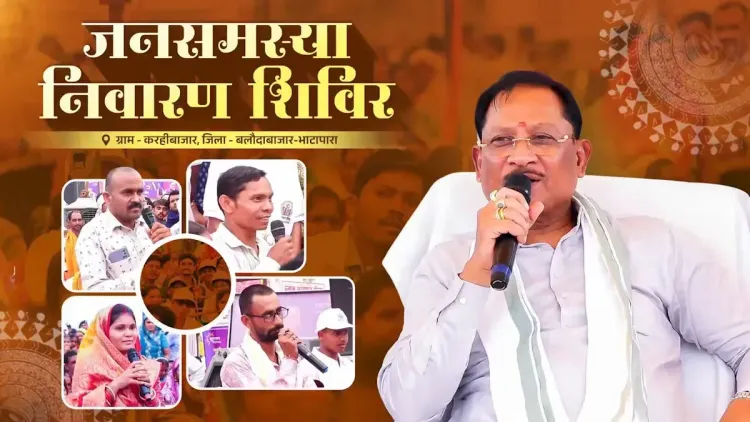
Chief Minister Vishnu Deo Sai launched the 'Ham Honge Kamyab 2.0' citizen-services portal and administered a water-conservation pledge at a Sushasan Tihar 2026 camp in Karhibazar village, Baloda Bazar-Bhatapara, on 22 May 2026, interacting directly with beneficiaries including farmer Manohar Yadu.
Key Takeaways
Chief Minister Vishnu Deo Sai launched the Ham Honge Kamyab 2.0 portal on 22 May 2026 at a Samadhan Shivir in Karhibazar, Baloda Bazar-Bhatapara .
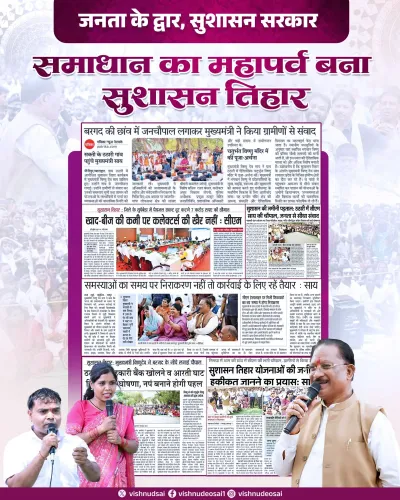
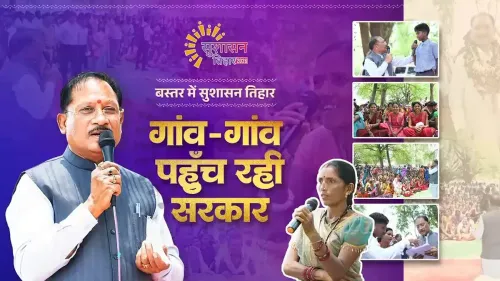
The event was part of the Sushasan Tihar 2026 state-wide governance outreach programme.
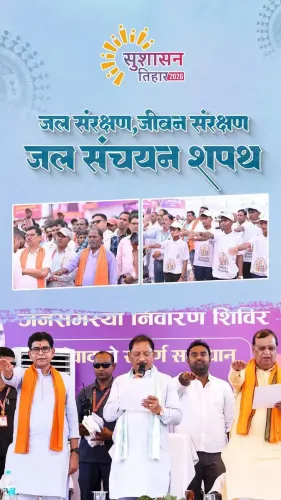
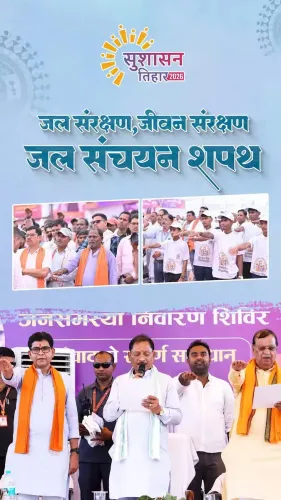
CM Sai administered a water-conservation oath ( jal sanchay ki shapath ) to participants at the camp.
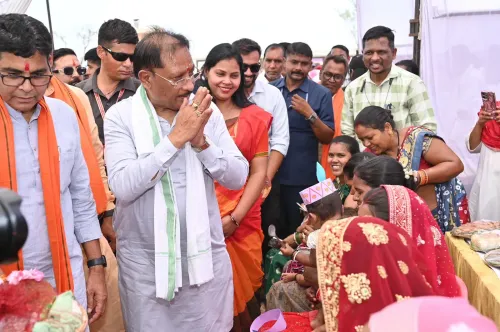
Beneficiaries Nand Kumar Dhruv , Pinki Banjare , and Dilip Verma cited swift resolution of their grievances.
Farmer Manohar Yadu shared that paddy sales income enabled him to purchase a tractor , highlighting agricultural welfare impact.
The portal is designed to provide digital grievance tracking alongside physical camp-based redressal across Chhattisgarh .
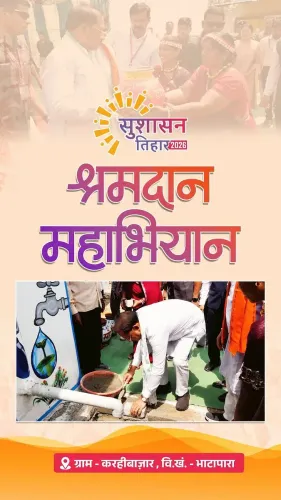
The Chief Minister's Office of Chhattisgarh announced on Friday, 22 May 2026, that Chief Minister Vishnu Deo Sai launched the 'Ham Honge Kamyab 2.0' digital portal at a Samadhan Shivir (grievance-redressal camp) held in Karhibazar village, Baloda Bazar-Bhatapara district. The event, held under the ongoing Sushasan Tihar 2026 governance outreach programme, also featured a public oath on water conservation and direct interaction with scheme beneficiaries.
Context
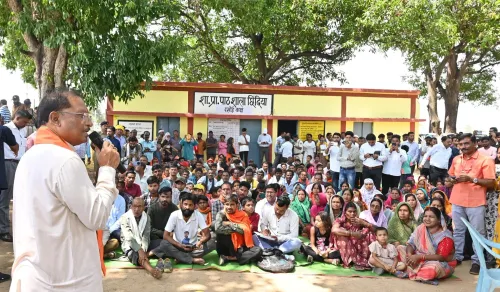
The Samadhan Shivir at Karhibazar brought together district administration officials and rural residents for on-the-spot resolution of pending grievances. Chief Minister Sai administered a jal sanchay ki shapath — a pledge for water conservation — to those gathered, linking welfare delivery with resource sustainability. Beneficiaries Nand Kumar Dhruv, Pinki Banjare, and Dilip Verma expressed satisfaction over the swift resolution of their issues at the camp.
Farmer Manohar Yadu shared a personal account with the Chief Minister, describing how income from selling paddy had enabled him to purchase a tractor — a direct testimonial to the impact of the state's agricultural support framework in Baloda Bazar-Bhatapara, a district known for significant paddy cultivation.
Policy Backdrop
Ham Honge Kamyab 2.0 is the updated iteration of a citizen-services and grievance-tracking portal under the current BJP state administration, which came to power in December 2023. The portal is intended to provide residents with a digital channel to monitor the status of their applications and complaints, complementing the physical outreach of the shivir format.
District-level Samadhan Shivirs have been a recurring feature of Chhattisgarh's governance architecture since at least the early 2010s, with successive administrations using the format to bridge the gap between state departments and rural populations. The current government has layered digital tools onto this physical infrastructure as part of its visible good-governance agenda since 2023.
Stakeholders and Impact
The primary beneficiaries of the Sushasan Tihar 2026 camps are rural residents — farmers, women, and marginalised communities — who may otherwise face delays navigating bureaucratic channels. The water-conservation pledge adds an environmental dimension to what are primarily welfare-delivery events, signalling an effort to integrate resource-awareness messaging into grassroots governance interactions.
For the farming community in agrarian districts like Baloda Bazar-Bhatapara, timely resolution of land, irrigation, or subsidy-related grievances can have direct economic consequences. Farmer Manohar Yadu's tractor purchase, as shared at the event, illustrates the downstream economic mobility that the administration is seeking to highlight through such interactions.
What's Next
The Sushasan Tihar 2026 programme is expected to continue with further district-level camps across Chhattisgarh, with the Ham Honge Kamyab 2.0 portal positioned as a central digital spine for tracking outcomes. Observers will watch whether the portal integrates with existing land-record or irrigation databases as rollout progresses through the remainder of 2026. The water-conservation oath, if replicated at subsequent camps, could signal a broader state push to embed environmental pledges into routine governance events ahead of the monsoon season.
Point of View
Suggesting the administration is beginning to weave environmental messaging into routine welfare delivery, possibly anticipating monsoon-linked agricultural stress in agrarian districts. How effectively the portal integrates with backend land and irrigation databases will determine whether the initiative moves beyond optics to structural improvement in citizen-service delivery.
NationPress
16 Sept 2026
Frequently Asked Questions
What is the Ham Honge Kamyab 2.0 portal in Chhattisgarh?
Ham Honge Kamyab 2.0 is an updated digital portal launched by the Chhattisgarh government under Chief Minister Vishnu Deo Sai for citizen-service delivery and grievance tracking. It was formally launched on 22 May 2026 at a Samadhan Shivir in Baloda Bazar-Bhatapara district.
What is Sushasan Tihar 2026?
Sushasan Tihar 2026 is a state-level governance outreach programme run by the Chhattisgarh government, featuring district-level camps where officials resolve citizen grievances and deliver scheme benefits directly to beneficiaries.
Where was the Sushasan Tihar 2026 camp held on 22 May?
The camp was held at Karhibazar village in Baloda Bazar-Bhatapara district of Chhattisgarh on 22 May 2026.
Who is Vishnu Deo Sai?
Vishnu Deo Sai is the Chief Minister of Chhattisgarh, heading the BJP state government since December 2023 following the state assembly elections.
What did farmer Manohar Yadu share at the Chhattisgarh Samadhan Shivir?
Farmer Manohar Yadu shared with Chief Minister Sai that income from selling paddy had enabled him to purchase a tractor, citing it as a positive outcome of the state's agricultural support and welfare programmes.