CM Sai launches Shala Pravesh Utsav 2026 in Chhattisgarh
Synopsis
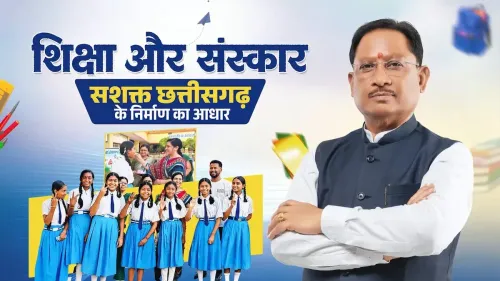
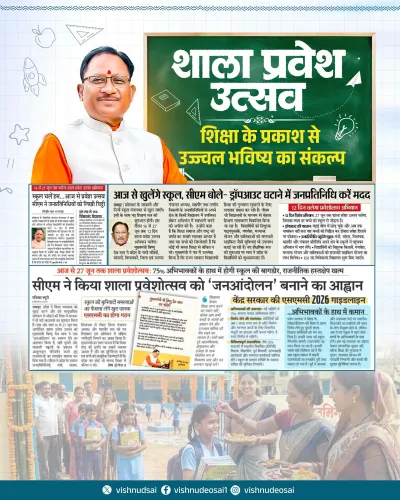
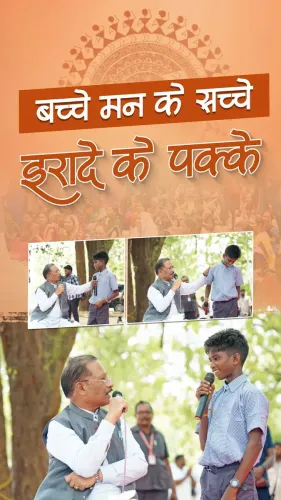
Chhattisgarh Chief Minister Vishnu Deo Sai on 24 June 2026 invoked Shala Pravesh Utsav 2026, framing the annual school-enrolment drive as a collective responsibility to ensure every child in the state — especially from rural and tribal communities — receives an education.
Key Takeaways
CM Vishnu Deo Sai posted on 24 June 2026 to mark Shala Pravesh Utsav 2026 , Chhattisgarh's annual school-enrolment festival.
He described the drive as a symbol of collective responsibility, not merely a ceremonial occasion.
The CM pledged that no child in Chhattisgarh will be denied education, and every student will develop with knowledge, values, and self-confidence.
The campaign targets rural and tribal communities where geographic and socioeconomic barriers to schooling persist.
The drive aligns with the Right to Education Act, 2009 and the National Education Policy 2020 goals of universal enrolment and foundational learning.
Retention and enrolment figures after the 2026 academic session will be the key metric to assess the drive's impact.
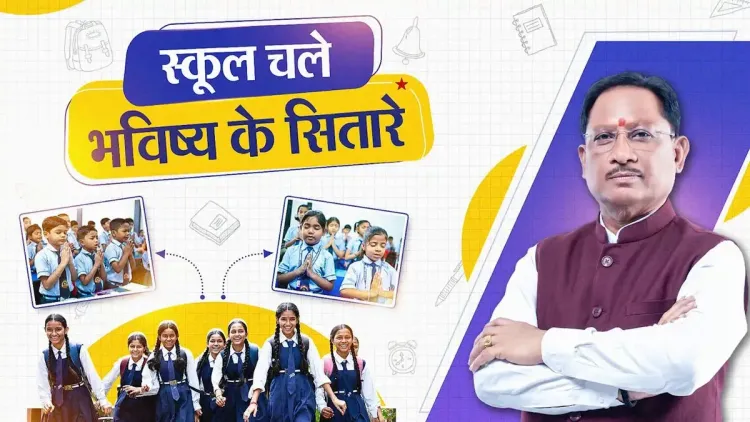
Chhattisgarh Chief Minister Vishnu Deo Sai on Wednesday, 24 June 2026, invoked the state's annual school-enrolment drive, Shala Pravesh Utsav 2026, calling it a collective societal responsibility to ensure no child in the state is denied an education.
Posting on X, CM Sai wrote: 'नन्हे कदम जब विद्यालय की ओर बढ़ते हैं, तभी विकसित भविष्य की नींव रखी जाती है' — 'When tiny feet step towards school, the foundation of a developed future is laid.' He described Shala Pravesh Utsav 2026 as not merely a celebration of children entering school, but a symbol of the government's commitment to their dreams, potential, and a better tomorrow.
The Chief Minister added that the state's resolve is that 'every student should be able to take flight towards their dreams with knowledge, values, and self-confidence' — and that not a single child in Chhattisgarh should remain deprived of education.
Context
Shala Pravesh Utsav is a state-level school-admission festival organised by the Chhattisgarh government at the start of each academic session to mark formal enrolment and encourage universal attendance. The event is designed to create community momentum around schooling, particularly in rural and tribal belts where access barriers remain significant.
Chhattisgarh is a central Indian state with a substantial tribal population. Geographical remoteness, seasonal migration, and socioeconomic constraints have historically made consistent school attendance a challenge for many families, making annual enrolment campaigns a recurring policy priority.
Policy Backdrop
The drive sits within a well-established national framework. The Right to Education Act, 2009 guarantees free and compulsory education to all children aged 6 to 14 years, placing a legal obligation on states to enrol and retain every child. Nationally, the Sarva Shiksha Abhiyan, launched in 2001, laid the groundwork for universalising elementary education and reducing out-of-school children.
More recently, the National Education Policy 2020 has set fresh targets for foundational literacy, universal enrolment, and equitable access, urging states to strengthen inclusion at the grassroots level. CM Sai, who assumed office in December 2023 following the state assembly elections, has aligned Chhattisgarh's education messaging with these central policy goals.
Stakeholders and Impact
The primary beneficiaries are school-age children — particularly from Chhattisgarh's rural and tribal communities — along with their families, who are the intended audience for the enrolment push. Teachers, local panchayat bodies, and anganwadi workers typically serve as the operational backbone of such drives, mobilising households and facilitating admissions at the school level.
For the state government, Shala Pravesh Utsav also functions as a visible public-engagement moment, reinforcing the administration's commitment to education as a developmental priority. Broader stakeholders include civil society groups working on child rights and tribal welfare, who track whether the drive translates into sustained attendance rather than a one-day ceremonial enrolment.
What's Next
The effectiveness of Shala Pravesh Utsav 2026 will be gauged by official enrolment and retention figures released after the academic session gets underway. Analysts and child-rights advocates will watch whether the symbolic momentum generated by the campaign converts into measurable reductions in out-of-school children, particularly among tribal and migrant communities in the state's more remote districts.
If Chhattisgarh can demonstrate improved retention data alongside enrolment numbers, the 2026 edition of the drive could serve as a model for deepening foundational learning outcomes in line with the National Education Policy 2020 targets.
Point of View
The real test will be whether the annual enrolment festival generates durable retention gains or remains a high-visibility, low-continuity exercise — a criticism levelled at similar drives across Indian states. Sustained follow-through on attendance, teacher deployment, and mid-day meal delivery will determine whether the symbolism translates into outcomes.
NationPress
24 Jun 2026
Frequently Asked Questions
What is Shala Pravesh Utsav 2026 in Chhattisgarh?
Shala Pravesh Utsav 2026 is an annual state-level school-enrolment festival organised by the Chhattisgarh government at the start of the academic session to encourage universal school attendance and formally welcome children — especially from rural and tribal communities — into the education system.
What did CM Vishnu Deo Sai say about Shala Pravesh Utsav 2026?
CM Vishnu Deo Sai said the event is a symbol of collective responsibility towards children's dreams and potential, and pledged that no child in Chhattisgarh will be denied education, with every student empowered to pursue their aspirations with knowledge, values, and self-confidence.
When did CM Sai post about Shala Pravesh Utsav 2026?
CM Vishnu Deo Sai posted about Shala Pravesh Utsav 2026 on Wednesday, 24 June 2026 , on the social media platform X.
Which law guarantees free education to children in Chhattisgarh?
The Right to Education Act, 2009 guarantees free and compulsory education to all children aged 6 to 14 years across India, including Chhattisgarh , placing a legal duty on the state government to enrol and retain every child.
Why does Chhattisgarh hold annual school enrolment drives?
Chhattisgarh conducts annual enrolment drives because the state has a significant tribal and rural population where geographic remoteness, poverty, and seasonal migration create persistent barriers to schooling, making community-level mobilisation critical to achieving universal elementary education goals.