CM Sai Offers Rs 15,000/Acre for Crop Diversification in Chhattisgarh
Synopsis
Chhattisgarh Chief Minister Vishnu Deo Sai has announced Rs 15,000 per acre input assistance for farmers who shift from paddy to pulses, oilseeds, millets, maize, or cotton under the Krishak Unnati Yojana, aiming to modernise the state's agriculture and reduce dependence on rice monoculture.
Key Takeaways
Chhattisgarh CM Vishnu Deo Sai announced the scheme on 23 June 2026 via a post on X.
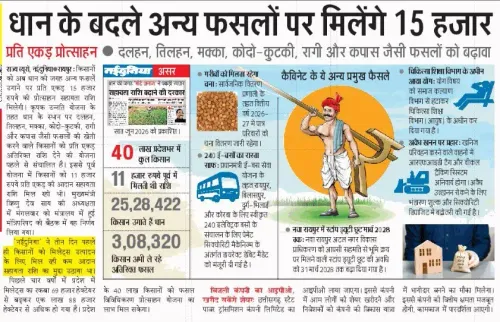
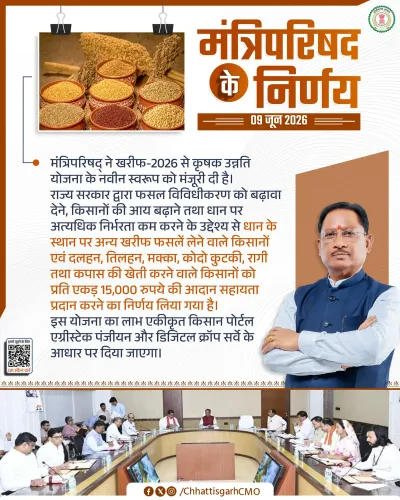
Farmers who abandon paddy for alternative crops will receive Rs 15,000 per acre in input assistance under the Krishak Unnati Yojana .
Eligible alternative crops include pulses, oilseeds, maize, kodo millet, kutki, ragi, and cotton.
The move marks a policy shift from earlier per-acre support that was primarily tied to paddy cultivation under the previous Rajiv Gandhi Kisan Nyay Yojana .
The scheme aligns with national goals around millet promotion and reducing groundwater stress from paddy monoculture.
Kharif 2026 adoption rates and future procurement assurances will determine the scheme's on-ground impact.
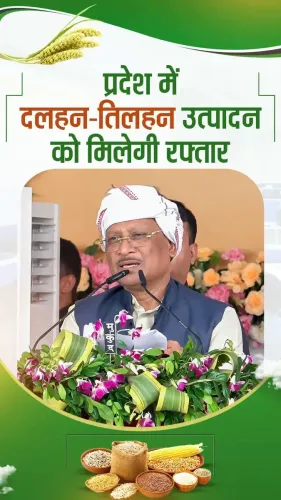
Chhattisgarh Chief Minister Vishnu Deo Sai on Tuesday, 23 June 2026, announced that farmers in the state who shift away from paddy cultivation to alternative crops will receive an input assistance of Rs 15,000 per acre under the Krishak Unnati Yojana, signalling a deliberate push to move the state's agriculture beyond its dependence on rice monoculture.
Context
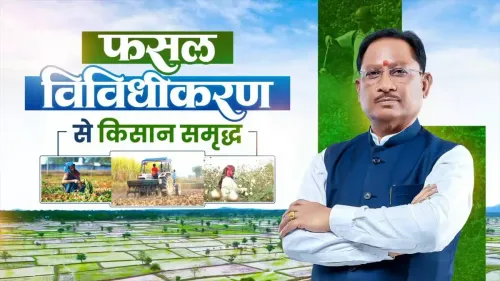
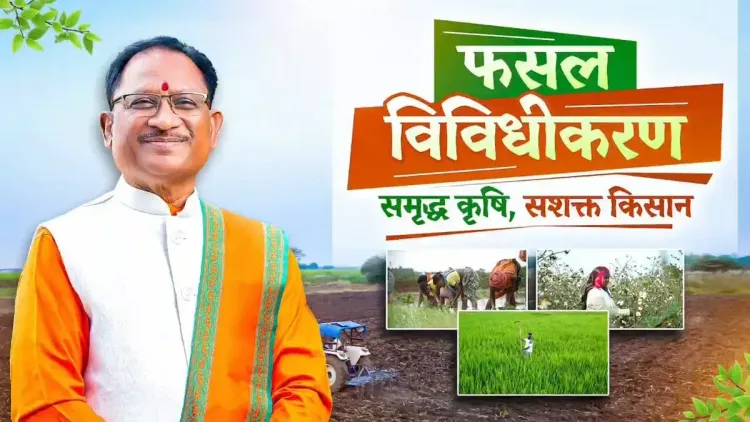
Posting in Hindi on X, CM Sai said: 'फसल विविधीकरण से खुल रहे हैं किसानों की समृद्धि के नए रास्ते' ['Crop diversification is opening new pathways to farmers' prosperity']. He listed pulses, oilseeds, maize, kodo millet, kutki, ragi, and cotton as the crops being promoted as alternatives to paddy, and affirmed the government's resolve that every farmer in Chhattisgarh should become more prosperous by adopting diverse crops.
The announcement comes ahead of the kharif sowing season, the period when paddy is traditionally planted across the state's plains and upland tracts. Framing the scheme as a pathway to 'modern, profitable and future-ready agriculture', the Chief Minister positioned crop diversification as a long-term structural shift rather than a one-season incentive.
Policy Backdrop
Chhattisgarh has historically been one of India's major paddy-producing states, and earlier administrations built support structures around rice cultivation — most notably the Rajiv Gandhi Kisan Nyay Yojana, launched in 2019, which provided per-acre income support primarily to paddy growers. The current government's pivot under the Krishak Unnati Yojana represents a policy course-correction, redirecting per-acre financial support toward farmers who voluntarily move to alternative crops.
The push aligns with a national conversation that gained momentum during India's International Year of Millets in 2023, which encouraged states to expand cultivation of coarse grains such as ragi, kodo, and kutki — crops that happen to be traditional to Chhattisgarh's tribal and upland farming communities. Promoting oilseeds and pulses also addresses domestic supply gaps that keep India dependent on imports of edible oils and protein crops.
Multiple rice-growing states across India are grappling with groundwater depletion and soil degradation linked to paddy monoculture, and several have introduced diversification incentives in recent years. Chhattisgarh's Rs 15,000-per-acre offer places it among the states offering among the more substantial per-acre incentives for such a shift, though the exact eligibility criteria and disbursement mechanism are yet to be detailed in official notifications.
Stakeholders and Impact
The primary beneficiaries are Chhattisgarh's paddy farmers — a large constituency that spans small and marginal landholders in the state's rice bowl districts as well as tribal farmers in upland areas who traditionally cultivated minor millets before the spread of paddy. For small farmers holding a few acres, an input assistance of Rs 15,000 per acre can meaningfully offset the initial cost and risk of switching to an unfamiliar crop.
Pulses and oilseeds typically require less water than paddy, which could ease pressure on groundwater in districts where over-extraction has become a concern. Millets such as kodo, kutki, and ragi are drought-tolerant and nutritionally dense, making them relevant both to farmer resilience and to state and national nutritional security goals. Cotton, also listed in the scheme, offers a cash-crop option for farmers in suitable agro-climatic zones of the state.
What's Next
The practical impact of the scheme will become clearer as the kharif 2026 season progresses and adoption rates among farmers are tracked. Analysts and farm groups will watch whether the state revises its procurement priorities or extends Minimum Support Price-linked assurances to the alternative crops, since income security at the point of sale is often as decisive as input support in persuading farmers to diversify. If uptake is substantial, the scheme could reshape cropping patterns across a significant share of Chhattisgarh's cultivated area and serve as a reference point for other paddy-dependent states seeking a managed transition to diversified agriculture.
Point of View
The BJP government is trying to make the economic case for change without triggering farmer backlash. The choice of crops — millets, pulses, oilseeds — maps neatly onto both national nutritional security priorities and climate-resilience narratives, giving the policy a multi-audience appeal. Whether it succeeds depends less on the announcement and more on whether the state backs the input support with credible procurement guarantees for non-paddy crops at harvest time.
NationPress
23 Jun 2026
Frequently Asked Questions
What is the Krishak Unnati Yojana in Chhattisgarh?
The Krishak Unnati Yojana is a Chhattisgarh state scheme that promotes crop diversification by offering financial input assistance to farmers who shift from paddy to alternative crops such as pulses, oilseeds, millets, maize, and cotton.
How much financial support will farmers get under the Chhattisgarh crop diversification scheme?
Farmers who switch from paddy to eligible alternative crops will receive Rs 15,000 per acre as input assistance under the Krishak Unnati Yojana, as announced by Chief Minister Vishnu Deo Sai on 23 June 2026.
Which crops are promoted under Chhattisgarh's Krishak Unnati Yojana?
The scheme promotes pulses, oilseeds, maize, kodo millet, kutki, ragi, and cotton as alternatives to paddy cultivation in Chhattisgarh.
Why is Chhattisgarh encouraging farmers to move away from paddy?
Paddy monoculture has contributed to groundwater depletion and soil stress in several districts. Diversifying to pulses, millets, and oilseeds can reduce water use, improve soil health, and raise farmer incomes by tapping into crops with strong domestic demand.
How does the Krishak Unnati Yojana differ from the Rajiv Gandhi Kisan Nyay Yojana?
The earlier Rajiv Gandhi Kisan Nyay Yojana, launched in 2019, provided per-acre income support primarily linked to paddy cultivation. The Krishak Unnati Yojana redirects per-acre financial support to farmers who voluntarily shift away from paddy to alternative crops, marking a change in the state's farm support philosophy.