CM Sai Highlights Sushasan Tihar 2026 as Grassroots Governance Drive
Synopsis
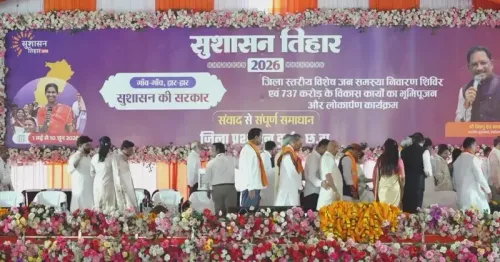
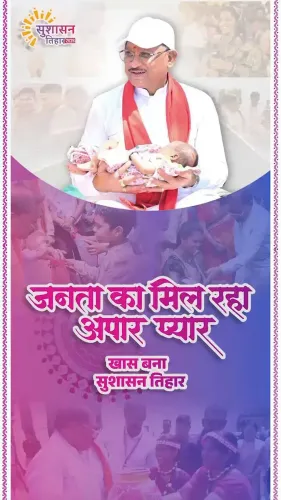
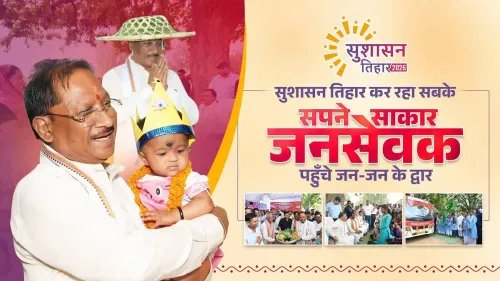
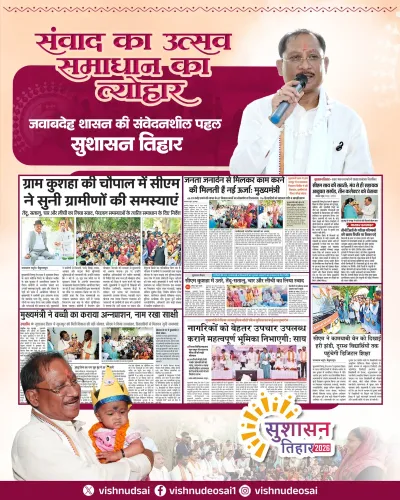
Chhattisgarh Chief Minister Vishnu Deo Sai described Sushasan Tihar 2026 as a people-first governance festival built on village chaupals, direct dialogue and on-the-spot problem resolution, reinforcing his administration's grassroots outreach agenda across the state's rural and tribal regions.
Key Takeaways
CM Vishnu Deo Sai posted on 22 May 2026 describing Sushasan Tihar 2026 as a festival of accessible, village-level governance.
The festival's defining feature is open-air chaupals held under trees, bringing officials directly to rural communities.
Chhattisgarh 's large tribal and forested regions make informal village-level outreach especially significant for grievance access.
The initiative directly reflects commitments made in the BJP 's 2023 Chhattisgarh election manifesto on transparent administration and panchayat-level engagement.
District-wise rollout and grievance disposal rates will be the key metrics to watch as the 2026 edition progresses.
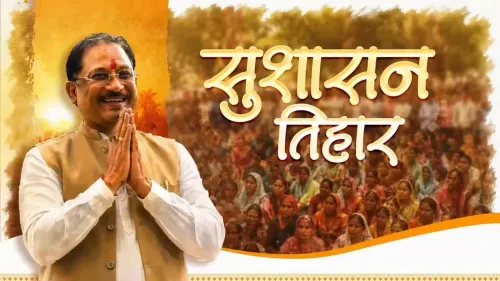
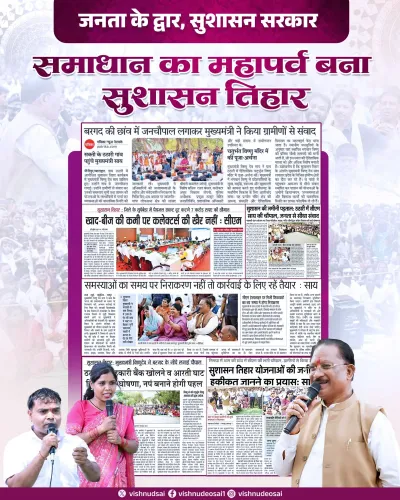
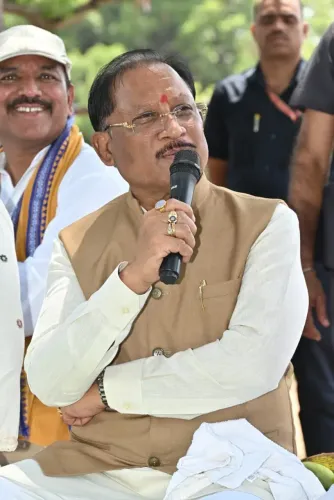
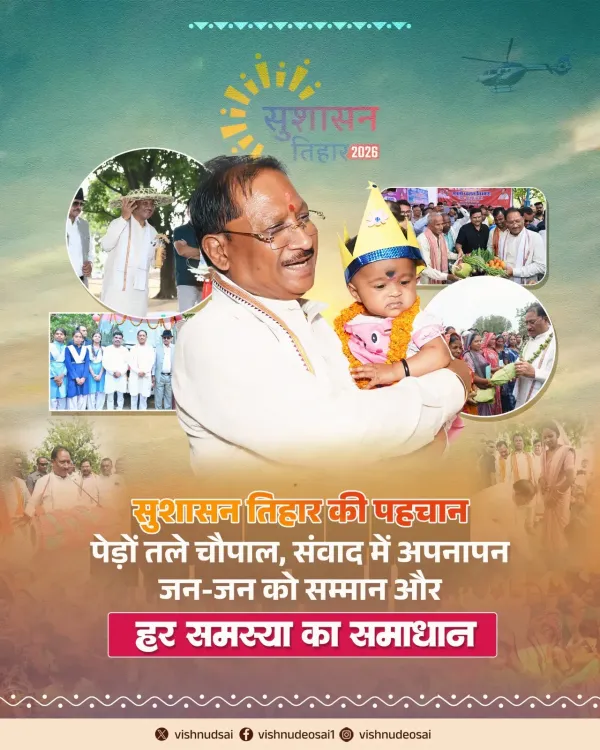
Chhattisgarh Chief Minister Vishnu Deo Sai on Friday, 22 May 2026 took to X to describe the identity of Sushasan Tihar 2026, the state government's ongoing good-governance festival, framing it as a people-first initiative built around village-level dialogue and on-the-spot problem resolution.
In his post, CM Sai wrote: 'पेड़ों तले चौपाल, संवाद में अपनापन, जन-जन को सम्मान और हर समस्या का समाधान' — translated as 'Chaupal under the trees, warmth in conversation, respect for every citizen, and a solution to every problem.' The four-line verse encapsulates the festival's stated operating principle: take administration to the village, not the other way around.
Context
Sushasan Tihar — literally 'Good Governance Festival' — is a state-organised initiative by the Chhattisgarh government designed to bring district and block-level officials into direct, informal contact with rural citizens. The format centres on open-air chaupals (community gatherings), traditionally held under trees in village commons, where residents can raise grievances without navigating formal bureaucratic channels. CM Sai, who took office in December 2023, has positioned the festival as a signature outreach mechanism of his administration.
Policy Backdrop
The BJP's 2023 Chhattisgarh assembly election manifesto had explicitly promised transparent administration, grievance redressal camps and strengthened panchayat-level forums for citizen engagement. Sushasan Tihar 2026 is a direct programmatic expression of those commitments, carrying forward a model that BJP-led state governments have deployed across India to bridge the distance between district administration and remote habitations. In Chhattisgarh — a state formed in 2000, with large tribal and forested regions where formal offices are often far from villages — the chaupal format carries particular administrative significance.
The 'sushasan' theme has been a recurring motif in BJP state governance campaigns nationally. By branding the outreach as a tihar (festival), the Chhattisgarh government signals an intent to make the exercise celebratory and participatory rather than transactional, aligning governance delivery with cultural familiarity in rural communities.
Stakeholders and Impact
The primary beneficiaries are Chhattisgarh's rural citizens and village panchayats, particularly in tribal and mineral-belt districts where access to state services has historically been uneven. The chaupal model gives gram sabha members, farmers, and residents of remote habitations a structured opportunity to surface local problems — from land records and ration card issues to road connectivity — directly before officials empowered to act. For the administration, the festival generates ground-level intelligence about unresolved grievances that may not surface through digital or formal complaint portals.
What's Next
The district-wise rollout schedule and cumulative participation numbers for Sushasan Tihar 2026 events planned through the remainder of the year will be a key measure of the initiative's reach. Analysts and panchayat observers will watch whether grievance disposal rates at the block and village level show a measurable improvement as the festival concludes its rounds. CM Sai's public communication around the event suggests the administration intends to keep the festival's visibility high ahead of local-body electoral cycles, reinforcing the BJP's governance-delivery narrative in Chhattisgarh.
Point of View
Making 'good governance' feel accessible rather than bureaucratic. The chaupal format is not new to Indian state politics, but its consistent revival by BJP administrations signals a calculated effort to anchor the party's identity in visible, ground-level service delivery. In Chhattisgarh, where large tribal populations have historically had uneven access to state machinery, the festival's optics carry weight beyond symbolism. The real test will come in measurable grievance disposal numbers and whether the 2026 edition produces documented outcomes that survive scrutiny beyond the campaign cycle.
NationPress
7 Oct 2026
Frequently Asked Questions
What is Sushasan Tihar 2026 in Chhattisgarh?
Sushasan Tihar 2026 is a good-governance festival organised by the Chhattisgarh government in which officials hold open-air village chaupals to hear citizen grievances and resolve problems on the spot, without residents needing to visit formal offices.
Who organised Sushasan Tihar 2026?
The Chhattisgarh state government under Chief Minister Vishnu Deo Sai organised Sushasan Tihar 2026 as part of the BJP administration's public outreach and grievance redressal agenda.
What does 'chaupal' mean in the context of Sushasan Tihar?
A chaupal is a traditional open-air community gathering space, often under a tree in a village common. In Sushasan Tihar, it serves as an informal venue where officials meet citizens directly to hear and address local problems.
How does Sushasan Tihar benefit tribal communities in Chhattisgarh?
Tribal and rural communities in Chhattisgarh often live far from formal government offices. Sushasan Tihar brings officials to village-level chaupals, giving residents in remote areas a direct channel to raise issues related to land records, rations, roads and other services.
What was Vishnu Deo Sai's post about Sushasan Tihar 2026?
CM Vishnu Deo Sai posted on X on 22 May 2026 describing Sushasan Tihar 2026 as a festival defined by chaupals under trees, warm dialogue, respect for every citizen, and a resolution for every problem.