CM Sai Seeks Central Funds to Electrify 461 Bastar Villages
Synopsis
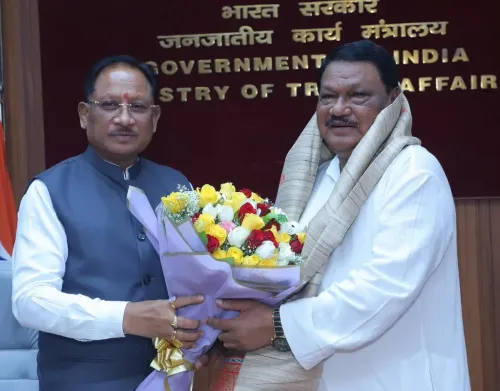
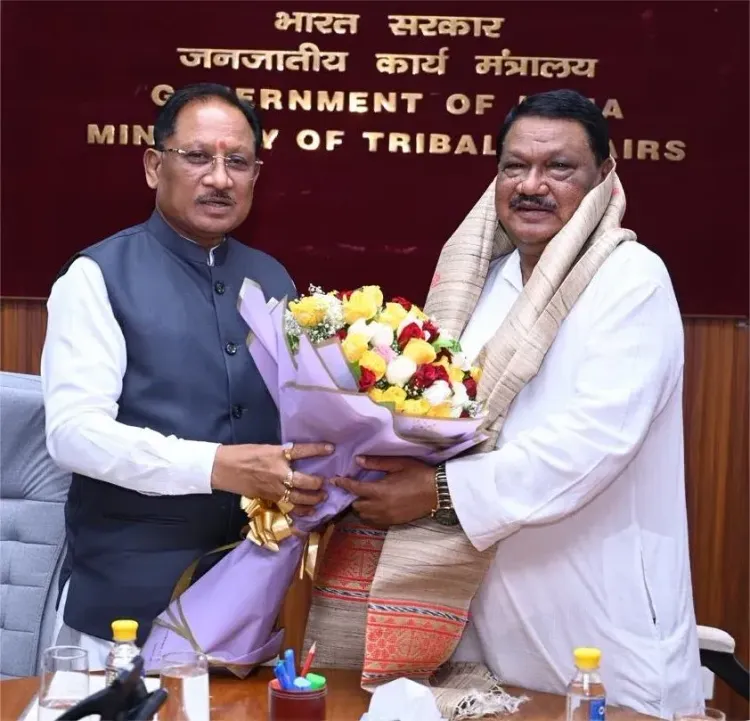
Chhattisgarh CM Vishnu Deo Sai met Union Tribal Affairs Minister Jual Oram in New Delhi on July 31 to seek special financial assistance under Dharati Aaba Gram Utkarsh Yojana for electrifying 461 remote, formerly Naxal-affected Bastar villages. Oram signalled a positive response and committed to advancing the approval process.
Key Takeaways
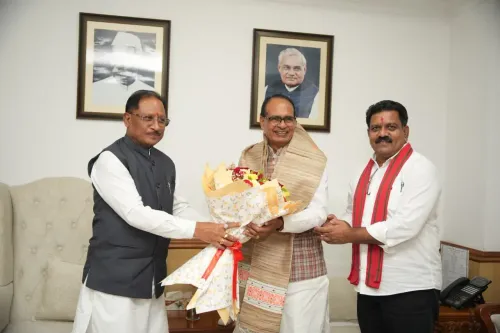
CM Vishnu Deo Sai met Union Minister Jual Oram in New Delhi on July 31, 2026 to discuss electrification funding for Bastar.
The proposal covers 461 remote and formerly Naxal-affected villages in the Bastar division of Chhattisgarh.
Funding is sought under the Dharati Aaba Gram Utkarsh Yojana , a Ministry of Tribal Affairs scheme for remote tribal settlements.
Union Minister Oram expressed a positive stance and said he would advance the formal approval process.
Electrification is expected to unlock access to education, healthcare, livelihoods, and local employment for tribal families in the region.
The push follows a broader pattern of post-security-stabilisation infrastructure investment in former Left Wing Extremism -affected zones.
Electricity has never reached some of Bastar's remotest corners — not because the grid couldn't get there, but because decades of Naxal violence made it impossible to try. Chhattisgarh Chief Minister Vishnu Deo Sai traveled to New Delhi on Friday, July 31, 2026, to change that, meeting Union Tribal Affairs Minister Jual Oram to push for special financial assistance that would bring power to 461 remote and formerly Naxal-affected villages in the Bastar division under the Dharati Aaba Gram Utkarsh Yojana.
The 461 villages left behind by every previous push
These are not villages that slipped through administrative cracks. They were deliberately left out — because sending linemen and laying cables into active conflict zones was a risk no utility could take. Now, with security conditions having improved across much of Bastar, the state government is making its move. CM Sai described the meeting as a 'sarthak charcha' (meaningful discussion), and said Oram expressed a 'positive stance' on the proposal and committed to advancing the approval process.
The scheme at the centre of the push, Dharati Aaba Gram Utkarsh Yojana, is a Ministry of Tribal Affairs initiative designed specifically for the upliftment of remote tribal settlements. It provides a funding channel distinct from mainstream rural electrification programmes — critical for villages that standard schemes like Deen Dayal Upadhyaya Gram Jyoti Yojana (launched 2015) and Saubhagya (launched 2017) never fully reached.
Why electrification is the unlock for everything else
A power connection is rarely just about light. In tribal Bastar, it is the precondition for a functional health sub-centre, a school that can run after dark, a cold chain for vaccines, a mobile-charging point that keeps a family connected. CM Sai made this explicit, noting that electricity in these villages would create new opportunities in education, health, livelihoods, and local employment — and give fresh momentum to what he called Bastar's development journey, one now moving forward 'with peace and trust.'
That framing matters. Successive central and state governments have treated electrification as the first confidence-building measure after security stabilisation in Left Wing Extremism-affected zones — a signal to communities that the state intends to stay, and to serve. The post-Naxal infrastructure push in Bastar follows exactly this playbook.
What the approval process looks like from here
Oram's positive signal is encouraging, but it is not a sanction. The formal approval, fund release, tendering by the state power utility, and physical execution across deeply forested, difficult terrain still lie ahead. The Bastar division spans seven districts and some of India's most challenging geography — progress will be measured in months, not weeks. The number to watch: how many of the 461 villages receive energisation before the next state election cycle.
For tribal families who have run their lives by firelight while the rest of the country streamed video on smartphones, the wait has already been long enough.
Point of View
Not just infrastructure. This keeps the Centre's tribal affairs ministry invested and creates a distinct accountability trail. Oram's positive signal also underlines how BJP-governed states and the Centre are coordinating to demonstrate governance dividends in regions once written off as ungovernable. The real test, however, is execution — Bastar's terrain and institutional capacity have defeated ambitious timelines before.
NationPress
1 Aug 2026
Frequently Asked Questions
What is the Dharati Aaba Gram Utkarsh Yojana?
The Dharati Aaba Gram Utkarsh Yojana is a Ministry of Tribal Affairs initiative aimed at the holistic upliftment of remote tribal villages, providing a dedicated funding channel for basic infrastructure including electrification in areas not fully covered by mainstream rural schemes.
Which villages in Bastar will get electricity under this proposal?
The proposal targets 461 remote and formerly Naxal-affected villages in the Bastar division of southern Chhattisgarh that have remained without reliable electricity due to decades of conflict and difficult terrain.
What did Union Minister Jual Oram say about the Bastar electrification request?
Jual Oram, the Union Minister of Tribal Affairs, expressed a positive stance on the proposal during his meeting with CM Vishnu Deo Sai on July 31, 2026, and said he would advance the formal approval process.
Why were these Bastar villages not electrified earlier?
Prolonged Naxal violence made it dangerous and logistically impossible to extend power infrastructure into these remote areas. Improved security conditions in recent years have now opened a window for electrification.
What benefits will electricity bring to tribal families in Bastar?
Electrification is expected to enable functional schools and health centres, support livelihoods and local employment, and integrate these villages into the development mainstream — acting as a foundation for broader welfare improvements.