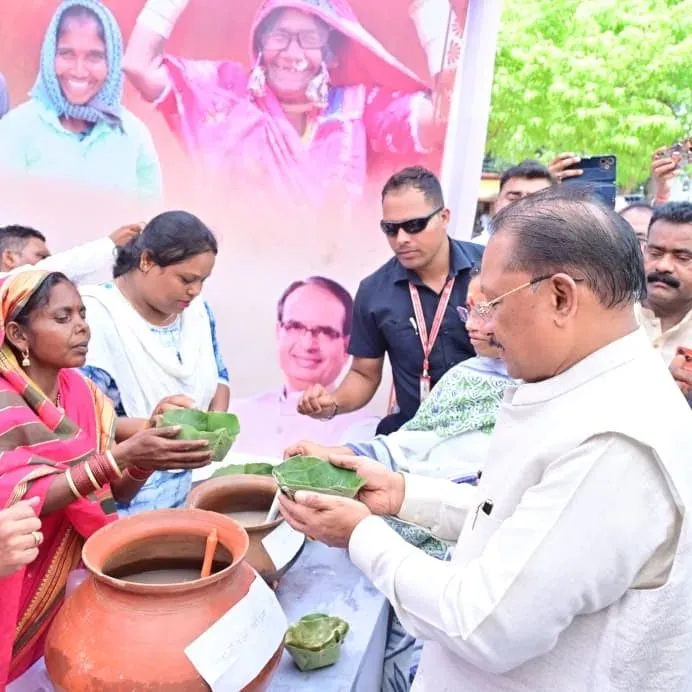
CM Sai Savours Madia Pej at Sushasan Tihar in Kondagaon
Synopsis
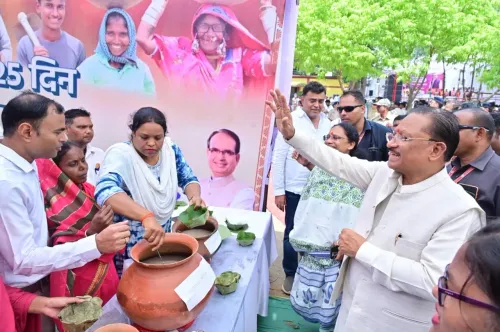
Chhattisgarh CM Vishnu Deo Sai attended Sushasan Tihar 2026 in Kondagaon and publicly savoured Madia Pej — a traditional Bastar finger-millet drink — made by Lakhpati Didis, spotlighting tribal women's SHG-linked livelihoods and cultural heritage in one of India's most economically marginalised regions.
Key Takeaways
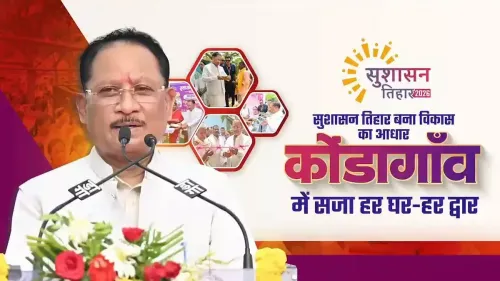
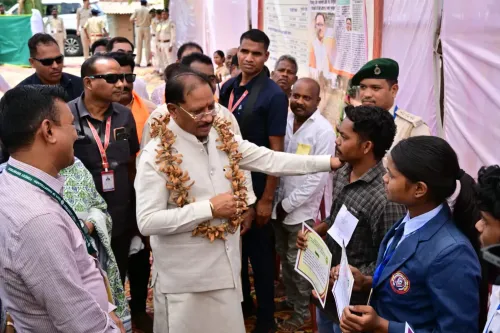
CM Vishnu Deo Sai attended Sushasan Tihar 2026 at village Badekaner, Kondagaon district on 1 June 2026 .
Madia Pej , a traditional finger-millet cooling drink, was prepared and served by Lakhpati Didis — women SHG members.
The Lakhpati Didi initiative targets annual household incomes of at least one lakh rupees for women SHG members.
Sushasan Tihar has been Chhattisgarh's district-level welfare outreach programme since 2024 , focusing on last-mile scheme delivery.
The state is positioning traditional Bastar tribal products as livelihood and self-reliance vehicles for tribal women.
Bastar division , despite mineral wealth, remains among Chhattisgarh's most economically backward regions, making women-led enterprise a key policy focus.
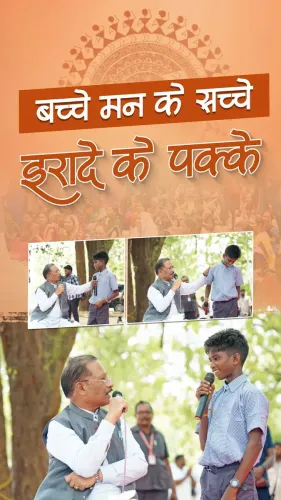
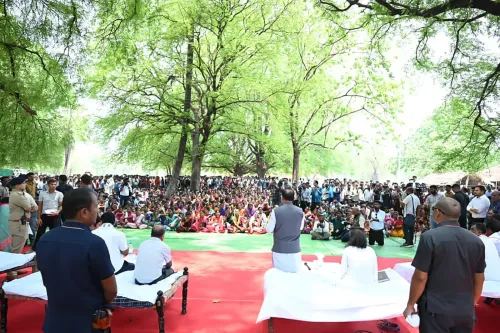
Chhattisgarh Chief Minister Vishnu Deo Sai on Monday, 1 June 2026, sampled Madia Pej — a traditional finger-millet cooling drink — prepared by Lakhpati Didis during the Sushasan Tihar outreach event at village Badekaner, Kondagaon district in the Bastar division.
Context
Posting on X, CM Sai described the experience in Hindi: 'Madia Pej ki har ghunt mein Bastar ki mitti ki sondhi mahak, janjatiya sanskriti ki samridh virasat aur Lakhpati Didiyon ki aatmiyata ka ehsaas hua' — ('Every sip of Madia Pej carried the earthy fragrance of Bastar's soil, the rich heritage of tribal culture, and the warmth of the Lakhpati Didis.'). He added that no modern beverage could match the cooling effect and taste of Bastar's Madia Pej.
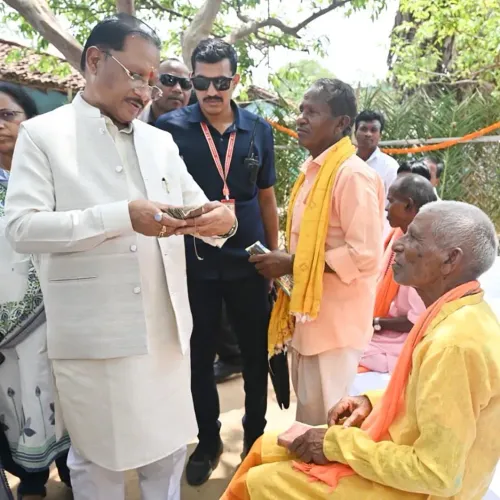
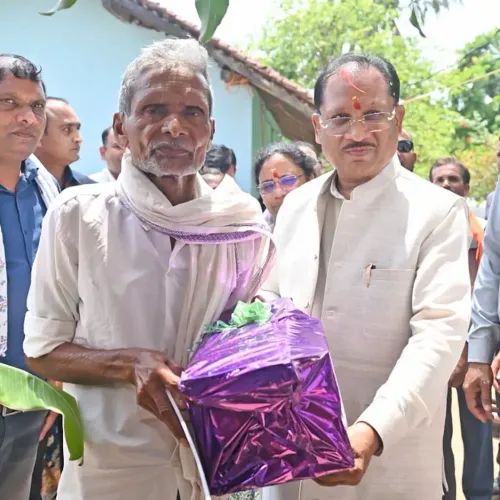
The visit was part of the Sushasan Tihar 2026 programme, a district-level government outreach drive that Chhattisgarh has run since 2024 to improve last-mile delivery of welfare schemes, conduct grievance redressal, and facilitate direct public interaction at the village level.
Policy Backdrop
The Lakhpati Didi initiative — scaled nationally from 2023 onward by the Ministry of Rural Development — aims to support women members of self-help groups (SHGs) in crossing an annual household income threshold of at least one lakh rupees through sustainable livelihood activities. Chhattisgarh has aligned this national programme with local tribal knowledge systems, including the promotion of traditional foods and beverages from the Bastar region.
Madia Pej is a fermented or cooked drink prepared from mandiya (finger millet), a staple grain of Bastar's tribal communities. It has long been consumed as a natural coolant and energy drink, particularly during summer months. By channelling its production through SHG networks, the state government is attempting to convert cultural heritage into a structured income source for tribal women.
Stakeholders and Impact
The primary beneficiaries are tribal women in Kondagaon and the wider Bastar division — one of Chhattisgarh's most economically backward yet culturally rich regions. Under the Lakhpati Didi framework, these women are producing and selling traditional products, using government support for training, marketing linkages, and access to rural livelihood missions.
State governments across central India have increasingly linked SHG networks with the promotion of region-specific traditional products to generate local employment. CM Sai's post explicitly framed the Lakhpati Didis as presenting 'a powerful image of the new Chhattisgarh' — signalling that the state intends to use cultural branding alongside income-generation goals. Bastar, despite its mineral wealth, has historically recorded high poverty and displacement indicators, making women-led economic activity a political as well as developmental priority.
What's Next
Attention will now turn to whether Madia Pej and similar Bastar tribal products receive dedicated support under state marketing federations or fresh budgetary allocations for SHG value chains in the next Chhattisgarh assembly session. The Sushasan Tihar 2026 programme is expected to continue across other districts, with traditional product promotion likely to remain a visible component of the government's grassroots outreach.
The broader trajectory — linking tribal women's SHGs to cultural-product markets — will be watched as a test of whether state-level implementation can translate national Lakhpati Didi targets into durable income gains for Bastar's communities.
Point of View
Visibilises the Lakhpati Didi programme, and reinforces the BJP government's 'good governance' narrative in a region historically associated with conflict and underdevelopment. The gesture fits a broader pattern in which ruling parties at the state level use SHG success stories as proof-of-concept for national rural development missions, particularly ahead of assembly cycles. For Bastar — long defined in public discourse by its security challenges — the framing of tribal women as economic entrepreneurs represents a deliberate rebranding effort. Whether the optics translate into measurable income gains for SHG members will determine the initiative's long-term political and developmental credibility.
NationPress
19 Sept 2026
Frequently Asked Questions
What is Madia Pej and why is it significant in Bastar?
Madia Pej is a traditional cooling drink made from finger millet, locally called mandiya, by tribal communities in Bastar, Chhattisgarh. It has been consumed for generations as a natural coolant and energy drink, and is now being promoted as a livelihood product by women self-help groups.
What is Sushasan Tihar in Chhattisgarh?
Sushasan Tihar is a Chhattisgarh government outreach programme launched in 2024 that brings officials to villages for grievance redressal, scheme delivery, and direct public interaction, aiming to improve last-mile governance.
Who are Lakhpati Didis and what is their role?
Lakhpati Didis are women members of rural self-help groups (SHGs) supported under a national programme scaled from 2023, with the goal of helping each member household earn at least one lakh rupees annually through livelihood activities such as producing traditional foods and beverages.
Where is Kondagaon district located?
Kondagaon is a district in the Bastar division of southern Chhattisgarh, characterised by a significant tribal population and rich traditions of millet-based food and drink.
What did CM Vishnu Deo Sai say about Madia Pej at Sushasan Tihar 2026?
CM Sai said that every sip of Madia Pej carried the earthy fragrance of Bastar's soil, the rich heritage of tribal culture, and the warmth of the Lakhpati Didis, adding that no modern beverage could match its taste and cooling effect.