CM Sai Welcomes Rabi MSP Hike for 2027-28, Thanks PM Modi
Synopsis
The Union Cabinet under PM Narendra Modi approved higher MSPs for rabi crops including wheat, mustard, gram, lentil, and barley for marketing year 2027-28. Chhattisgarh CM Vishnu Deo Sai welcomed the decision, calling it a landmark move for farmers and crop diversification.
Key Takeaways
The Union Cabinet approved revised Minimum Support Prices for rabi crops for marketing year 2027-28 on 30 September 2026 .
Crops covered include wheat, mustard (sarson), gram (chana), lentil (masoor), and barley (jau) .
Chhattisgarh CM Vishnu Deo Sai welcomed the decision and thanked PM Narendra Modi on behalf of the state's residents.
Higher MSPs for pulses and oilseeds are expected to incentivise crop diversification away from the rice-wheat monoculture.
The revision aligns with the 2018 central government commitment to fix MSP at a minimum of 1.5 times the cost of production .
Actual farmer benefit will depend on state-level procurement operations during the 2027-28 rabi marketing season.
Every rabi season, millions of Indian farmers make a quiet bet — planting wheat, mustard, gram, lentils, and barley months before they know what the market will pay. On Wednesday, 30 September 2026, the Union Cabinet under Prime Minister Narendra Modi moved to reduce that uncertainty, approving higher Minimum Support Prices (MSP) for rabi crops for marketing year 2027-28 — and Chhattisgarh Chief Minister Vishnu Deo Sai was quick to welcome the decision on behalf of the state's farming communities.
What the Cabinet Decided — and Why It Matters to Chhattisgarh
CM Sai's post, written in Hindi, described the MSP revision as 'annadata ke hit mein ek mahatvapurn nirnay' — 'an important decision in the interest of the food-providers.' He specifically named wheat, mustard, gram (chana), lentil (masoor), and barley (jau) as crops that will fetch better prices for farmers across the country, including those in Chhattisgarh.
The Minimum Support Price is the government-guaranteed floor price below which the state will not allow farmers' produce to be bought — a critical safety net in a market where commodity prices can swing sharply. Annual revisions are recommended by the Commission for Agricultural Costs and Prices (CACP) and then cleared by the cabinet, making each hike a formal policy commitment rather than an administrative tweak.
The Pulse and Oilseed Angle: Diversification as a National Goal
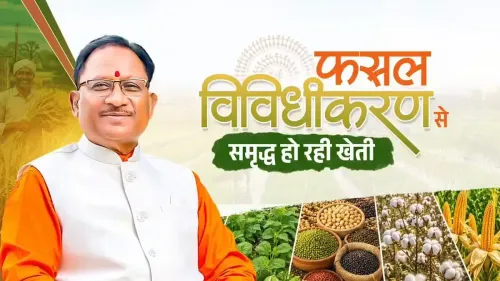
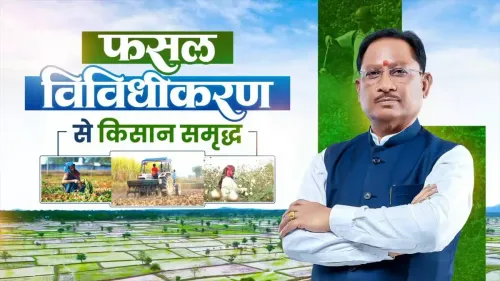
CM Sai's post went beyond the headline numbers to flag a structural objective: better support prices for pulses and oilseeds are expected to push farmers toward crop diversification, moving away from the dominant rice-wheat cycle. This is not a new ambition — successive governments have used rabi MSP hikes as a lever to reduce India's heavy dependence on imported edible oils and pulses.
The logic is straightforward. If growing mustard or lentils is as financially rewarding as growing wheat, more farmers will do it. That shifts acreage, improves soil health through rotation, and chips away at an import bill that runs into tens of thousands of crores annually. The 2018 central government commitment to fix MSP at a minimum of 1.5 times the cost of production for all mandated crops gave this diversification push a firm numerical anchor.
Sai's Message to Chhattisgarh's Farmers
The Chief Minister closed his post with an expression of gratitude to Prime Minister Modi on behalf of all residents of Chhattisgarh — 'samast Chhattisgarhvasiyon ki or se aadarniya Pradhanmantri ji ka hriday se aabhar evam dhanyavad' — 'heartfelt gratitude and thanks to the respected Prime Minister from all people of Chhattisgarh.' The framing positions the MSP revision as a direct benefit flowing from the Centre to the state's agrarian base, reinforcing the BJP government's farmer-welfare narrative ahead of the rabi sowing season.
The real test will come during the 2027-28 rabi marketing season, when state procurement machinery will need to operationalise the higher prices on the ground — and when actual market arrivals will determine whether farmers in Chhattisgarh and beyond can capture the full benefit of the revised floor.
Point of View
The Cabinet is also nudging the agricultural economy toward a structural goal — reducing import dependence — that has remained elusive for decades. The real policy test, however, is always procurement: an announced MSP only delivers if state agencies actually buy at that price. Chhattisgarh's follow-through on ground-level procurement will be the measure that matters most to the farmers CM Sai is speaking for.
NationPress
1 Oct 2026
Frequently Asked Questions
What is MSP and why does it matter to Indian farmers?
MSP, or Minimum Support Price, is the government-guaranteed floor price at which the state commits to purchase farmers' produce, protecting them from sharp market price drops. It is a critical income safety net for millions of cultivators across India.
Which rabi crops got an MSP hike for 2027-28?
The Union Cabinet approved MSP increases for wheat, mustard, gram (chana), lentil (masoor), and barley (jau) for marketing year 2027-28, according to CM Vishnu Deo Sai's post.
How does a higher MSP for pulses and oilseeds help with crop diversification?
When pulses and oilseeds offer financially competitive returns compared to wheat or rice, more farmers shift acreage to these crops. This reduces India's dependence on imported edible oils and pulses while also improving soil health through crop rotation.
What is the government's benchmark for fixing MSP?
Since 2018, the central government has committed to fixing MSP at a minimum of 1.5 times the cost of production for all mandated crops, as recommended by the Commission for Agricultural Costs and Prices (CACP).
Will Chhattisgarh farmers directly benefit from the rabi MSP hike?
Yes, CM Vishnu Deo Sai explicitly stated that farmers in Chhattisgarh, along with those across the country, will receive better prices for their produce. Actual benefit depends on state procurement operations during the 2027-28 rabi marketing season.