CM Saini Chairs Gurugram Grievance Meet, Directs Officials
Synopsis
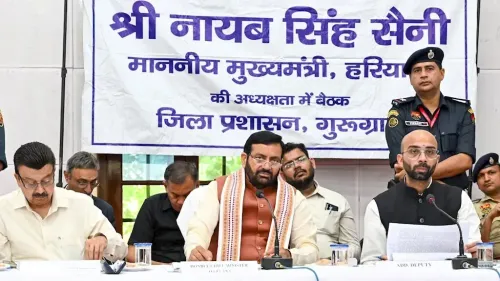
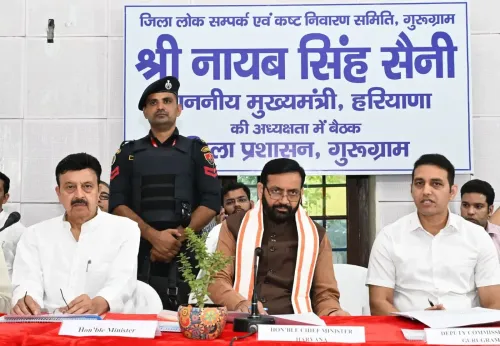
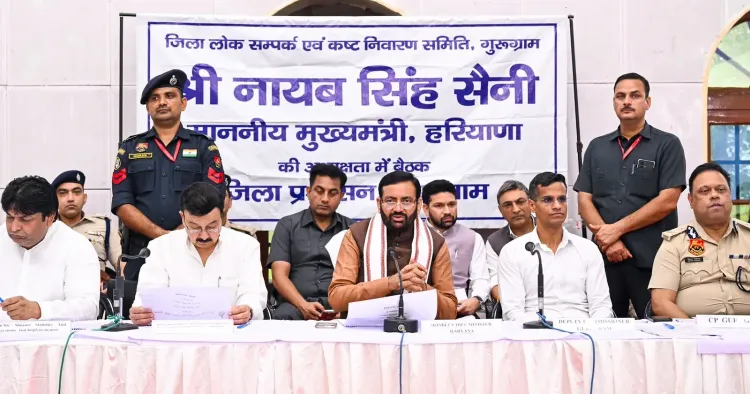
Haryana Chief Minister Nayab Singh Saini attended the District Public Contact and Grievance Redressal Committee meeting in Gurugram on 25 July 2026, listening to citizens' complaints and directing officials to ensure effective, transparent, and time-bound resolution of all grievances.
Key Takeaways
CM Nayab Singh Saini chaired the District Public Contact and Grievance Redressal Committee meeting in Gurugram on 25 July 2026 .
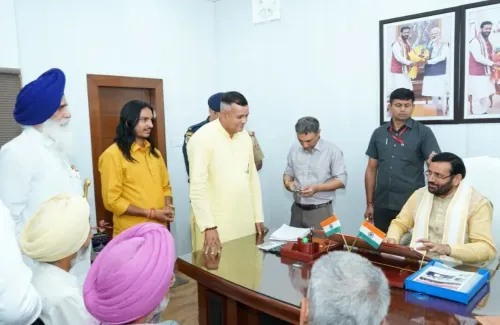
Citizens' complaints and suggestions on various public interest issues were heard and deliberated upon during the session.
Relevant district officials were issued directives for 'effective, transparent and time-bound' resolution of all grievances received.
The District Public Contact and Grievance Redressal Committee is a structured mechanism introduced in Haryana after 2014 to improve direct citizen-administration contact.
Gurugram , as a rapidly urbanising corporate hub, faces distinct civic challenges that such district-level outreach aims to address.
Follow-up on complaint resolution rates and future district meetings will be key indicators of the programme's effectiveness.
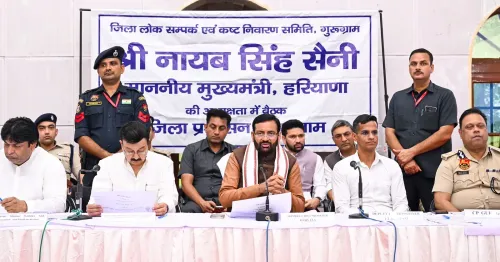
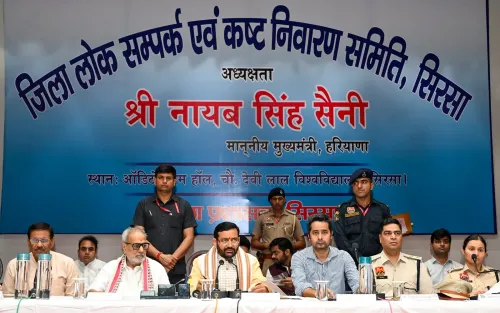
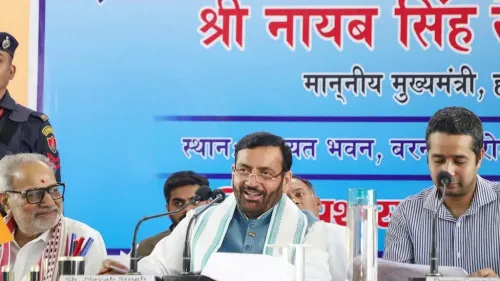
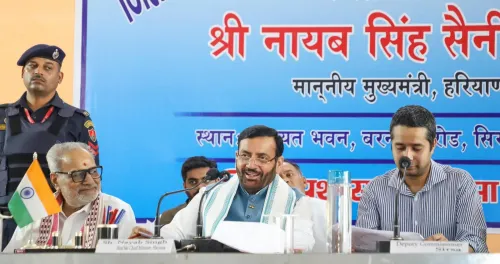
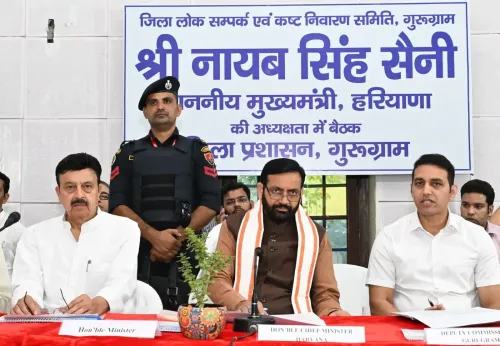
Haryana Chief Minister Nayab Singh Saini on Saturday, 25 July 2026, attended the District Public Contact and Grievance Redressal Committee meeting held in Gurugram, where he heard citizens' complaints and suggestions and issued directives to officials for their effective, transparent, and time-bound resolution.
Context
Posting on X after the meeting, CM Saini wrote: 'आज गुरुग्राम में आयोजित जिला लोक संपर्क एवं कष्ट निवारण समिति की बैठक में शामिल हुआ' ('Today I participated in the District Public Contact and Grievance Redressal Committee meeting held in Gurugram'). He added that complaints and suggestions received from the people of the state were heard seriously and detailed deliberations were held on various issues of public interest.
The Chief Minister stated that relevant officials were given necessary instructions to ensure 'effective, transparent and time-bound resolution' of all grievances and suggestions received. He described addressing every citizen's problems with sensitivity and on a priority basis as 'our highest responsibility.'
Policy Backdrop
The District Public Contact and Grievance Redressal Committee is a structured district-level mechanism established by the Haryana government to facilitate direct contact between citizens and the administration. Such committees gained formal momentum after 2014 as part of administrative reforms aimed at improving accountability at the grassroots level.
Gurugram, a major corporate and urban hub in Haryana, faces a distinct set of public service challenges driven by rapid urbanisation — from infrastructure gaps to civic amenity shortfalls. Holding a grievance redressal meeting in the district signals an intent to address localised urban concerns directly rather than routing them solely through centralised digital portals.
Across BJP-ruled states, district-level public contact programmes have been a recurring feature of governance outreach, building on earlier e-governance initiatives and reflecting a broader emphasis on responsive, decentralised administration.
Stakeholders and Impact
The primary beneficiaries of such meetings are Haryana residents who bring forward complaints spanning civic infrastructure, land records, welfare scheme access, and local administrative disputes. District officials receive direct mandates from the Chief Minister, which typically accelerates follow-up action compared with routine departmental channels.
For Gurugram's rapidly growing population — which includes both long-term residents and a large migrant workforce — accessible grievance redressal at the district level can address gaps that digital-only systems sometimes leave unresolved for citizens with limited internet access or literacy.
What's Next
Attention will now turn to the resolution rate of complaints raised at the Gurugram meeting and whether similar sessions are scheduled across other Haryana districts. The effectiveness of such committees is ultimately measured not by the meetings themselves but by the documented follow-through on directives issued to officials — a metric the government will be expected to demonstrate publicly.
Point of View
District-level public outreach as a governance brand — a pattern consistent across BJP-ruled states since 2014. Holding such a session in Gurugram, Haryana's most high-profile urban district, carries symbolic weight beyond routine administration, signalling that the government is attentive to urban as well as rural grievances. The real test, however, lies in verifiable follow-through: resolution rates and time-to-closure data will determine whether these meetings translate into tangible administrative accountability or remain primarily a public-contact exercise.
NationPress
25 Jul 2026
Frequently Asked Questions
What is the District Public Contact and Grievance Redressal Committee in Haryana?
It is a district-level body in Haryana where citizens can directly present their complaints and suggestions to senior officials and the Chief Minister, who then issue directives for time-bound resolution. The mechanism was formalised as part of administrative reforms in Haryana after 2014.
Why did CM Nayab Singh Saini visit Gurugram on 25 July 2026?
CM Saini attended the District Public Contact and Grievance Redressal Committee meeting in Gurugram to hear citizens' complaints, discuss public interest issues, and direct officials to resolve grievances in an effective, transparent, and time-bound manner.
What directives did CM Saini issue at the Gurugram grievance meeting?
CM Saini instructed the relevant district officials to ensure effective, transparent, and time-bound resolution of all complaints and suggestions received from citizens at the meeting.
Who is Nayab Singh Saini?
Nayab Singh Saini is the Chief Minister of Haryana and a BJP leader who assumed office in March 2024, succeeding Manohar Lal Khattar.
How does Haryana's district grievance redressal system work?
Under the system, district-level committees hold periodic meetings where citizens present grievances and suggestions directly. Senior officials, including the Chief Minister, hear these complaints and issue directives to the concerned departments for resolution, aiming to bypass bureaucratic delays.