Puri Highlights Deepwater Energy Push via ONGC, SamudraManthan
Synopsis
Union Petroleum Minister Hardeep Singh Puri flagged India's deepwater and offshore energy agenda on X, invoking #SamudraManthan and #ONGC. The post underscores the government's sustained push to reduce crude import dependence exceeding 80 percent by accelerating domestic hydrocarbon exploration in frontier maritime basins.
Key Takeaways
Hardeep Singh Puri , Union Minister of Petroleum and Natural Gas, posted on 25 July 2026 highlighting deepwater and offshore energy under hashtags including #SamudraManthan and #ONGC .
India imports over 80 percent of its crude oil, making domestic offshore production a strategic national priority.
ONGC , India's largest public sector oil and gas company, is the principal operator in deepwater basins such as Krishna-Godavari and Mumbai High .
The Hydrocarbon Exploration and Licensing Policy (HELP) , introduced in 2016 , simplified licensing to encourage deepwater and offshore exploration.
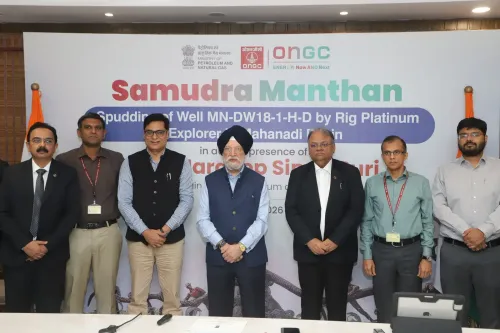
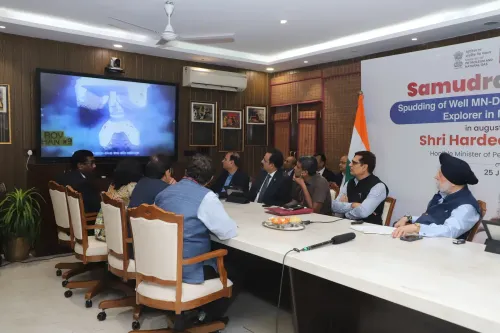
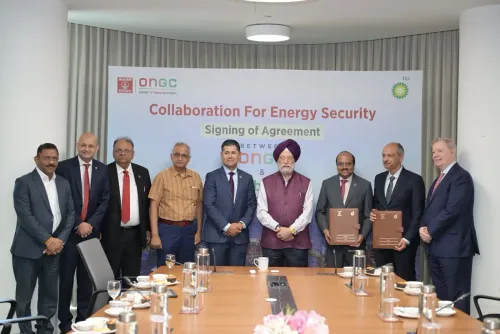
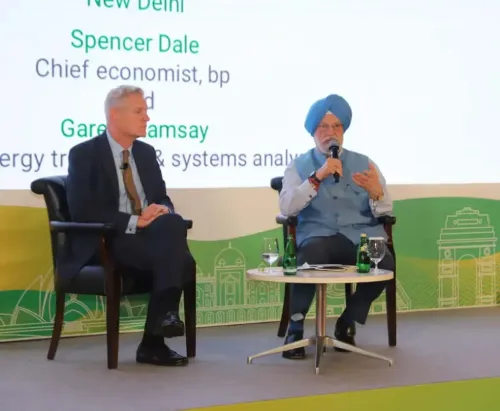
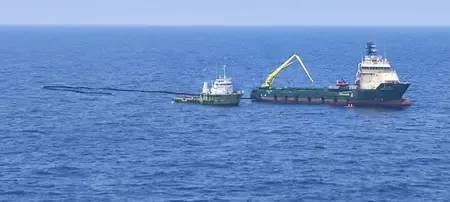
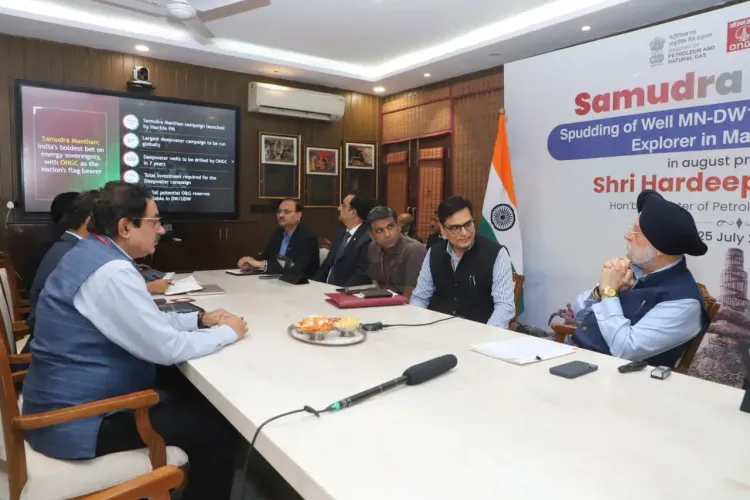
The post was accompanied by four images , suggesting a visual update tied to an offshore operation or industry event.
Upcoming offshore licensing rounds and new deepwater production announcements from ONGC are the key developments to watch.
Union Petroleum Minister Hardeep Singh Puri on Saturday, 25 July 2026, shared a post on X referencing deepwater and offshore energy exploration, tagging hashtags including #SamudraManthan, #DeepWater, #Offshore, #Energy, and #ONGC, drawing attention to India's ongoing push to expand hydrocarbon production from its maritime basins.
Context
The post, though brief in text, carries significant signalling weight given Puri's role as the minister overseeing India's petroleum sector. The hashtag #SamudraManthan — a Sanskrit term meaning 'churning of the ocean' — is widely used in policy and industry circles to reference deepwater hydrocarbon exploration efforts, evoking the mythological act of extracting treasures from the sea. Its pairing with #ONGC directly links the message to Oil and Natural Gas Corporation, India's largest public sector exploration and production company.
The post was accompanied by four images, suggesting a visual update related to an offshore or deepwater operation, site visit, or industry event, though the specific content of those images has not been independently detailed here.
Policy Backdrop
India imports more than 80 percent of its crude oil requirements, making domestic offshore and deepwater production a strategic priority for successive governments. The Hydrocarbon Exploration and Licensing Policy (HELP), introduced in 2016, was designed to simplify licensing frameworks and incentivise exploration in frontier and deepwater acreages.
ONGC has been the primary vehicle for this ambition, operating in prolific basins such as Krishna-Godavari and Mumbai High. Deepwater blocks in these basins hold substantial estimated reserves, and accelerating their development is central to the Ministry of Petroleum and Natural Gas's energy security agenda under Puri's stewardship.
Stakeholders and Impact
The most direct stakeholder is ONGC itself, whose capital expenditure cycles and production targets are closely watched by both the government and energy markets. Successful deepwater development would reduce India's exposure to global crude price volatility, which has periodically strained the current account and fuel subsidy frameworks.
Petroleum explorers and private sector partners eyeing upcoming offshore licensing rounds also stand to benefit from sustained ministerial attention to the deepwater segment. For energy importers and refiners, any meaningful uptick in domestic offshore output would ease procurement pressures over the medium term.
What's Next
Attention will now turn to the outcomes of upcoming offshore licensing rounds and any formal production announcements from ONGC's deepwater fields. The ministry has consistently signalled intent to expand the acreage under active exploration, and Puri's post may foreshadow a policy announcement, a field milestone, or a stakeholder engagement on deepwater energy in the near term.
As India works toward greater energy self-reliance, the deepwater frontier remains one of the most consequential — and capital-intensive — arenas in the country's hydrocarbon story.
Point of View
Using the evocative term 'SamudraManthan' to frame deepwater exploration as a civilisational and strategic mission rather than mere industrial activity. It fits a pattern where the petroleum ministry has consistently used social media to build public and investor awareness around energy security narratives ahead of licensing rounds or policy announcements. With India's crude import bill remaining a persistent macroeconomic vulnerability, any credible push on domestic offshore output carries both economic and electoral resonance for the ruling dispensation. The linkage to ONGC also reinforces the public sector's central role in what the government positions as a sovereign energy mission.
NationPress
25 Jul 2026
Frequently Asked Questions
What is #SamudraManthan in the context of India's energy policy?
'SamudraManthan' literally means 'churning of the ocean' in Sanskrit and is used in India's energy policy discourse to refer to deepwater and offshore hydrocarbon exploration efforts, symbolising the extraction of resources from the sea.
What is ONGC's role in India's deepwater exploration?
ONGC (Oil and Natural Gas Corporation) is India's largest public sector oil and gas company and the primary operator in deepwater basins such as Krishna-Godavari and Mumbai High , leading the country's offshore hydrocarbon production efforts.
Why is deepwater energy exploration important for India?
India imports more than 80 percent of its crude oil, making it highly vulnerable to global price swings. Expanding domestic deepwater production is a key strategy to reduce this import dependence and strengthen energy security.
What is the Hydrocarbon Exploration and Licensing Policy (HELP)?
The Hydrocarbon Exploration and Licensing Policy (HELP) was introduced in 2016 to simplify the licensing process for oil and gas blocks and encourage investment in deepwater and frontier acreages in India.
What did Petroleum Minister Hardeep Singh Puri post about on 25 July 2026?
Hardeep Singh Puri posted on X on 25 July 2026 referencing deepwater and offshore energy exploration using hashtags including #SamudraManthan , #DeepWater , #Offshore , #Energy , and #ONGC , accompanied by four images.