CM Saini Marks 12 Years of Health Reforms Under Modi

Synopsis
Haryana CM Nayab Singh Saini marked 12 years of post-2014 health reforms under PM Modi, highlighting Ayushman Bharat, digital health missions and the Viksit Bharat vision as pillars of India's transformation into a healthier, more self-reliant nation.
Key Takeaways
Haryana CM Nayab Singh Saini on 14 June 2026 posted a tribute to 12 years of health sector reforms under PM Narendra Modi .
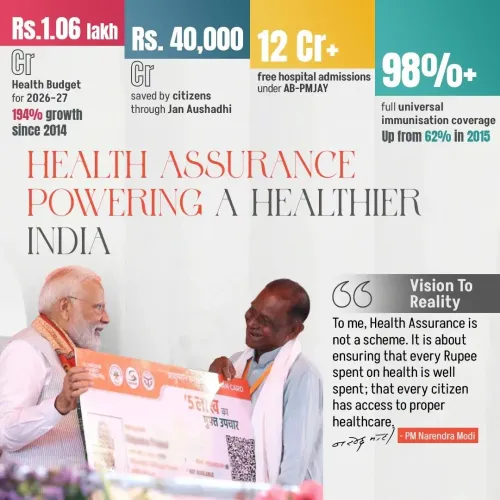
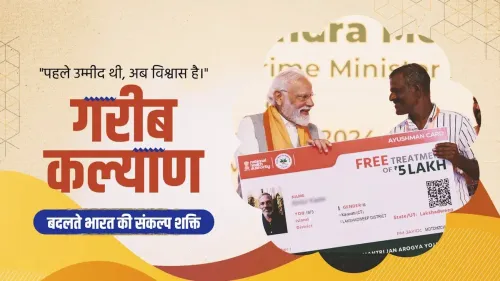
PM-JAY provides annual health cover of up to ₹5 lakh to over 10 crore economically vulnerable families.
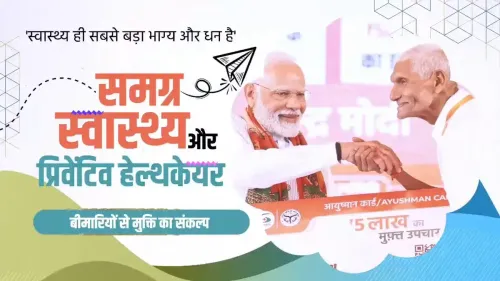
Ayushman Bharat Health and Wellness Centres deliver free primary care, diagnostics and preventive services at the community level.
The Ayushman Bharat Digital Mission (from 2020 ) creates unique health IDs and electronic records to integrate care pathways.
The Swachh Bharat Mission (from October 2014 ) links sanitation improvements directly to public health outcomes.
Saini connected the health agenda to the Viksit Bharat goal of making India a developed nation by 2047 .
Haryana Chief Minister Nayab Singh Saini on Sunday, 14 June 2026 highlighted India's health sector transformation since 2014, crediting Prime Minister Narendra Modi's leadership for delivering accessible healthcare to crores of citizens through flagship schemes and digital innovation.
Context
Saini's post, tagged #12YearsOfSwasthBharat (12 Years of Healthy India), frames the period from 2014 to 2026 as a decisive shift in India's public health approach. He describes the journey as one built on 'janakendrit sudhar, takniki navachan aur vyapak vistar' — people-centred reforms, technological innovation and broad expansion — that together reoriented the country's healthcare delivery model.
The post specifically names Ayushman Bharat, digital health services, infrastructure expansion and welfare initiatives as the pillars of this transformation, asserting that they have carried better and more accessible health facilities to millions who were previously underserved.
Policy Backdrop
The Ayushman Bharat programme, formally launched on 23 September 2018, operates on two tracks. The Pradhan Mantri Jan Arogya Yojana (PM-JAY) provides annual health cover of up to ₹5 lakh to over 10 crore economically vulnerable families, covering secondary and tertiary hospitalisation costs. The Ayushman Bharat Health and Wellness Centres (AB-HWCs) upgrade sub-health centres to deliver free primary care, diagnostics and preventive services in rural and urban areas alike.
The digital layer — the Ayushman Bharat Digital Mission, rolled out from 2020 — creates unique health IDs and electronic health records, aiming to knit together fragmented care pathways. This supply-side and demand-side combination reflects the architecture laid out in the National Health Policy 2017, which set universal health coverage as a national target. The Swachh Bharat Mission, begun in October 2014, runs in parallel, linking improved sanitation directly to downstream health outcomes.
Saini's post also invokes the #ViksitBharat (Developed India) vision — the government's official goal of making India a developed nation by 2047 — positioning health outcomes as a core pillar of that long-term ambition.
Stakeholders and Impact
The primary beneficiaries of PM-JAY are economically weaker sections who lack private insurance and face catastrophic out-of-pocket expenditure during hospitalisation. Rural primary-care users are the target population for AB-HWCs, which are designed to reduce unnecessary referrals to district hospitals by resolving common conditions at the community level.
State health departments, including Haryana's, bear co-financing and implementation responsibilities. Coverage and utilisation rates vary across states depending on administrative capacity, digital readiness and awareness campaigns — factors that make state-level political messaging around these schemes particularly significant.
Saini's statement also underscores preventive health, nutrition and quality treatment as areas of focused effort, reflecting a broader government argument that health is an enabler of human capital and economic productivity, not merely a welfare cost.
What's Next
Analysts will watch National Health Authority utilisation reports for PM-JAY and AB-HWC coverage data to assess whether the scheme's reach matches the political narrative. Any fresh allocations for digital health infrastructure in the forthcoming Union Budget will be a key indicator of the Centre's commitment to sustaining this expansion. For Haryana, Saini's public alignment with the #12YearsOfSwasthBharat campaign signals continued state-level advocacy for centrally sponsored health schemes as a governance deliverable ahead of future electoral cycles.
Point of View
The messaging ties welfare delivery to a long-arc development narrative, making health a BJP electoral asset rather than a standalone administrative report. As a state chief minister whose party governs Haryana, Saini's endorsement also signals that states are being mobilised to co-own the Centre's health record. The real test of this narrative lies in granular utilisation data from the National Health Authority, which will reveal whether scheme reach matches the scale being claimed.
NationPress
25 Sept 2026
Frequently Asked Questions
What is the #12YearsOfSwasthBharat campaign?
It is a political and communications campaign marking 12 years of health sector reforms under PM Narendra Modi since 2014, highlighting schemes like Ayushman Bharat, digital health missions and sanitation drives.
What does Ayushman Bharat PM-JAY offer?
PM-JAY provides annual health insurance cover of up to ₹5 lakh per family to over 10 crore economically vulnerable households in India, covering secondary and tertiary hospitalisation expenses.
What are Ayushman Bharat Health and Wellness Centres?
These are upgraded sub-health centres that provide free primary care, diagnostics and preventive health services at the community level, reducing the burden on district and referral hospitals.
What is the Viksit Bharat vision mentioned by CM Saini?
Viksit Bharat is the Indian government's official goal to make India a developed nation by 2047, with improved health outcomes listed as one of its core pillars.
What is the Ayushman Bharat Digital Mission?
Launched in 2020, it is a digital public infrastructure initiative that creates unique health IDs and electronic health records for citizens, aiming to integrate fragmented healthcare pathways across India.