CM Sai's Office Hails Sushasan Tihar as Key Governance Bridge
Synopsis
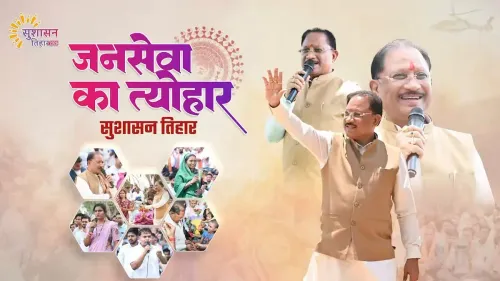
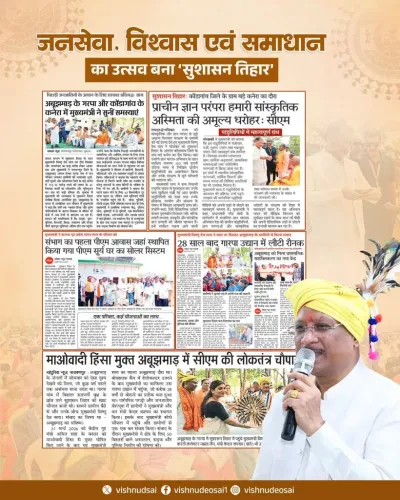
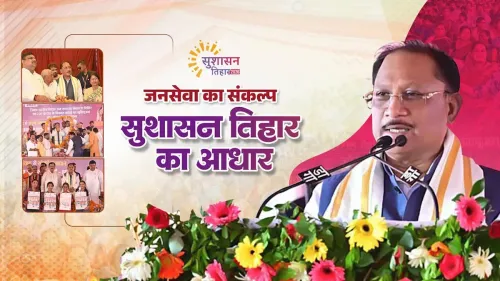
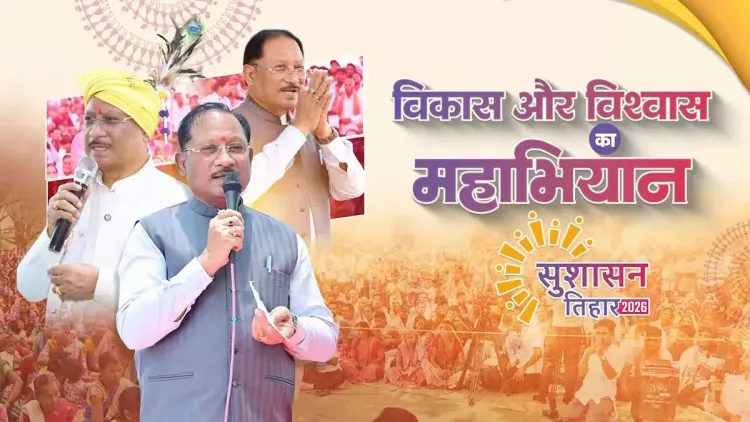
The Chief Minister's Office of Chhattisgarh on 10 July 2026 described Sushasan Tihar as far more than a campaign — calling it the state government's most powerful medium for direct citizen connect, rapid grievance resolution, and last-mile service delivery under CM Vishnu Deo Sai.
Key Takeaways
The Chhattisgarh CMO posted on 10 July 2026 reaffirming Sushasan Tihar as the administration's primary citizen-connect programme.
CM Vishnu Deo Sai has led the Chhattisgarh government since December 2023 after the BJP's return to power.
The programme aims to directly hear citizen expectations, gather suggestions, and deliver on-the-spot resolutions.
Rapid, need-based solutions and universal service delivery are stated as the 'highest priority' of the Sushasan Sarkar .
The initiative aligns with a broader BJP pattern of citizen-connect and grievance redressal camps seen across party-governed states.
Future phases of Sushasan Tihar camps across Chhattisgarh 's districts are anticipated.
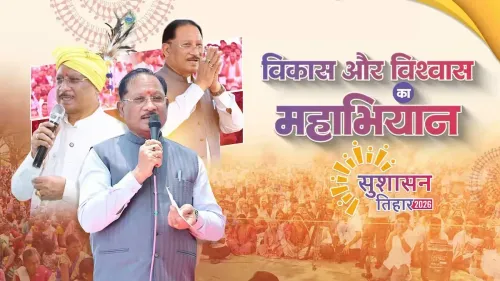
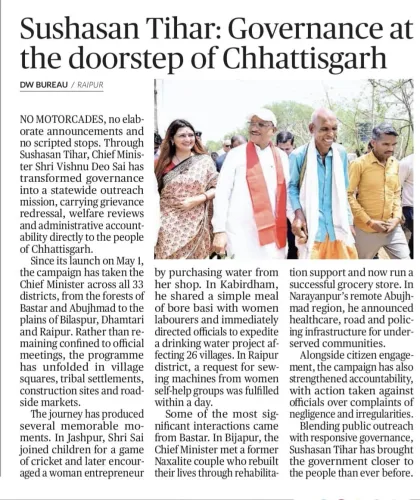
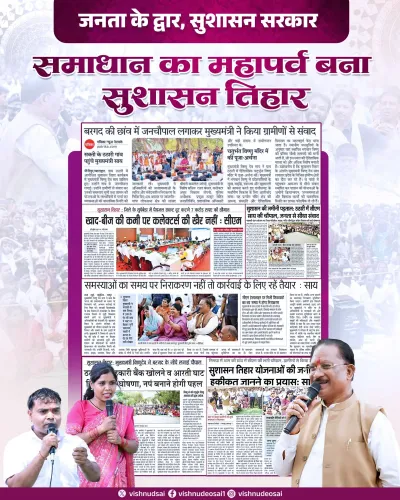
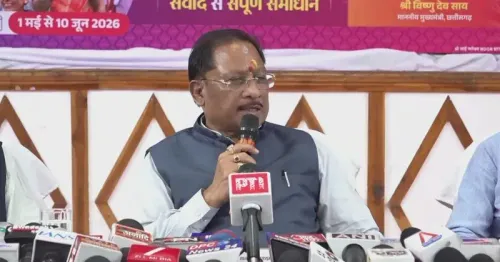
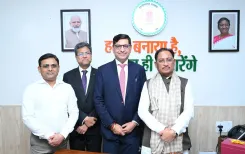
The Chief Minister's Office of Chhattisgarh reaffirmed on 10 July 2026 that Sushasan Tihar — the state government's flagship public outreach programme — is the administration's most direct channel for hearing citizen grievances, gathering suggestions, and delivering on-the-spot resolutions across Chhattisgarh.
Context
The CMO's post, shared in Hindi, states: 'Sushasan Tihar kewal ek abhiyan nahin hai' ('Sushasan Tihar is not merely a campaign') — framing it instead as a 'powerful medium' for direct citizen-government connect. The office underlined that delivering swift, need-based solutions and reaching every citizen with government services is the 'highest priority' of the Sushasan Sarkar (Good Governance Government), as Chief Minister Vishnu Deo Sai's administration has branded itself.
The statement was accompanied by a video and carried hashtags including #SushasanTihar, #JanSamvad (public dialogue), and #ViksitChhattisgarh (Developed Chhattisgarh), signalling the programme's alignment with both state and national development narratives.
Policy Backdrop
Vishnu Deo Sai assumed office as Chief Minister of Chhattisgarh in December 2023 after the Bharatiya Janata Party returned to power in the state assembly elections, replacing the previous Congress government. One of the new administration's stated pillars from the outset was a return to 'sushasan' — good governance — with an emphasis on last-mile service delivery and structured public dialogue.
Sushasan Tihar emerged as the programmatic expression of this commitment, organising camps and outreach events where officials meet citizens directly to register and resolve complaints. The initiative draws conceptual lineage from Good Governance Day, observed nationally on 25 December every year since 2014, which has prompted similar citizen-connect drives across BJP-governed states. Comparable grievance redressal camps have been a recurring feature in states such as Uttar Pradesh and Madhya Pradesh, reflecting a wider party emphasis on accessible administration.
Stakeholders and Impact
The primary beneficiaries of Sushasan Tihar are Chhattisgarh's ordinary citizens — particularly residents of rural and tribal areas who historically face barriers in accessing state services. The state has a significant Scheduled Tribe population, and programmes that bring government officials to local levels carry particular weight in districts where institutional access is limited.
For the Sai government, the programme also serves a political function: demonstrating responsiveness in a state where the BJP returned after a five-year gap, and where consolidating public trust remains an ongoing task. The CMO's framing — that citizen expectations, suggestions, and needs must drive 'rapid solutions' — positions the initiative as a feedback loop, not a one-way announcement exercise.
What's Next
Subsequent phases of Sushasan Tihar camps are expected to continue across Chhattisgarh's districts. Analysts watching the programme will look for potential integration with the central government's digital grievance platforms, as well as any dedicated budgetary provisions for grievance-redressal infrastructure in the next state budget. The CMO's continued social media amplification of the initiative suggests it will remain a central plank of the government's public communication strategy through the current term.
Point of View
Particularly in states where the party has recently recaptured power. The sustained social media amplification, complete with aspirational hashtags like #ViksitChhattisgarh, also signals that the programme is as much about political optics as administrative outcomes. Whether the initiative translates into measurable, verifiable improvements in service delivery will determine its long-term credibility with Chhattisgarh's largely rural and tribal electorate.
NationPress
10 Jul 2026
Frequently Asked Questions
What is Sushasan Tihar in Chhattisgarh?
Sushasan Tihar is a state-level public outreach and grievance redressal programme launched by the Chhattisgarh government under CM Vishnu Deo Sai, designed to bring officials directly to citizens for registering and resolving complaints and delivering government services at the local level.
Who is the Chief Minister of Chhattisgarh in 2026?
Vishnu Deo Sai of the Bharatiya Janata Party has been the Chief Minister of Chhattisgarh since December 2023, when the BJP returned to power after the state assembly elections.
What does 'Sushasan Sarkar' mean?
'Sushasan Sarkar' translates to 'Good Governance Government' — a label the Vishnu Deo Sai administration has adopted to brand its governance philosophy, centred on responsive public service delivery and citizen connect.
What is Jan Samvad in the context of Chhattisgarh governance?
Jan Samvad means 'public dialogue' and is one of the core principles behind Sushasan Tihar, referring to structured interactions between state officials and citizens to understand local needs and grievances.
How does Sushasan Tihar benefit tribal communities in Chhattisgarh?
Chhattisgarh has a large Scheduled Tribe population that often faces barriers in accessing state services; Sushasan Tihar's local-level camps aim to bridge this gap by bringing government officials directly to rural and tribal areas for on-the-spot resolution of issues.