CM Samrat Choudhary Distributes Appointment Letters to 2,446 Jeevika Recruits
Synopsis
Bihar Chief Minister Samrat Choudhary presided over a live-streamed ceremony distributing appointment letters to 2,446 newly selected candidates under Jeevika, the state's flagship rural livelihoods programme targeting women's self-help groups.
Key Takeaways
2,446 candidates received appointment letters under the Jeevika rural livelihoods programme on 21 July 2026 .
The event was live-streamed and presided over by Bihar Chief Minister Samrat Choudhary .
Jeevika, launched in 2007 with World Bank support, implements the central National Rural Livelihoods Mission in Bihar.
The programme covers over 1 crore households through women's self-help group networks across Bihar.
New recruits will serve as field-level coordinators supporting village institutions in livelihood planning and community mobilisation.
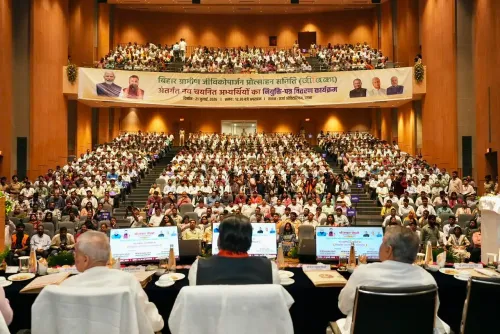
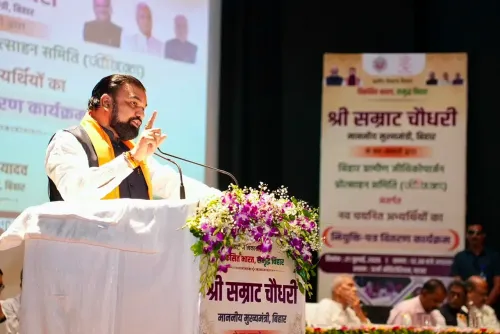
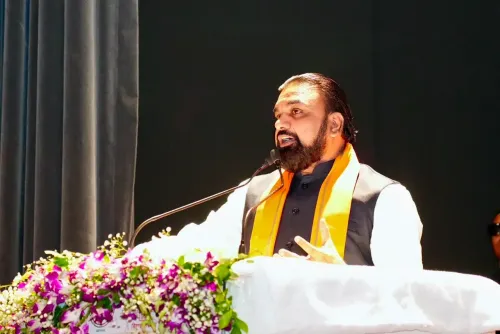
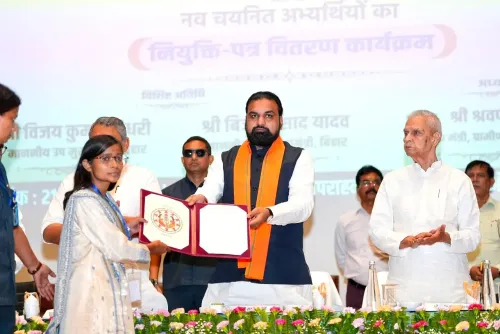
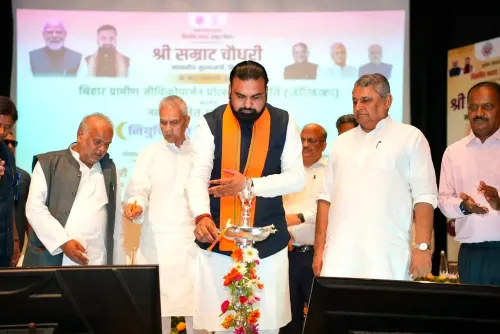
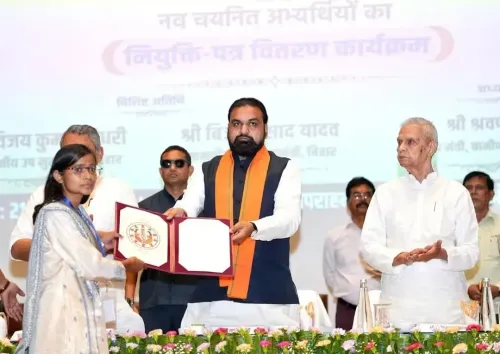
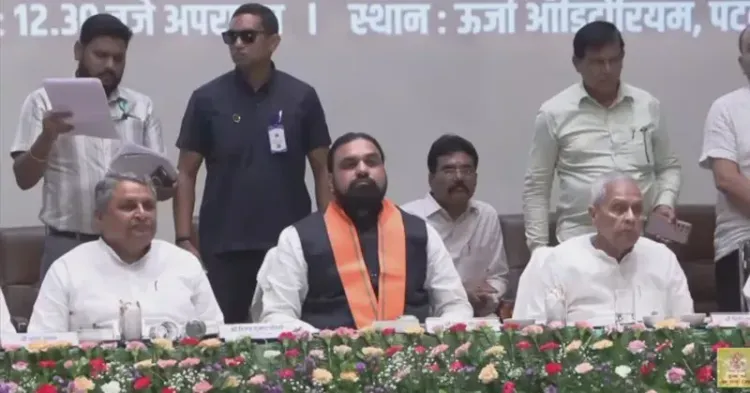
Bihar Chief Minister Samrat Choudhary presided over an appointment-letter distribution ceremony for 2,446 newly selected candidates under the Jeevika rural livelihoods programme on Tuesday, 21 July 2026, live-streaming the event for public viewing.
Context
The Chief Minister shared a live broadcast link of the ceremony on social media, describing it as a niyukti-patra vitaran karyakram (appointment-letter distribution programme) for freshly selected Jeevika candidates. The event marks a significant hiring push under the state's flagship women-centric rural development initiative, bringing new field-level workers into the programme's delivery network.
Jeevika — formally the Bihar Rural Livelihoods Project — functions as the state's implementation vehicle for the National Rural Livelihoods Mission (NRLM), connecting rural women through layered self-help group (SHG) structures. Field-level coordinators and facilitators recruited under the programme are central to its outreach at the village level.
Policy Backdrop
Jeevika was initiated in 2007 with World Bank assistance, and expanded significantly after 2011 when it was integrated with the centrally sponsored NRLM framework. The mission aims to organise rural poor households — particularly women — into SHGs and promote sustainable income-generation pathways.
Bihar has positioned Jeevika as a core pillar of its rural development strategy, with the programme now covering over 1 crore households through community organisations spread across the state's districts. Periodic recruitment drives to place trained personnel at the grassroots are a recurring feature of the programme's expansion model.
Successive Bihar governments have used such appointment ceremonies as high-visibility events, signalling both administrative momentum and the state's commitment to employment generation in one of India's most rural-population-dense states.
Stakeholders and Impact
The 2,446 newly appointed candidates will join Jeevika's field workforce, supporting village-level SHG institutions in areas such as financial literacy, livelihood planning, and community mobilisation. Their induction directly strengthens the programme's last-mile delivery capacity.
Rural women and active SHG members stand to benefit most from the expanded field presence, gaining closer access to scheme resources, credit linkages, and skill-building opportunities. For the recruits themselves, the appointments represent a formal employment pathway within a government-backed programme — significant in a state where formal rural employment options remain limited.
What's Next
Observers will watch for further recruitment phases under Jeevika as the programme continues to scale. The state government may also explore integration of Jeevika's field network with upcoming skill development or entrepreneurship initiatives, particularly in the context of the next budget cycle. The live-streaming of today's event signals an intent to keep such welfare milestones in public view ahead of the political calendar.
Point of View
446 Jeevika field workers in a single ceremony is part of a deliberate Bihar government strategy to deepen last-mile delivery of rural welfare schemes ahead of a politically sensitive period. By live-streaming the event, Chief Minister Samrat Choudhary ensures maximum visibility for a welfare action that directly touches rural women voters — a key demographic in Bihar's electoral calculus. The move also reinforces the BJP-led state government's alignment with the Centre's NRLM priorities, projecting administrative competence on a programme with cross-party legacy. Watch for whether this recruitment wave is followed by similar drives in other state welfare verticals as the budget cycle approaches.
NationPress
21 Jul 2026
Frequently Asked Questions
What is Jeevika in Bihar?
Jeevika is the Bihar Rural Livelihoods Project, launched in 2007 with World Bank assistance. It implements the National Rural Livelihoods Mission in Bihar by organising rural women into self-help groups and providing livelihood support, covering over 1 crore households across the state.
Who are the 2,446 candidates appointed under Jeevika?
They are newly selected field-level personnel — coordinators and facilitators — recruited to support Jeevika's village-level self-help group institutions in areas such as financial literacy, livelihood planning, and community mobilisation.
What did Bihar CM Samrat Choudhary do at the Jeevika event on 21 July 2026?
Chief Minister Samrat Choudhary presided over a live-streamed appointment-letter distribution ceremony, formally inducting 2,446 newly selected Jeevika candidates into the programme's field workforce.
What is the National Rural Livelihoods Mission (NRLM)?
NRLM is a central government scheme launched in 2011 to organise rural poor households, especially women, into self-help groups and promote sustainable income-generation. Bihar implements it through the Jeevika programme.
How does Jeevika recruitment help rural women in Bihar?
New Jeevika field workers expand the programme's grassroots presence, giving SHG members closer access to credit linkages, skill-building resources, and scheme benefits — directly strengthening economic opportunities for rural women across Bihar.