CM Samrat Choudhary Marks 9 Years of GST in Bihar

Synopsis
Bihar Chief Minister Samrat Choudhary on 1 July 2026 marked nine years of GST, praising PM Modi's 'One Nation, One Tax' reform as a symbol of trust, transparency, and economic integration. He highlighted digital compliance and industry confidence as hallmarks of the reform's impact over nine years.
Key Takeaways
Bihar CM Samrat Choudhary posted on 1 July 2026 to mark the ninth anniversary of the Goods and Services Tax.
He described GST as a symbol of 'trust, transparency, and development' and credited PM Narendra Modi's vision for the reform.
GST was implemented on 1 July 2017 under the 101st Constitutional Amendment Act , replacing multiple central and state levies.
The 'One Nation, One Tax' framework created a unified national market and introduced destination-based revenue sharing, benefiting consuming states like Bihar .
Successive GST Council decisions have rationalised rates and expanded digital filing, increasing formalisation of the economy.
Upcoming GST Council sessions are expected to address further rate rationalisation and compliance relief for small and micro enterprises.
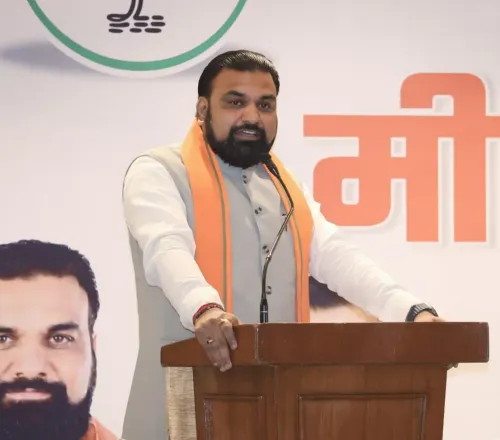
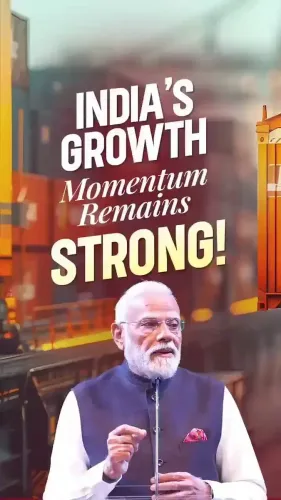
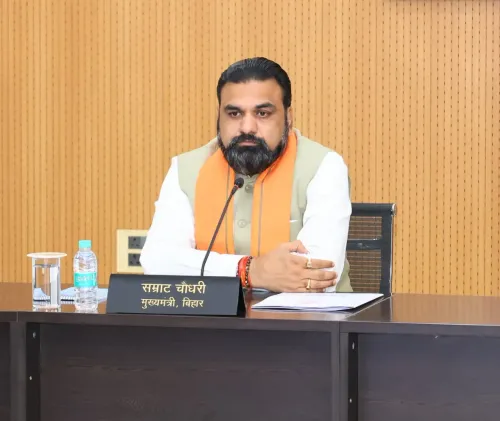
Bihar Chief Minister Samrat Choudhary on Wednesday, 1 July 2026 marked the ninth anniversary of the Goods and Services Tax, calling it a symbol of trust, transparency, and development in India's economic journey. The senior BJP leader credited Prime Minister Narendra Modi's vision for what he described as a historic transformation of the country's tax architecture under the 'One Nation, One Tax' framework.
Context
Posting in Hindi on the occasion of GST Day (1 July), CM Choudhary wrote: 'विश्वास, पारदर्शिता और विकास का प्रतीक है GST' — 'GST is a symbol of trust, transparency, and development.' He described the past nine years as 'golden years of economic self-reliance,' citing simpler compliance, digital filing, and renewed confidence among industries and traders.
The post carried the hashtags #9YearsOfGST and #OneNationOneTax, aligning with a broader BJP campaign marking the reform milestone. CM Choudhary specifically praised Modi's 'far-sighted leadership' as the driving force behind the structural overhaul.
Policy Backdrop
GST was rolled out across India on 1 July 2017, backed by the 101st Constitutional Amendment Act that received presidential assent in 2016. The reform subsumed a web of central and state levies — including excise duty, service tax, and value-added tax — into a single, destination-based tax collected across four rate slabs.
The stated goal of 'One Nation, One Tax' was to create a unified national market, reduce cascading tax-on-tax effects, and lower the compliance burden on businesses. Over successive GST Council meetings, rates on hundreds of goods and services have been rationalised, and digital filing through the GSTN portal has become the norm, contributing to greater formalisation of the economy.
Bihar, as a consuming state rather than a manufacturing hub, has been a consistent beneficiary of the destination-based revenue-sharing model embedded in GST, receiving a larger share of collections relative to its production base.
Stakeholders and Impact
For taxpayers and small businesses, the nine-year arc of GST has brought both gains and friction. Compliance has been progressively digitised, reducing physical interface with tax authorities, while the introduction of the e-invoice mandate and e-way bill system has tightened the supply chain audit trail.
Industries — particularly in manufacturing and logistics — have benefited from the elimination of inter-state check-posts and the seamless input tax credit chain, which lowered effective costs. Traders and the MSME sector, however, have at various points flagged the complexity of return-filing procedures, a concern the GST Council has addressed through successive simplifications.
What's Next
Attention now turns to upcoming GST Council sessions that are expected to take up further rate rationalisation and potential relief measures for small taxpayers. Discussions around simplifying the return-filing structure for micro and small enterprises remain on the agenda.
As the reform enters its tenth year, the political framing by leaders like CM Choudhary signals that GST will remain a central plank of the BJP's economic governance narrative ahead of future electoral cycles. The emphasis on 'record collections' and 'digital compliance' is likely to intensify as the party positions the reform as a signature achievement of the Modi era.
Point of View
Particularly in states like Bihar where the party needs to demonstrate tangible developmental credentials. By anchoring the tribute to PM Modi's 'far-sighted leadership,' Choudhary reinforces the central-state alignment that defines BJP's political messaging. The emphasis on digital compliance and industry confidence speaks to an urban and trader constituency the party has long cultivated. As GST enters its tenth year, such messaging is likely to sharpen ahead of the next round of state and national elections.
NationPress
1 Jul 2026
Frequently Asked Questions
When was GST launched in India?
GST was launched in India on 1 July 2017 , following the passage of the 101st Constitutional Amendment Act in 2016. It replaced a range of central and state indirect taxes with a single unified tax structure.
What is 'One Nation, One Tax'?
'One Nation, One Tax' is the official policy slogan for GST, reflecting the goal of replacing multiple indirect taxes across states and the centre with a single, unified goods and services tax applicable across India.
Why did Bihar CM Samrat Choudhary post about GST?
Bihar Chief Minister Samrat Choudhary posted on 1 July 2026 to mark the ninth anniversary of GST, praising the reform as a symbol of trust and transparency and crediting PM Modi's leadership for its success.
How has GST benefited Bihar?
As a consuming state, Bihar benefits from GST's destination-based revenue-sharing model, which allocates a larger share of tax collections to the state where goods and services are consumed rather than where they are produced.
What are the next steps for GST reform in India?
Upcoming GST Council meetings are expected to discuss further rate rationalisation and simplification of return-filing procedures, particularly for small and micro enterprises that have found compliance burdensome.