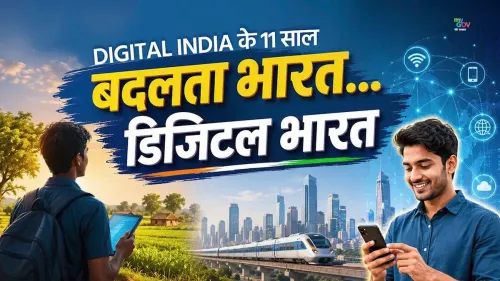
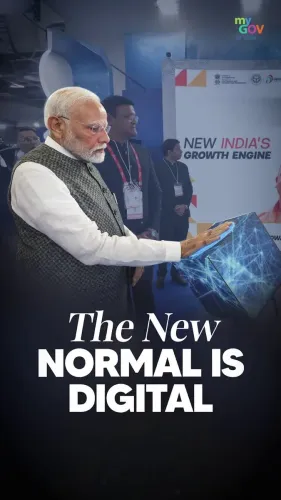
CM Gujarat Marks 11 Years of Digital India Under PM Modi
Synopsis
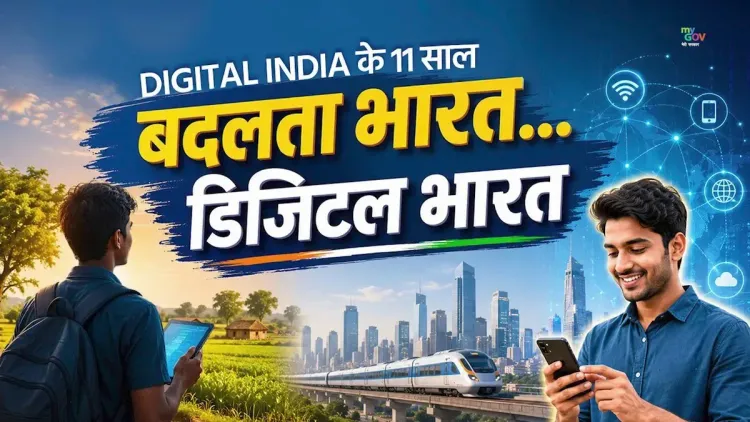
The Chief Minister's Office of Gujarat marked 11 years of the Digital India programme on 1 July 2026, citing village-level internet access, UPI-powered payments, paperless public services, and a growing AI and semiconductor ecosystem as hallmarks of PM Modi's digital vision.
Key Takeaways
Digital India completed 11 years on 1 July 2026 , with the Gujarat CMO marking the anniversary on X.
The programme was launched on 1 July 2015 under Prime Minister Narendra Modi to build a digitally empowered society.
UPI , introduced in 2016 by NPCI, is cited as a flagship outcome enabling mass digital payments.
The post highlights village-level internet connectivity and paperless digital public services as key achievements.
India's ambitions have expanded to AI and semiconductor manufacturing, framed under the Viksit Bharat 2047 goal.
Upcoming policy milestones include new semiconductor fabrication units and updated National AI Mission guidelines.
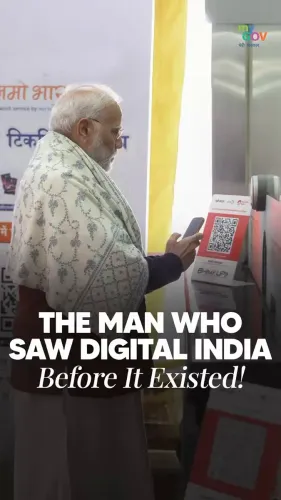
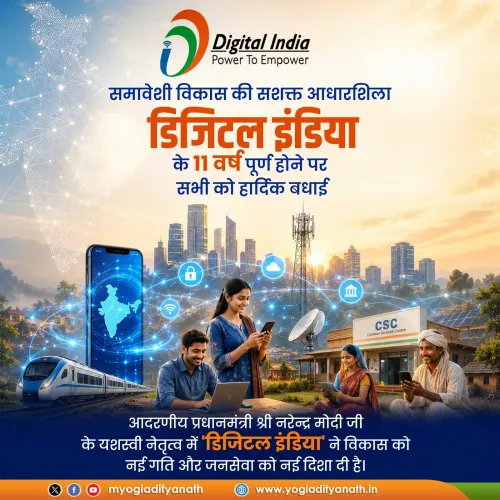
The Chief Minister's Office of Gujarat on Wednesday, 1 July 2026 marked the 11th anniversary of the Digital India programme, crediting the initiative's launch and progress to the 'visionary leadership' of Prime Minister Narendra Modi, who set the country on what the post describes as a journey toward becoming a 'digital superpower.'
Context
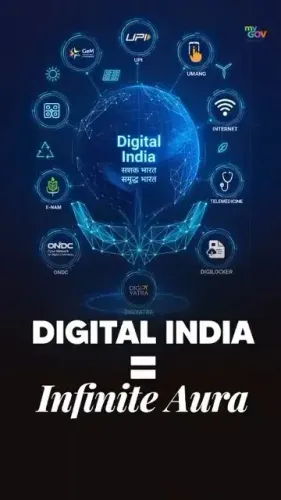
The Gujarati-language post states: 'માનનીય વડાપ્રધાન શ્રી નરેન્દ્રભાઈ મોદીની વિઝનરી લિડરશીપમાં 11 વર્ષ પહેલાં શરૂ થઈ નવા ભારતની ડિજિટલ યાત્રા' — ['The digital journey of a new India began 11 years ago under the visionary leadership of respected Prime Minister Shri Narendra Modi.'] The post highlights four pillars of this journey: village-level internet connectivity, paperless and effortless digital public services, digital payments through UPI, and the development of a global-scale ecosystem in AI and semiconductors. The hashtag #11YearsOfDigitalIndia anchors the message to a nationwide commemorative moment.
Policy Backdrop
Digital India was formally launched on 1 July 2015 with the stated aim of transforming India into a digitally empowered society and knowledge economy. The programme brought together broadband infrastructure expansion, Aadhaar-linked e-governance services, and open application programming interfaces under a single policy umbrella. UPI, introduced by the National Payments Corporation of India (NPCI) in 2016, became one of the most visible outcomes — evolving into one of the world's largest real-time payment systems.
Over the decade that followed, the government layered additional ambitions onto the original connectivity mandate. Semiconductor manufacturing incentive schemes and a dedicated National AI Mission were introduced to position India as a producer — not merely a consumer — of frontier technology. These moves are framed under the broader Viksit Bharat 2047 development framework, which sets a centenary target for India to become a developed nation.
Stakeholders and Impact
Rural citizens have been among the most cited beneficiaries of the programme's first phase, with internet connectivity described in the post as having reached 'village to village' (ગામેગામ). Digital public services — from land records to welfare transfers — are now accessible without physical paperwork across much of the country. The post's phrase 'આંગળીના ટેરવે' ['at the fingertips'] captures the stated ambition of making governance frictionless for ordinary citizens.
The technology industry stands as the second major stakeholder. The CMO Gujarat post's explicit mention of AI and semiconductors signals that the government views Digital India not merely as a social welfare instrument but as an industrial strategy. Domestic and multinational firms in chip fabrication and AI research are being drawn into an ecosystem the government has been actively building through policy incentives.
What's Next
The immediate policy calendar includes the rollout of additional semiconductor fabrication units under India's chip incentive scheme, as well as updated guidelines expected for the National AI Mission. Both will test whether the ambitions articulated in Digital India's 11th-year messaging translate into measurable industrial capacity. The Gujarat CMO's post, coming from the home state of Prime Minister Modi, reinforces a political narrative that ties Gujarat's own digital governance record to the national programme's legacy — a framing likely to intensify as the Viksit Bharat 2047 milestone draws closer to the policy mainstream.
Point of View
The messaging signals a deliberate pivot: the government wants Digital India to be seen not just as a welfare delivery tool but as an industrial and geopolitical strategy. Gujarat's role as Modi's home state gives this particular post an added symbolic weight, reinforcing a Gujarat-to-Delhi policy lineage the BJP has long cultivated. The forward references to Viksit Bharat 2047 suggest the party intends to keep Digital India as a live, evolving centrepiece of its long-term governance pitch rather than a completed chapter.
NationPress
1 Jul 2026
Frequently Asked Questions
When was Digital India launched?
Digital India was formally launched on 1 July 2015 by Prime Minister Narendra Modi with the goal of transforming India into a digitally empowered society and knowledge economy.
What are the main achievements of Digital India in 11 years?
Key achievements cited include village-level internet connectivity, paperless and effortless digital public services, the rise of UPI as a mass payment platform, and the development of an AI and semiconductor ecosystem in India.
What is UPI and how does it relate to Digital India?
UPI (Unified Payments Interface) is a real-time payment system introduced by the National Payments Corporation of India in 2016. It is one of the most visible outcomes of the Digital India programme, enabling instant digital transactions for hundreds of millions of Indians.
What is Viksit Bharat 2047?
Viksit Bharat 2047 is the Indian government's overarching development framework that sets a target for India to become a developed nation by 2047, the centenary of its independence. Digital India's expanded AI and semiconductor ambitions are framed as part of this goal.
Why did the Gujarat CMO post about Digital India's anniversary?
The Chief Minister's Office of Gujarat posted on 1 July 2026 to mark 11 years of the Digital India programme, attributing its launch and success to PM Modi's leadership — a message carrying added political significance given that Gujarat is the Prime Minister's home state.