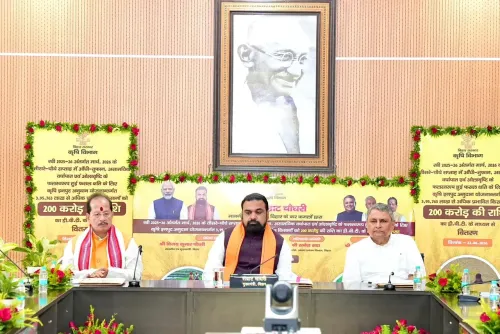
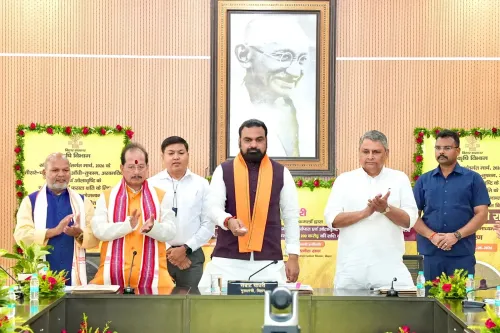
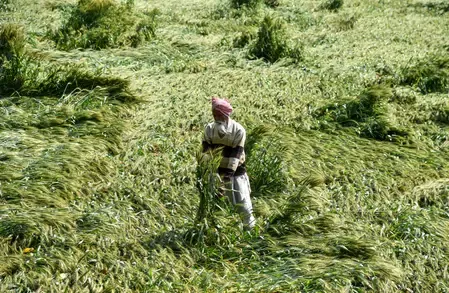
CM Samrat Choudhary orders crop damage survey after Bihar storms
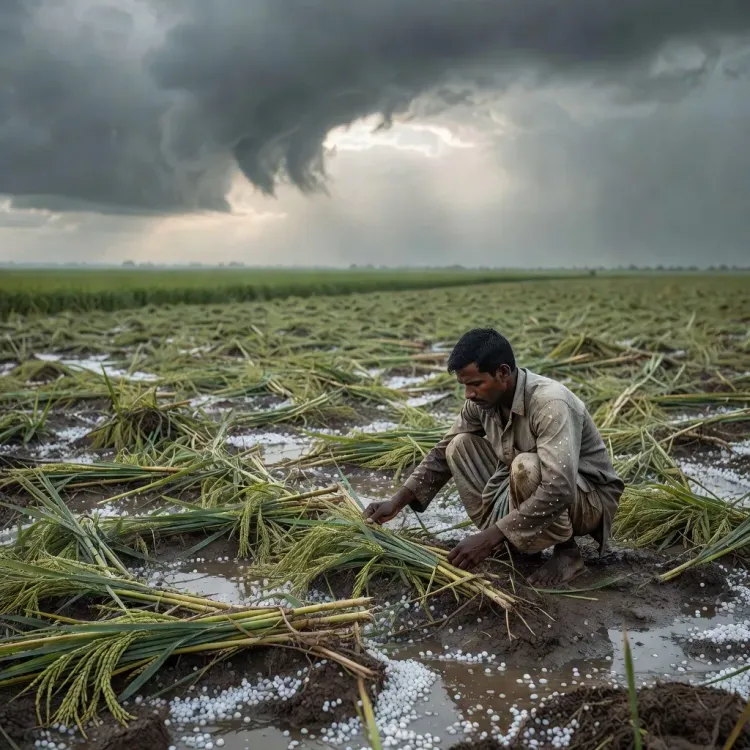
Synopsis
Bihar Chief Minister Samrat Choudhary has directed the Agriculture and Disaster Management departments to survey crop and fruit-tree damage caused by sudden thunderstorms and hailstorms across several districts, with the aim of providing timely relief to affected farmers.
Key Takeaways
CM Samrat Choudhary issued the survey directive on 29 May 2026 via a post on X.
Both the Bihar Agriculture Department and the Bihar Disaster Management Department have been tasked with conducting the damage assessment.
The survey covers damage to standing crops as well as fruits on trees caused by thunderstorms, rain, and hailstorms.
Relief will be channelled through the State Disaster Response Fund (SDRF) once survey reports are submitted.
The directive complements central schemes such as PMFBY and PM-KISAN but targets immediate, localised losses.
Survey outcomes and compensation timelines are expected to be announced in the coming weeks.
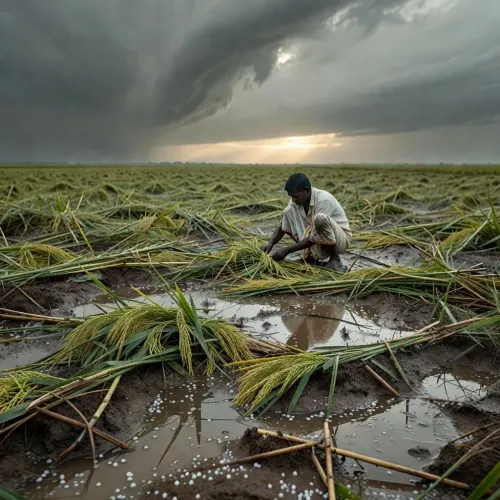
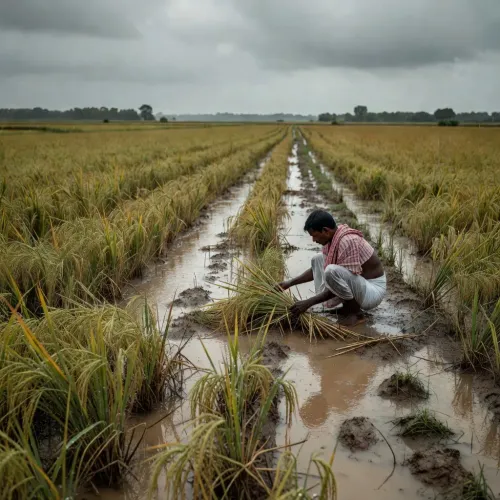
Bihar Chief Minister Samrat Choudhary on Friday, 29 May 2026, directed the state's Agriculture Department and Disaster Management Department to conduct surveys across several districts hit by sudden thunderstorms, heavy rain, and hailstorms that damaged standing crops and fruit-bearing trees. The directive aims to ensure that affected farmers receive adequate relief at the earliest.
Context
Posting on X, CM Choudhary stated in Hindi: 'राज्य के कई जिलों में अचानक तेज आंधी-बारिश एवं ओलावृष्टि से हुई फसल क्षति एवं वृक्ष में लगे फलों की क्षति का सर्वे कराने का निर्देश कृषि विभाग एवं आपदा प्रबंधन विभाग को दिया गया है' — meaning: 'Instructions have been given to the Agriculture Department and Disaster Management Department to conduct a survey of crop damage and damage to fruits on trees caused by sudden strong thunderstorms, rain, and hailstorms in several districts of the state.' He added that the survey is being ordered 'so that appropriate relief can be provided to affected farmers.'
The post did not specify which districts were affected or the scale of the weather event. The directive signals that the state administration has taken note of the damage and is moving to quantify losses before disbursing compensation.
Policy Backdrop
Bihar is one of India's most agriculturally dependent states, with a large share of its rural population relying on kharif and rabi crops as well as horticulture — particularly mango and litchi orchards — for their livelihoods. Pre-monsoon thunderstorms and hailstorms are a recurring hazard in the state, capable of flattening standing wheat and pulses and stripping fruit trees of their yield in a matter of hours.
The Bihar Disaster Management Department administers relief payouts through the State Disaster Response Fund (SDRF), which provides ex-gratia compensation to farmers after joint surveys confirm the extent of damage. These state-level measures complement central programmes such as PM-KISAN and the Pradhan Mantri Fasal Bima Yojana (PMFBY), which offer income support and crop insurance respectively, but which can take longer to translate into on-ground payouts.
Bihar governments have historically ordered joint agriculture-disaster surveys following unseasonal hail and rain events, making such directives a standard first step in the relief pipeline. The speed of the survey and the subsequent release of compensation figures are typically what determine farmer satisfaction with the state's response.
Stakeholders and Impact
The primary stakeholders are Bihar's farming households — both cereal cultivators and orchard growers — spread across the multiple districts mentioned in the Chief Minister's post. Damage to fruit-bearing trees is particularly consequential because it affects not just the current season's income but also the productive capacity of orchards in subsequent years.
The Bihar Agriculture Department will be responsible for on-ground assessment of field crops, while the Disaster Management Department coordinates the broader relief framework and fund disbursement. The two departments conducting a joint survey is consistent with established state protocol and is intended to prevent delays caused by inter-departmental gaps.
What's Next
The immediate next step is the completion of district-level surveys by the two departments. Once survey reports are submitted, the state government is expected to announce compensation amounts and timelines for disbursal to eligible farmers. Observers will watch whether the relief reaches farmers quickly enough to offset losses ahead of the main kharif sowing season. Any announcement of specific compensation figures or an expanded list of affected districts will be a key indicator of the administration's responsiveness to this weather-related agricultural crisis.
Point of View
The order attempts to pre-empt the inter-departmental delays that have historically slowed relief in similar situations. The move fits a broader pattern of state governments using social media announcements to demonstrate administrative intent ahead of formal action, effectively making the Chief Minister's post itself a form of accountability. How quickly the surveys are completed and compensation reaches farmers will ultimately determine whether the directive translates into tangible relief or remains a well-intentioned announcement.
NationPress
12 Oct 2026
Frequently Asked Questions
Why did Bihar CM Samrat Choudhary order a crop damage survey?
CM Samrat Choudhary ordered the survey after sudden thunderstorms, heavy rain, and hailstorms damaged crops and fruit-bearing trees across several Bihar districts, so that the government can assess losses and provide appropriate relief to affected farmers.
Which departments will conduct the Bihar crop damage survey?
The Bihar Agriculture Department and the Bihar Disaster Management Department have both been directed to carry out the survey jointly.
How will Bihar farmers receive compensation for storm damage?
Compensation is expected to be disbursed through the State Disaster Response Fund (SDRF) once the joint survey reports are submitted and damage is officially quantified.
Which crops and produce are affected by the Bihar hailstorm?
The directive mentions damage to standing field crops as well as fruits on trees, which in Bihar typically includes mango and litchi orchards alongside cereal and pulse crops.
What happens after the Bihar crop damage survey is completed?
After the survey reports are submitted, the state government is expected to announce specific compensation amounts and a timeline for disbursal to eligible farmers in the affected districts.