CM Sawant highlights Curtorim couple's fish farm success under PMMSY
Synopsis
Goa Chief Minister Pramod Sawant on 18 July 2026 highlighted how Agnelo Luis and his wife from Curtorim built a cage fish farming enterprise under PMMSY, earning over ₹1.5 lakh monthly — showcasing the scheme's role in advancing the Swayampurna and Viksit Goa vision.
Key Takeaways
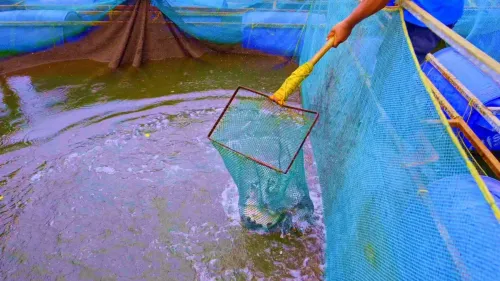
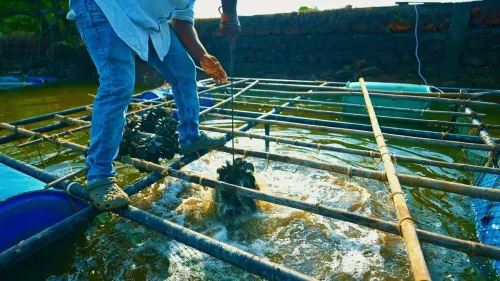
Agnelo Luis and his wife from Curtorim, Goa built a cage fish farming unit with support from the Pradhan Mantri Matsya Sampada Yojana .
Their farm generates an income of over ₹1.5 lakh per month , according to CM Sawant's post.
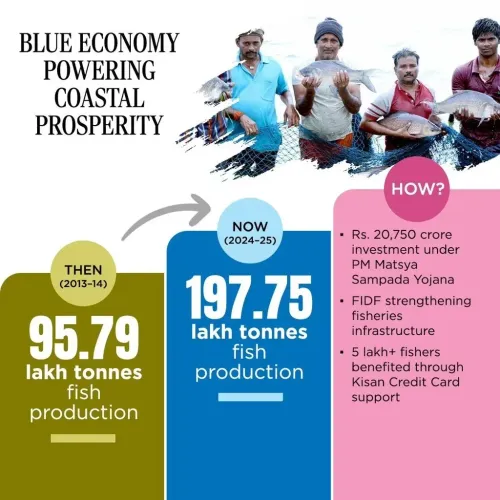
PMMSY was launched in May 2020 with a national outlay of ₹20,050 crore to modernise fisheries and aquaculture.
Goa has aligned PMMSY with its Swayampurna Goa mission to promote self-reliance and livelihood diversification.
CM Sawant framed the case as evidence of aquaculture's role in building a Viksit Goa and a prosperous rural economy.
Cage fish farming is being promoted across coastal states as part of India's blue economy strategy to raise rural incomes.
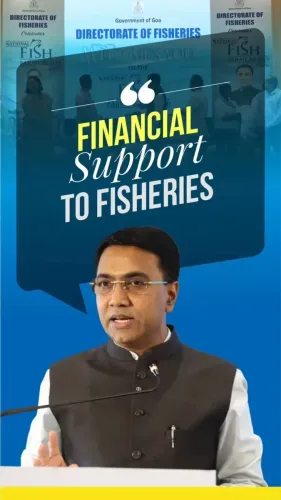
Goa Chief Minister Pramod Sawant on Saturday, 18 July 2026, spotlighted a beneficiary success story from Curtorim, sharing how a local couple has built a thriving cage fish farming enterprise with support from the Pradhan Mantri Matsya Sampada Yojana (PMMSY), generating over ₹1.5 lakh per month in income and offering a model for aquaculture-led rural livelihoods in the state.
Context
Agnelo Luis and his wife from Curtorim — a village in South Goa — have established a cage fish farming unit backed by central government funding under PMMSY. CM Sawant described their journey as 'an inspiring example of how entrepreneurship in the fisheries sector is creating a prosperous economy,' citing a monthly income figure of over ₹1.5 lakh as evidence of the model's viability. The couple's venture is among the beneficiary cases the state government has been promoting to encourage wider adoption of modern aquaculture techniques.
Policy Backdrop
The Pradhan Mantri Matsya Sampada Yojana was launched by the Government of India in May 2020 with a total outlay of ₹20,050 crore, aimed at boosting fish production, modernising infrastructure, and generating rural employment across coastal states. The scheme supports activities ranging from cage culture and hatcheries to cold-chain infrastructure and marketing linkages. Goa has channelled PMMSY resources alongside its own Swayampurna Goa mission — a state-level programme focused on self-reliance and sector-wise livelihood generation — to diversify incomes beyond the state's traditional dependence on tourism and coastal fishing.
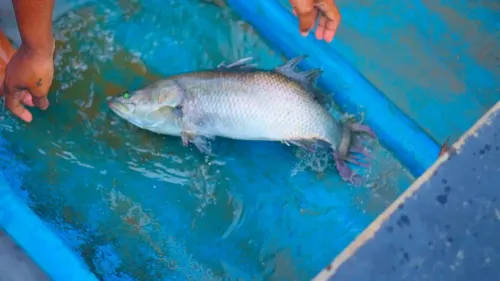
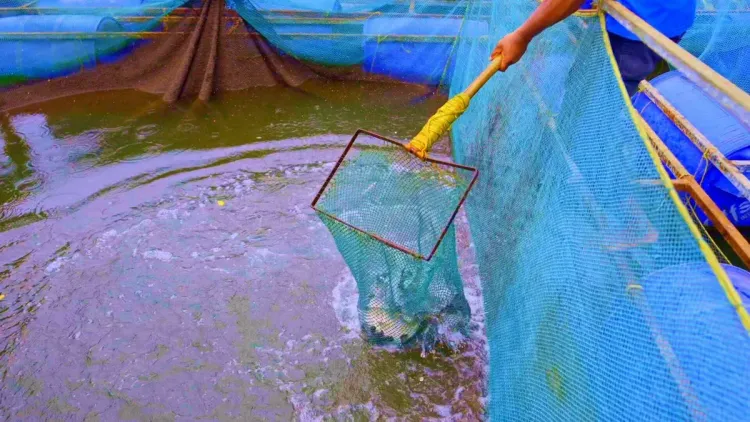
Cage fish farming, promoted under PMMSY, allows farmers to cultivate fish in enclosed net structures in rivers, estuaries or coastal waters, reducing land dependency and improving yield predictability. The model has been encouraged across several coastal states as part of India's broader push to develop the blue economy and raise the share of fisheries in rural household incomes.
Stakeholders and Impact
The primary beneficiaries of PMMSY in Goa are small and marginal fish farmers, coastal fisherfolk, and rural households seeking income diversification. By highlighting the Curtorim case, CM Sawant's communication signals the state government's intent to use individual success stories as demonstration models to attract more farmers into structured aquaculture. The Swayampurna Goa framework amplifies this by embedding fisheries entrepreneurship within a wider self-sufficiency narrative that the BJP-led state government has championed since 2019.
For Goa's fishing communities — many of whom face seasonal income volatility and competition from industrial trawling — cage culture represents a potential pathway to year-round earnings. State-level adoption of PMMSY infrastructure support could reduce entry barriers for first-generation aquaculture entrepreneurs similar to the Luis family.
What's Next
Attention will now turn to whether the Goa government releases aggregate data on PMMSY beneficiaries, cage-culture cluster development, and disbursement figures in the state as part of its next budget or policy review cycle. Broader uptake of the scheme will depend on last-mile credit access, technical training, and marketing linkages — areas where state supplementary spending could play a decisive role. CM Sawant's post, framed around the Viksit Goa and Swayampurna Goa vision, suggests the fisheries sector will remain a visible pillar of the state's economic messaging in the months ahead.
Point of View
Using a single household's income milestone to validate both a central scheme and a state-level self-reliance mission simultaneously. It reflects the BJP's broader electoral strategy of anchoring governance narratives around tangible beneficiary outcomes rather than aggregate policy statistics. By tying PMMSY gains to 'Swayampurna Goa' and 'Viksit Goa,' Sawant is also reinforcing Goa's alignment with the national 'Viksit Bharat' framework ahead of future electoral cycles. The fisheries angle is notable: it signals a deliberate effort to broaden the state's economic identity beyond tourism, which remains vulnerable to seasonal and global disruptions.
NationPress
18 Jul 2026
Frequently Asked Questions
What is the Pradhan Mantri Matsya Sampada Yojana?
The Pradhan Mantri Matsya Sampada Yojana (PMMSY) is a central government scheme launched in May 2020 with an outlay of ₹20,050 crore to develop India's fisheries sector through infrastructure investment, training, and support for sustainable aquaculture practices.
Who are Agnelo Luis and his wife and why are they in the news?
Agnelo Luis and his wife are fish farmers from Curtorim in Goa who built a cage fish farming enterprise with PMMSY support. Goa CM Pramod Sawant highlighted their story on 18 July 2026, noting their farm earns over ₹1.5 lakh per month.
What is Swayampurna Goa?
Swayampurna Goa is a Goa state government mission aimed at promoting self-reliance, entrepreneurship, and livelihood generation across sectors including aquaculture, aligning with central schemes like PMMSY to diversify rural incomes.
What is cage fish farming and how does it work?
Cage fish farming involves cultivating fish in enclosed net structures placed in rivers, estuaries, or coastal waters. It reduces dependence on land, improves yield consistency, and is promoted under PMMSY as a modern aquaculture technique for small and marginal farmers.
How much has the Indian government allocated for fisheries development under PMMSY?
The Government of India allocated ₹20,050 crore for the Pradhan Mantri Matsya Sampada Yojana at its launch in May 2020, making it one of the largest investments in India's fisheries sector.