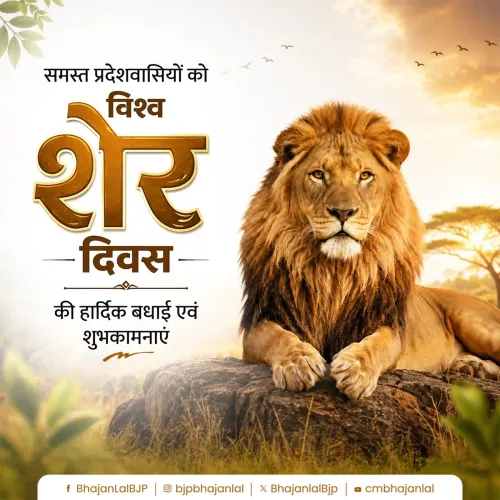
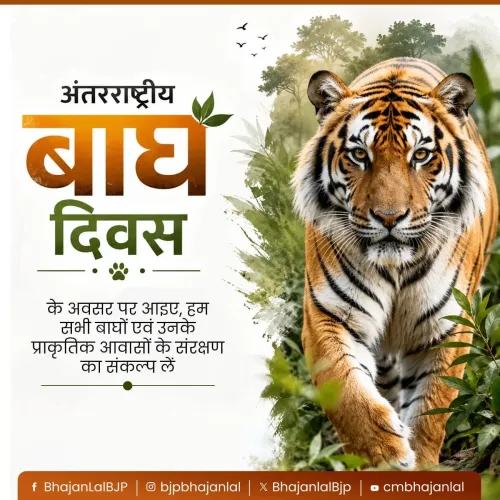
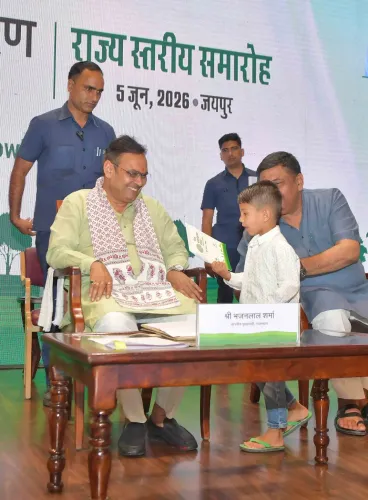
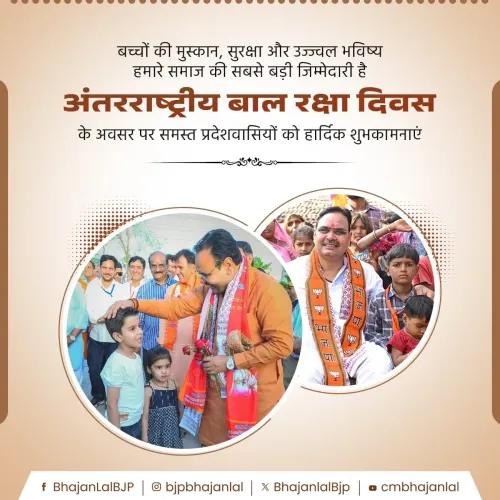
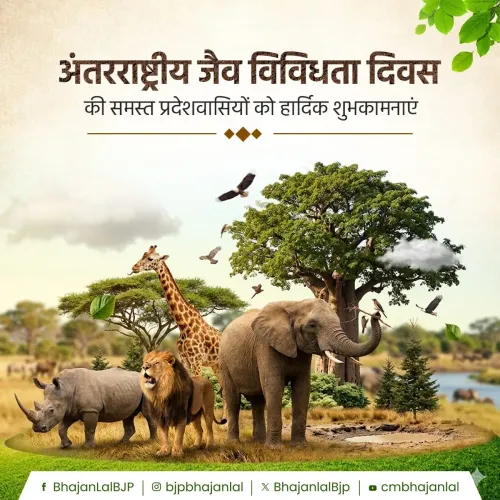
CM Bhajan Lal Sharma marks World Animal Day with compassion call
Synopsis
Rajasthan CM Bhajan Lal Sharma marked World Animal Day on October 4, 2026, calling on citizens to pledge firm resolve toward animal conservation, welfare, and compassion, and to participate in building an empathetic society.
Key Takeaways
Rajasthan Chief Minister Bhajan Lal Sharma posted a World Animal Day message on October 4, 2026 .
He called for a firm resolve ( dridh sankalp ) toward animal conservation, promotion, and compassionate treatment.
CM Sharma framed animal welfare as a collective civic responsibility, not just a state function.
The message invokes the concept of a samvedansheel samaj — a sensitive, empathetic society.
World Animal Day is observed globally on October 4 , coinciding with the Feast of Saint Francis of Assisi.
Rajasthan hosts key wildlife reserves including Ranthambore and Sariska , giving the message added ecological context.
On World Animal Day, October 4, 2026, Rajasthan Chief Minister Bhajan Lal Sharma called on citizens to pledge themselves to the protection, welfare, and compassionate treatment of animals — and to play an active role in building a more empathetic society.
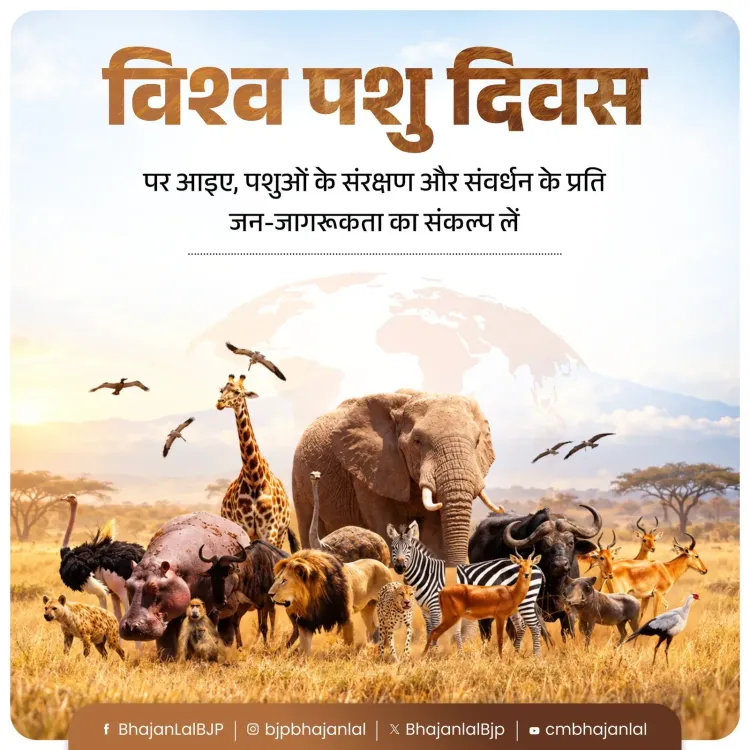
Posting in Hindi on X, CM Sharma wrote: 'Vishwa Pashu Divas ke avasar par aaiye pashuo ke sanrakshan, samvardhan aur unke prati karuna bhav banaye rakhne ka dridh sankalp len' — urging people to take a firm resolve toward animal conservation and to ensure their participation in creating a sensitive society.
World Animal Day and its global resonance
World Animal Day is observed every year on October 4, a date that coincides with the Feast of Saint Francis of Assisi, the patron saint of animals. The day is recognised globally as an occasion to raise awareness about animal welfare standards and mobilise action for the protection of all species.
In India, the occasion carries particular weight given the country's deep cultural and religious traditions around reverence for animals — from the cow's sacred status to wildlife conservation efforts spanning tigers, elephants, and migratory birds.
Rajasthan's stake in animal welfare
Rajasthan is home to significant wildlife, including the Ranthambore Tiger Reserve, the Sariska Tiger Reserve, and the Desert National Park — which shelters the critically endangered Great Indian Bustard. The state also has a large livestock population central to its rural agrarian economy, making animal welfare a matter of both ecological and economic importance.
CM Sharma's message, framed around the twin pillars of sanrakshan (conservation) and samvardhan (promotion or nurturing), echoes a broader push across state governments to align local policy language with national and international animal welfare frameworks.
The call for a 'samvedansheel samaj' — a sensitive or empathetic society — positions animal welfare not merely as a regulatory concern but as a moral and civic value, one that citizens are invited to own collectively rather than leave to the state alone. That framing, quiet as it is, carries a long reach.
Point of View
This language bridges cultural reverence for animals with modern conservation optics. It also aligns with the party's broader effort to project ecological sensitivity alongside development. The message is light on specifics but consistent with a pattern of using symbolic occasions to reinforce governance values.
NationPress
4 Oct 2026
Frequently Asked Questions
Why is World Animal Day celebrated on October 4?
World Animal Day is observed on October 4 every year because it coincides with the Feast of Saint Francis of Assisi, the patron saint of animals, making it a globally recognised date for animal welfare awareness.
What did Rajasthan CM Bhajan Lal Sharma say on World Animal Day 2026?
CM Bhajan Lal Sharma urged citizens to take a firm pledge toward animal conservation, welfare, and compassion, and to actively participate in building a sensitive, empathetic society.
What wildlife is found in Rajasthan?
Rajasthan is home to major wildlife reserves including Ranthambore Tiger Reserve, Sariska Tiger Reserve, and Desert National Park, which shelters the critically endangered Great Indian Bustard.
What does 'samvedansheel samaj' mean?
'Samvedansheel samaj' is a Hindi phrase meaning a sensitive or empathetic society — used by CM Sharma to describe the kind of community he envisions through animal welfare participation.
Is animal welfare a state subject in India?
Animal welfare in India is governed by both central legislation — such as the Prevention of Cruelty to Animals Act, 1960 — and state-level enforcement, making state governments key actors in implementation.