CM Shivakumar Convenes Vision 2030 CSR Conclave in Bengaluru
Synopsis
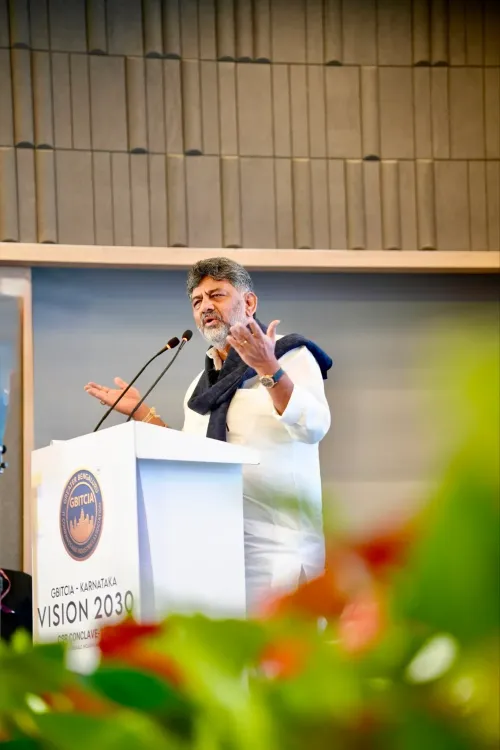
Chief Minister D.K. Shivakumar convened the Karnataka Vision 2030 CSR Conclave in Bengaluru on 7 August 2026, calling on GCC leaders and IT firms to align CSR investment with the state's Bengaluru South development roadmap under the One Bengaluru One Voice initiative.
Key Takeaways
Shivakumar attended the Karnataka Vision 2030 CSR Conclave in Bengaluru on 7 August 2026 .
The conclave brought together GCC leaders, IT companies and industry executives to discuss Bengaluru South's development roadmap for 2026 and beyond .
Shivakumar called for stronger government-industry partnerships to drive inclusive and sustainable urban development.
The event operates under the One Bengaluru One Voice initiative, aimed at aligning diverse stakeholders on a unified city vision.
Karnataka Vision 2030 is the state's long-term planning framework targeting sustainable economic growth and infrastructure development by 2030.
Concrete project rollouts and government budget allocations tied to the conclave's roadmap remain the key deliverables to watch.
Bengaluru, 7 August 2026 — With the city's skyline as backdrop and its future as the agenda, Chief Minister D.K. Shivakumar on Friday brought together the technology industry's heaviest hitters to ask a pointed question: what does Bengaluru owe itself by 2030? The Karnataka Vision 2030 CSR Conclave, held in Bengaluru today, drew Global Capability Centre (GCC) leaders, IT companies and industry executives to map out a concrete development roadmap for Bengaluru South covering 2026 and beyond.
One Bengaluru One Voice: the pitch to industry
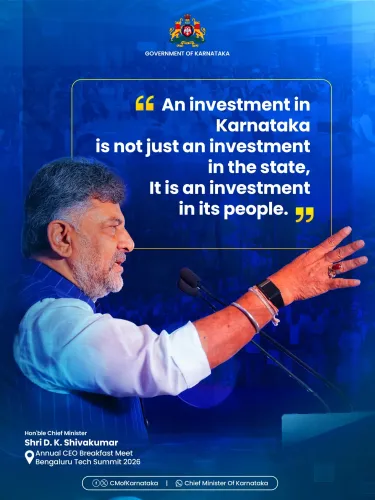
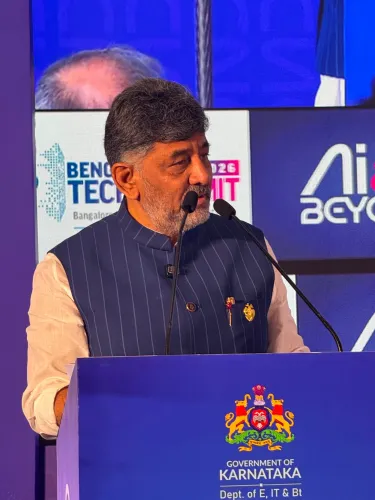
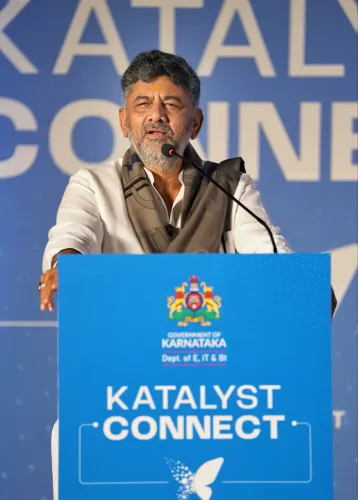
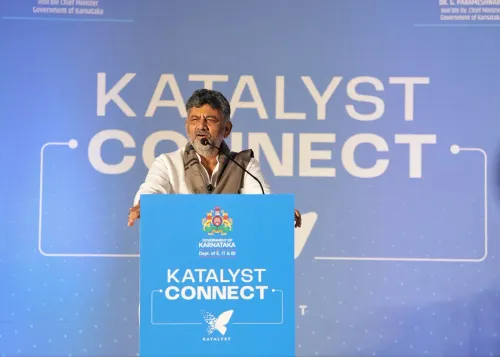
Addressing the conclave, Shivakumar framed Corporate Social Responsibility not as a compliance checkbox but as a lever of inclusive development — one capable of bridging the gap between Karnataka's booming tech economy and the communities that sustain it. He called for stronger government-industry partnerships to build what his office described as a 'sustainable, future-ready Bengaluru' under the banner of One Bengaluru One Voice, an initiative designed to align diverse stakeholders behind a single urban vision.
The framing is deliberate. Bengaluru hosts the largest concentration of GCCs in India — multinational firms running critical operations from the city — and their combined CSR mandates represent a significant, if historically fragmented, pool of capital. The conclave's premise is that coordinated deployment of those funds, guided by a state-level roadmap, can accelerate outcomes that neither government budgets nor individual corporate programmes achieve alone.
Karnataka's long bet on public-private Bengaluru
This is not Karnataka's first attempt to harness industry for city-building. The state has pursued successive IT and industrial policies since the 1990s, each seeking to translate Bengaluru's economic dominance into liveable, scalable urban infrastructure. Karnataka Vision 2030 is the latest iteration — a long-term planning framework targeting sustainable economic growth and inclusive development across the decade.
The Bengaluru South roadmap discussed at the conclave represents a geographic sharpening of that ambition: rather than city-wide generalities, planners are now zeroing in on specific corridors and communities, inviting industry to co-own outcomes. Whether concrete project commitments or budget allocations follow will be the real measure of Friday's gathering.
The next signal to watch: government notifications or supplementary budget provisions that translate the conclave's conversations into enforceable, funded deliverables under Vision 2030. Bengaluru's growth story has never lacked ambition — the test, as always, is execution.
Point of View
Shivakumar is attempting to institutionalise what has historically been ad hoc industry goodwill. The One Bengaluru One Voice branding also signals a political calculation: with rapid urbanisation straining civic infrastructure, the CM needs industry buy-in to deliver visible outcomes before the next electoral cycle. The real test of this conclave's ambition will come when — or if — Vision 2030 commitments translate into gazetted projects and budget lines.
NationPress
7 Aug 2026
Frequently Asked Questions
What is the Karnataka Vision 2030 CSR Conclave?
The Karnataka Vision 2030 CSR Conclave is a state-organised forum that brings together GCC leaders, IT companies and industry executives to align Corporate Social Responsibility investments with Karnataka's long-term development roadmap targeting sustainable growth by 2030.
What is the One Bengaluru One Voice initiative?
One Bengaluru One Voice is a Karnataka government initiative designed to unite diverse stakeholders — government, industry and civic bodies — behind a single, coordinated vision for Bengaluru's urban planning and future development.
What is Bengaluru South's development roadmap for 2026?
The Bengaluru South development roadmap discussed at the August 2026 conclave outlines priority areas for infrastructure, sustainability and inclusive growth in the southern corridors of the city, with industry CSR funds expected to co-finance key projects.
What did CM D.K. Shivakumar say at the Vision 2030 conclave?
Chief Minister D.K. Shivakumar highlighted the transformative role of CSR in driving inclusive development and called for stronger partnerships between the Karnataka government and industry to build a sustainable, future-ready Bengaluru.
What are GCCs and why are they important for Bengaluru?
Global Capability Centres are offshore units of multinational corporations that manage critical business functions. Bengaluru hosts the largest concentration of GCCs in India, making their CSR and investment commitments central to the city's development ambitions.