CM Shivakumar Launches QUANTUM at Science Gallery Bengaluru
Synopsis
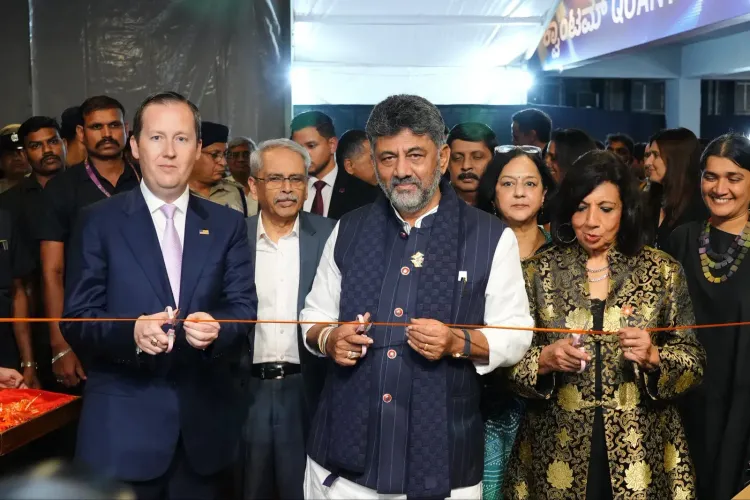
Chief Minister D.K. Shivakumar inaugurated QUANTUM at Science Gallery Bengaluru on 7 August 2026, with US Ambassador Sergio Gor present, and outlined Karnataka's three-pillar quantum blueprint: India's first Quantum City at Hesaraghatta, the Karnataka Quantum Mission, and a Centre of Excellence at IIIT Dharwad.
Key Takeaways
QUANTUM exhibition inaugurated at Science Gallery Bengaluru on 7 August 2026 by CM D.K.
US Ambassador Sergio Gor attended, underscoring the Karnataka–US technology partnership angle.
Karnataka plans India's first Quantum City at Hesaraghatta , Bengaluru.
The Karnataka Quantum Mission complements India's National Quantum Mission approved in 2023 .
A Centre of Excellence in Quantum AI and Computing is being established at IIIT Dharwad .
Science Gallery Bengaluru is being positioned as a public-engagement pipeline for frontier-technology talent.
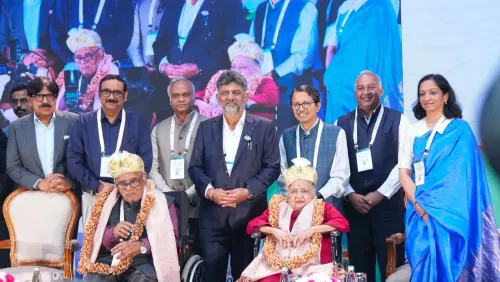
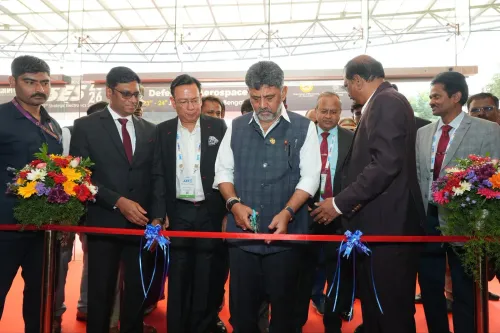
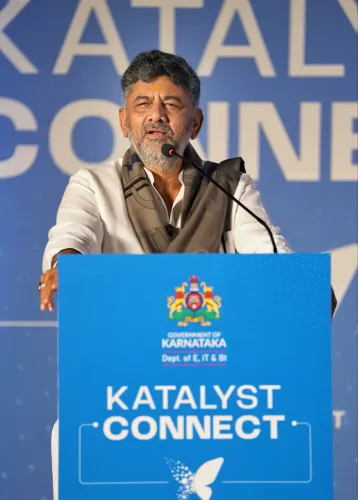
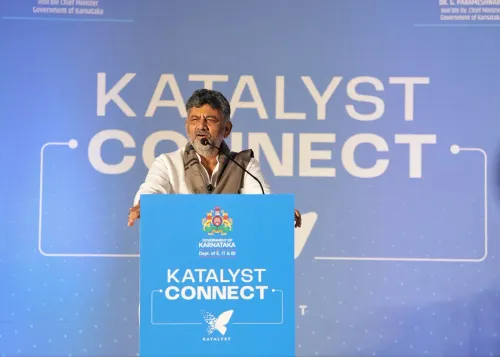
Bengaluru is staking its claim as India's quantum capital — and on Friday, 7 August 2026, the city got its most visible symbol yet. Chief Minister D.K. Shivakumar inaugurated QUANTUM, a landmark exhibition at Science Gallery Bengaluru, signalling Karnataka's intent to move quantum technology from laboratory abstraction into public consciousness.
A US Ambassador in the Room — and What That Signals
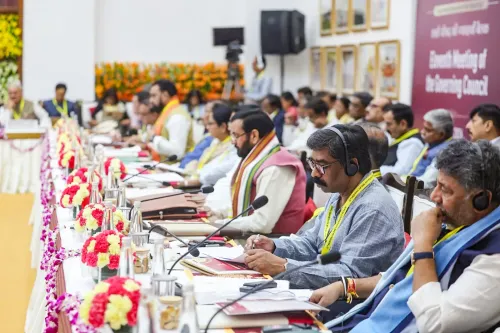
The guest list was not incidental. Sergio Gor, the United States Ambassador to India, was present alongside Priyank Kharge, Karnataka's Minister for IT and Biotechnology, Byrathi Suresh, Minister for Transport, and Dr. Kiran Mazumdar-Shaw, Chairperson of Biocon Group. Dr. Jahnavi Phalkey, Founding Director of Science Gallery Bengaluru, also attended.
Shivakumar used the occasion to press for a deeper Karnataka–US partnership in technology, innovation, research, skilling, and higher education — a bilateral framing that elevates a state-level event into the orbit of the India-US Initiative on Critical and Emerging Technology (iCET), launched in 2023 to expand cooperation in quantum and related frontier fields.
Hesaraghatta, IIIT Dharwad, and Karnataka's Quantum Blueprint
Shivakumar outlined three pillars of the state's quantum ambition. First: India's first Quantum City, to be built at Hesaraghatta on Bengaluru's northern fringe — a dedicated cluster designed to anchor research, industry, and talent in one geography. Second: the Karnataka Quantum Mission, a state programme mirroring and complementing India's National Quantum Mission approved by the Union government in 2023. Third: a Centre of Excellence in Quantum Artificial Intelligence and Computing at IIIT Dharwad, embedding frontier research capacity in a Tier-2 city.
Taken together, the three initiatives represent a deliberate attempt by Karnataka to build a full-stack quantum ecosystem — from public curiosity at Science Gallery to deep research at IIIT Dharwad to industry clustering at Hesaraghatta.
Science Gallery as a Talent Pipeline, Not Just a Museum
Shivakumar was explicit about the role he sees for institutions like Science Gallery Bengaluru: not passive exhibition spaces, but active engines of scientific curiosity that feed the next generation of innovators and researchers into the quantum workforce. The QUANTUM exhibition is designed to make frontier science legible to students, entrepreneurs, and the general public — a soft infrastructure play as deliberate as any hardware investment.
Indian states are increasingly moving in this direction, layering local missions and public-engagement institutions atop the national quantum framework to build differentiated talent clusters. Karnataka, with Bengaluru's existing deep-tech density, is positioning itself as the state most likely to win that race.
The Hesaraghatta Quantum City and any formal agreements emerging from the US-Karnataka dialogue will be the real test of whether Friday's inauguration marks a turning point — or a well-attended ribbon-cutting.
Point of View
A dedicated city cluster, and a university research centre to create a full-stack ecosystem that no other state has yet assembled. The presence of the US Ambassador at a state-level inauguration signals that iCET's technology cooperation is increasingly being operationalised at the sub-national level, bypassing slower federal timelines. For CM Shivakumar, quantum is also a political asset: a high-visibility, future-oriented sector that reinforces Bengaluru's identity as a global tech hub ahead of state elections. The real measure will be whether Hesaraghatta's Quantum City moves from announcement to infrastructure within a credible timeframe.
NationPress
7 Aug 2026
Frequently Asked Questions
What is the QUANTUM exhibition at Science Gallery Bengaluru?
QUANTUM is an exhibition inaugurated by Karnataka Chief Minister D.K. Shivakumar at Science Gallery Bengaluru on 7 August 2026, designed to make quantum technology accessible to students and the general public and to build scientific curiosity around emerging technologies.
Where is India's first Quantum City being built?
India's first Quantum City is planned at Hesaraghatta , located on the northern outskirts of Bengaluru in Karnataka, as part of the state's broader quantum ecosystem strategy.
What is the Karnataka Quantum Mission?
The Karnataka Quantum Mission is a state-level programme to develop a quantum technology ecosystem covering research, industry, and skilling. It runs alongside India's National Quantum Mission, which was approved by the Union government in 2023.
What is the Centre of Excellence in Quantum AI at IIIT Dharwad?
It is a research centre being established at the Indian Institute of Information Technology Dharwad, focused on Quantum Artificial Intelligence and Computing, as one of the three pillars of Karnataka's quantum strategy.
Why was the US Ambassador present at the Science Gallery Bengaluru inauguration?
US Ambassador Sergio Gor attended to reflect the growing Karnataka–US partnership in technology, innovation, and research, aligned with the India-US Initiative on Critical and Emerging Technology (iCET) launched in 2023.