CM Shivakumar Meets Rajnath Singh Over Bengaluru Land Needs

Synopsis
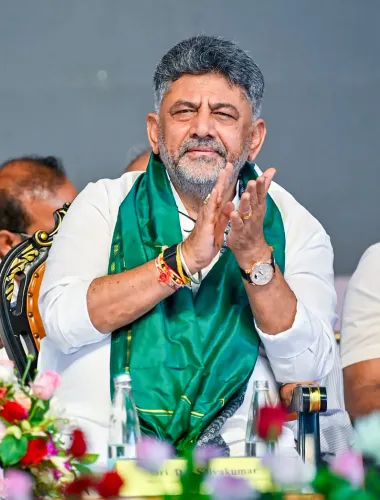
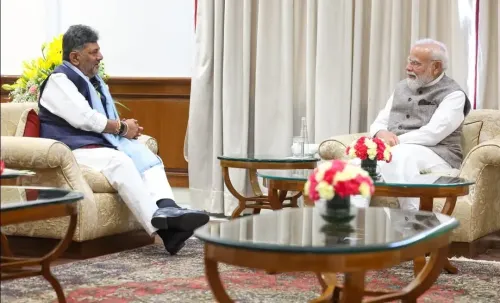
Karnataka Chief Minister D.K. Shivakumar met Union Defence Minister Rajnath Singh on 29 September 2026, submitting formal demands for Ministry of Defence land transfers needed to advance Bengaluru's road widening, tunnel corridors, slum redevelopment, and building height restriction review.
Key Takeaways
Shivakumar met Union Defence Minister Rajnath Singh in New Delhi on 29 September 2026 .
Discussions covered road widening , tunnel road projects , slum redevelopment , and a review of building height restrictions in Bengaluru.
Formal demands for Ministry of Defence land transfers required for all listed projects were submitted during the meeting.
Bengaluru 's defence establishments — including cantonment zones — constrain road, tunnel, and development alignments across large parts of the city.
Karnataka governments have sought Ministry of Defence land releases for Bengaluru infrastructure periodically since the early 2000s .
The Ministry of Defence must assess each parcel through the Defence Estates framework before any transfer can be notified.
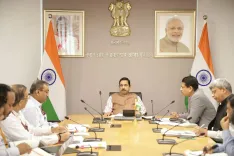
Bengaluru's gridlocked roads, cramped skylines, and sprawling slums all converged in a single meeting in New Delhi on Tuesday, 29 September 2026. Karnataka Chief Minister D.K. Shivakumar sat down with Union Defence Minister Rajnath Singh to press for what every ambitious infrastructure plan in the city ultimately requires: land that currently belongs to the Ministry of Defence.
The Chief Minister's Office of Karnataka confirmed the meeting, stating that CM Shivakumar discussed road widening, tunnel corridor projects, slum redevelopment, and a review of building height restrictions — every one of them stalled or constrained by defence land sitting inside the city's footprint. Formal demands for land transfer were submitted to the Defence Ministry during the meeting.
Why Defence Land Holds the Key to Bengaluru's Growth
Bengaluru is home to some of India's most significant defence establishments — from Hebbal to Jalahalli to the sprawling Cantonment zones — whose perimeters cut across the city's organic expansion. Roads that need to be six lanes wide dead-end at cantonment walls. Tunnel alignments that would relieve arterial congestion run straight through parcels the Ministry of Defence has held for decades. Building height restrictions imposed by defence aviation rules cap development across large sections of the city.
This is not a new tension. Karnataka governments have been knocking on the Defence Ministry's door since at least the early 2000s, seeking land releases to build metro lines, widen highways, and clear encroachments. What makes the current push notable is the breadth: road widening, tunnels, slum rehabilitation, and height-restriction reform all tabled in a single engagement.
The Tunnel and Slum Angle — Bengaluru's Two Biggest Pressure Points
Tunnel road proposals have been circulating in Bengaluru's planning circles as a way to bypass the city's chronic above-ground congestion without requiring mass demolitions. But viable tunnel alignments under the city's hillier terrain — particularly through Sadashivanagar, Malleswaram, and the northern corridors — frequently intersect with defence-controlled parcels. Without a land-transfer nod, detailed project reports cannot even be finalised.
The slum redevelopment ask carries a sharper human dimension. Large informal settlements have grown along the edges of defence land over generations. Redevelopment schemes require clear title and consolidated land parcels — which means the state and the Ministry of Defence must agree on boundaries, transfer mechanisms, and compensation before a single house can be rebuilt.
What Happens After the Demands Are Submitted
Central procedure requires the Ministry of Defence to assess each parcel against operational necessity, consult the relevant service commands, and route approvals through the Defence Estates framework. The process is methodical — and historically slow. States that have won land releases, including for earlier phases of Bengaluru's metro, typically required sustained follow-up over months or years before transfers were notified.
CM Shivakumar's direct meeting with Rajnath Singh signals that Karnataka is treating this cycle of requests as a political priority, not a bureaucratic formality. Whether the Defence Ministry responds with speed will determine which of Bengaluru's infrastructure bottlenecks actually move from drawing board to tender.
Bengaluru cannot build the city it needs without land the army holds. The paperwork is now officially on Rajnath Singh's desk.
Point of View
A Congress chief minister, is directly engaging a BJP-led central government on a multi-pronged ask — road, tunnel, slum, and height restrictions at once — signalling that Bengaluru's infrastructure deficit has become too visible to manage incrementally. The Defence Ministry's response will test whether the centre-state infrastructure compact can override partisan optics. A swift release would hand Shivakumar a concrete development win heading into the next electoral cycle; a prolonged delay would give him an equally usable grievance narrative.
NationPress
29 Sept 2026
Frequently Asked Questions
Why did Karnataka CM Shivakumar meet Rajnath Singh?
CM D.K. Shivakumar met Defence Minister Rajnath Singh to discuss and formally submit demands for Ministry of Defence land transfers needed for road widening, tunnel corridors, slum redevelopment, and a review of building height restrictions in Bengaluru .
Why does Bengaluru need defence land for infrastructure projects?
Bengaluru has major defence establishments — including cantonment areas — whose land parcels sit directly in the path of planned road, tunnel, and redevelopment alignments, making Ministry of Defence approvals a prerequisite for advancing those projects.
What projects are being planned for Bengaluru that require defence land?
The projects include road widening , tunnel road schemes , slum redevelopment , and a review of building height restrictions imposed by defence aviation rules across parts of the city.
How long does the Ministry of Defence take to transfer land to state governments?
The process is historically slow; the Ministry of Defence must assess each parcel against operational necessity, consult service commands, and route approvals through the Defence Estates framework, a process that has taken months to years for past projects including earlier phases of the Bengaluru Metro .
Has Karnataka asked for defence land for Bengaluru before?
Yes. Karnataka governments have been seeking Ministry of Defence land releases for Bengaluru infrastructure projects periodically since at least the early 2000s , including for metro expansion and road widening schemes.