CM Soren Launches Jharkhand's First Film & TV Institute MoU
Synopsis
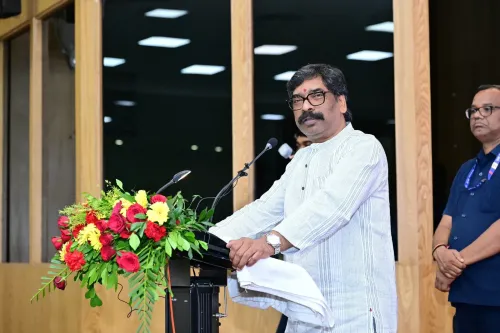
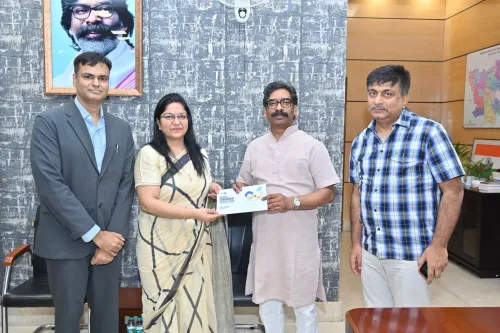
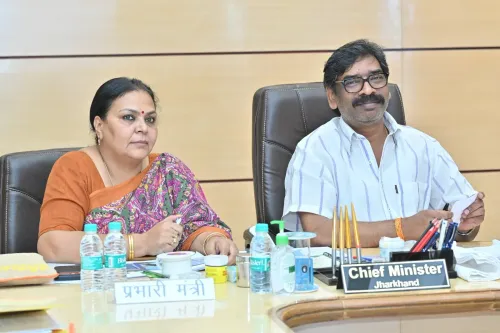
Chief Minister Hemant Soren attended the MoU signing between Jharkhand Film Development Corporation Ltd. and SRFTI, Kolkata, on 22 July 2026 at Project Bhawan, Ranchi, laying the groundwork for Jharkhand's first Film and Television Institute and expanding professional film education to the state.
Key Takeaways
Jharkhand's first Film and Television Institute is being established through an MoU between Jharkhand Film Development Corporation Ltd. and SRFTI, Kolkata .
The MoU was signed on 22 July 2026 at Project Bhawan, Ranchi , in the presence of Chief Minister Hemant Soren .
SRFTI is one of India's two central film training institutes, founded in 1995 in Kolkata ; the other is FTII Pune (est.
The initiative aims to provide professional film and television education to aspiring creators from Jharkhand , reducing the need to relocate to other states.
Regional-language cinema — including Santhali and Nagpuri — and the broader creative economy of Jharkhand are key intended beneficiaries.
Curriculum, faculty, campus infrastructure, and admissions timelines are yet to be announced.
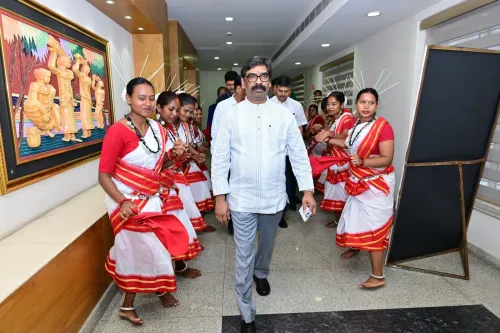
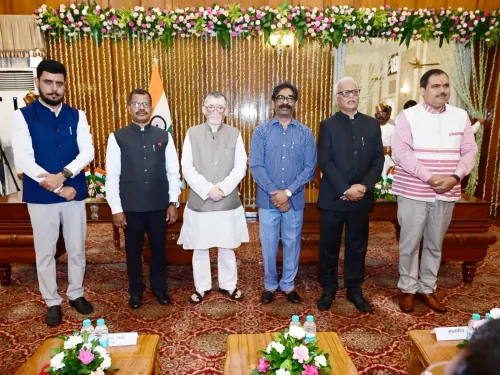
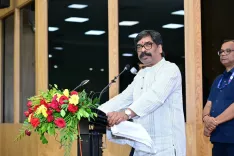
Jharkhand Chief Minister Hemant Soren attended the signing of a Memorandum of Understanding between Jharkhand Film Development Corporation Ltd. and Satyajit Ray Film and Television Institute (SRFTI), Kolkata on Wednesday, 22 July 2026, marking the foundation of the state's first Film and Television Institute. The ceremony was held at Project Bhawan, Ranchi.
Context
Posting on X, CM Soren described the occasion as historic, writing: 'आज रांची के प्रोजेक्ट भवन में झारखण्ड के पहले फिल्म एंड टेलीविजन इंस्टीट्यूट की स्थापना के लिए... MoU हस्ताक्षरित समारोह में शामिल हुआ' ('Today I attended the MoU signing ceremony at Project Bhawan, Ranchi, for the establishment of Jharkhand's first Film and Television Institute'). He extended greetings to all stakeholders, using the traditional Jharkhand salutation Johar. The agreement pairs the state's film promotion body with a nationally recognised institution to build professional training infrastructure within the state.
Policy Backdrop
SRFTI, established in 1995 in Kolkata, is one of India's two central film and television training institutes — the other being Film and Television Institute of India (FTII), Pune, founded in 1960. Both have served as models for state-level partnerships across the country. Jharkhand Film Development Corporation Ltd. is a state government undertaking created to promote film production, provide incentives to filmmakers, and build institutional capacity within the state's creative sector.
Across India, several states have entered into similar tie-ups with SRFTI and FTII to extend professional film education beyond the traditional hubs of Mumbai and Kolkata. Such arrangements are seen as a way to support local-language cinema, generate employment in the creative economy, and develop regional talent pipelines.
Stakeholders and Impact
The most direct beneficiaries of the proposed institute will be aspiring filmmakers, directors, cinematographers, and media professionals from Jharkhand who currently must relocate to other states for formal training. A state-based institution would lower barriers of cost and distance for students from tribal and rural communities that make up a significant part of the state's population.
The Jharkhand creative sector — including practitioners of Santhali, Nagpuri, and other regional-language cinema — stands to gain structured institutional support. Broader economic spillovers in the form of local production activity and technical employment are also anticipated as the institute becomes operational.
What's Next
The MoU signing is the formal first step; the specifics of curriculum design, faculty appointments, campus infrastructure, and the first admissions cycle are yet to be announced. Observers will watch for state budget allocations dedicated to the institute's physical and academic setup, as well as the timeline for its inaugural batch. The partnership with SRFTI is expected to shape the academic framework and quality benchmarks of the new institution.
With this agreement, Jharkhand positions itself among the growing number of Indian states investing in cultural infrastructure — signalling that professional film education is no longer the preserve of a handful of cities, but an expanding national ecosystem.
Point of View
It doubles as a cultural-identity statement — Jharkhand's tribal and regional-language artistic traditions gain an institutional home for the first time. The partnership model, anchored to an established central institute, reduces the risk of a poorly resourced state venture while lending immediate academic credibility. Whether the institute translates into sustained infrastructure investment or remains a ceremonial milestone will depend on the budget allocations and timelines that follow.
NationPress
22 Jul 2026
Frequently Asked Questions
What is Jharkhand's first Film and Television Institute?
It is a proposed state-level film and television training institution being set up through an MoU between Jharkhand Film Development Corporation Ltd. and Satyajit Ray Film and Television Institute (SRFTI), Kolkata. The MoU was signed on 22 July 2026 at Project Bhawan, Ranchi.
What is SRFTI and why is it partnering with Jharkhand?
SRFTI, or Satyajit Ray Film and Television Institute, is a national film education institution established in Kolkata in 1995. It is partnering with Jharkhand to help set up the state's first film institute, lending academic expertise and institutional credibility to the new venture.
Where was the MoU signing ceremony held?
The MoU signing ceremony was held at Project Bhawan in Ranchi, the capital of Jharkhand, on 22 July 2026.
Who attended the MoU signing for Jharkhand's film institute?
Chief Minister Hemant Soren attended the ceremony. He posted about the event on X, calling it a historic occasion and extending greetings to all stakeholders.
When will Jharkhand's Film and Television Institute start admissions?
No official timeline for admissions, curriculum finalisation, or campus setup has been announced yet. These details are expected to follow the MoU signing as the next phase of the project.