CM Sukhu Allots Land to 42 Pong Dam Displaced Families

Synopsis
Himachal Pradesh CM Sukhvinder Singh Sukhu has allotted land-lease deeds to 42 Pong Dam displaced families in Dehra constituency, with 89 families covered in a prior phase. The government has pledged that no oustee family will remain landless, reviving focus on a five-decade-old rehabilitation challenge in Kangra district.
Key Takeaways
42 families from Dehra assembly constituency received land-lease deeds from the Himachal Pradesh government on 20 July 2026 .
An earlier phase had already allotted land to 89 displaced families , bringing the running total to at least 131 families covered.
The families were displaced by the Pong Dam (Maharana Pratap Sagar) project on the Beas river , completed in 1974 , which submerged large areas of Kangra district .
CM Sukhu stated the government's commitment that no displaced family should remain landless and that every family deserves the right to its own land.
Pong Dam rehabilitation has been a recurring governance challenge for successive Himachal Pradesh governments for over five decades .
Further phases of allotment and possible court directions on pending oustee claims remain key developments to watch.
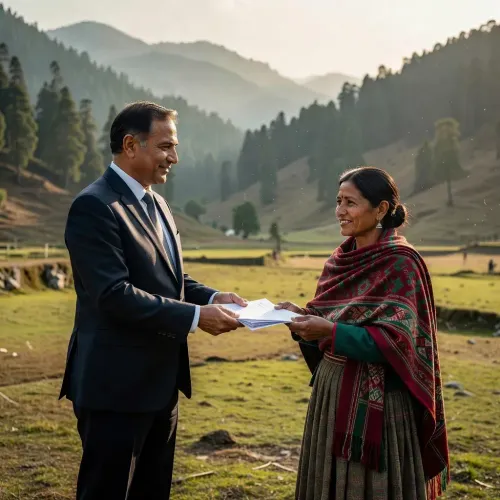
Himachal Pradesh Chief Minister Sukhvinder Singh Sukhu announced on Monday, 20 July 2026 that land-lease deeds have been handed over to 42 displaced families from the Dehra assembly constituency who were uprooted by the construction of Pong Dam, adding that 89 such families had already received land allotments in an earlier phase.
Context
Posting in Hindi on X, Chief Minister Sukhu wrote that the families had endured years of pain after being separated from their birthplaces — 'अपनी जन्मभूमि से बिछड़ने का दर्द इन परिवारों ने वर्षों तक सहा है' ('these families bore the pain of separation from their homeland for years'). He said the allotted land would serve as 'a strong foundation for their dignity, security and a new beginning in life.' The post underlines the state government's stated commitment that no displaced family should remain landless.
Dehra is an assembly constituency in Kangra district, several of whose villages were submerged or severely affected when the Pong Dam reservoir (Maharana Pratap Sagar) filled up after the dam's completion in the mid-1970s.
Policy Backdrop
The Pong Dam project on the Beas river was initiated in 1961 and completed by 1974, submerging large tracts of fertile agricultural land in lower Kangra and displacing thousands of families. Rehabilitation of these oustees has remained an unresolved governance challenge across successive Himachal Pradesh administrations for more than five decades.
Successive state governments — both Indian National Congress and BJP — have periodically announced land allotment or compensation drives for Pong oustees, including efforts in the 1980s and 1990s and renewed phases after 2000. The issue mirrors protracted displacement rehabilitation challenges seen in other large dam projects across India, including the Narmada and Tehri projects, where land-for-land compensation has often remained incomplete for decades.
Stakeholders and Impact
The immediate beneficiaries are the 42 families now receiving land-lease deeds in Dehra, bringing the cumulative total of allotted families in this ongoing drive to at least 131 when combined with the earlier batch of 89 families. For these rural households, formal land tenure means access to institutional credit, agricultural support, and legal security that landlessness had denied them for generations.
Broader stakeholders include the larger population of Pong Dam oustees across Kangra who are yet to receive land, civil-society groups that have pursued their claims through courts, and the state administration tasked with identifying and allocating suitable land parcels within Himachal Pradesh.
What's Next
Chief Minister Sukhu's post signals that further phases of land-lease distribution are intended, with the government committing that every displaced family will receive its right to land. Observers will watch for updates to the state's rehabilitation policy framework and any directions from the Himachal Pradesh High Court or the Supreme Court of India on pending Pong oustee claims that could set timelines for completing the process.
The political salience of the issue is also notable: Dehra is a constituency in Kangra, a district that carries significant electoral weight in Himachal Pradesh, and visible welfare delivery to long-marginalised displaced communities is likely to remain a priority for the Congress government ahead of future electoral cycles.
Point of View
The state's most populous district and a perennial electoral battleground. By framing the allotments in the language of dignity and rights rather than charity, the Chief Minister is signalling a political identity built around redressing historical injustices of state-sponsored displacement. The move also puts quiet pressure on the opposition to explain its own incomplete record on Pong rehabilitation across its tenures. Whether the government can move beyond incremental phases to a comprehensive, time-bound resolution of all pending claims will determine whether this becomes a lasting policy achievement or another chapter in a five-decade cycle of partial redress.
NationPress
21 Jul 2026
Frequently Asked Questions
Who are the Pong Dam displaced families in Himachal Pradesh?
The Pong Dam displaced families are households whose agricultural land and villages in lower Kangra district were submerged when the Pong Dam reservoir (Maharana Pratap Sagar) on the Beas river filled up after the dam's completion in 1974. Thousands of families were uprooted and have sought land-for-land rehabilitation from the state government for over five decades.
How many families have received land from the Himachal Pradesh government in the latest drive?
According to CM Sukhu's post dated 20 July 2026, 42 families from Dehra assembly constituency received land-lease deeds in the latest allotment, while 89 families had already been allotted land in a prior phase, bringing the cumulative figure to at least 131 families covered in this drive.
What is a land-lease deed (patta) in the context of rehabilitation?
A land-lease deed, known locally as a 'patta,' is an official government document conferring legal tenure over a plot of land to a beneficiary. For displaced families, it provides formal land rights, enabling access to agricultural credit, government schemes, and legal protection that landlessness had previously denied them.
Why has Pong Dam rehabilitation taken so long in Himachal Pradesh?
Pong Dam rehabilitation has remained incomplete for over five decades due to the scale of displacement, difficulties in identifying and allocating suitable land parcels within the state, administrative delays across successive governments, and protracted litigation in courts by oustee groups seeking enforcement of promised compensation.
What is the Dehra assembly constituency and why is it significant?
Dehra is an assembly constituency in Kangra district of Himachal Pradesh, one of the state's most electorally significant districts. Several of its villages were submerged or affected by the Pong Dam reservoir, making land rehabilitation for its displaced residents both a welfare priority and a politically sensitive issue for the state government.