CM Sukhu Backs NEET Protest Candle March, Slams Lathi Charge
Synopsis
Himachal Pradesh CM Sukhvinder Singh Sukhu backed a candle march supporting NEET paper-leak protesters on 25 July 2026, condemned a lathi charge on students, and highlighted his government's strict action against exam fraud, calling dialogue and accountability the hallmarks of democracy.
Key Takeaways
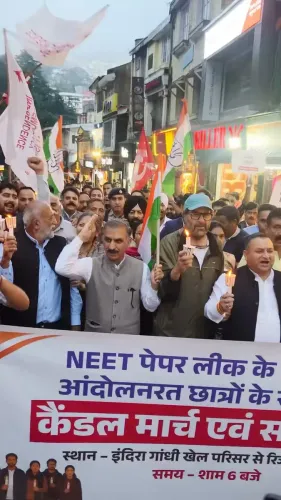
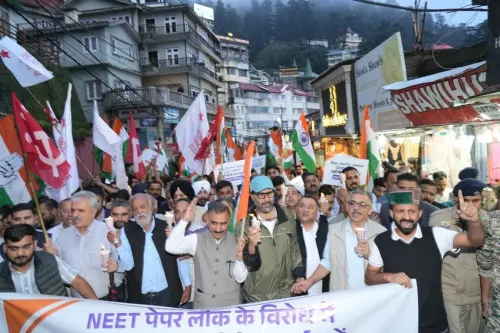
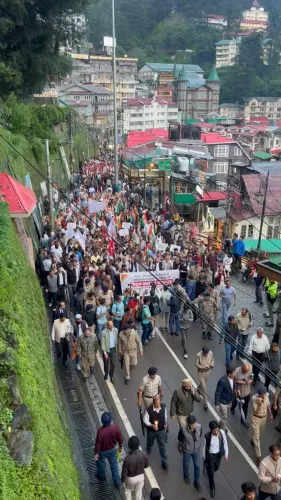
CM Sukhvinder Singh Sukhu expressed solidarity with a candle march held in support of NEET paper-leak protesters on 25 July 2026 .
He condemned a lathi charge on students demanding NEET transparency, calling it 'extremely unfortunate' and an affront to democratic values.
Sukhu stated that in a democracy, dissent must be respected and that dialogue is stronger than force.
He claimed the Himachal Pradesh government has already taken strict legal action against paper leak offenders.
The Chief Minister reaffirmed that ensuring a fair, transparent, and trustworthy examination system is his government's 'highest commitment.' The statement reflects a broader pattern of opposition-ruled states contrasting their exam-integrity measures with central-level accountability gaps.
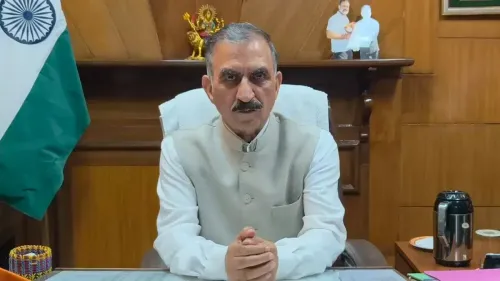
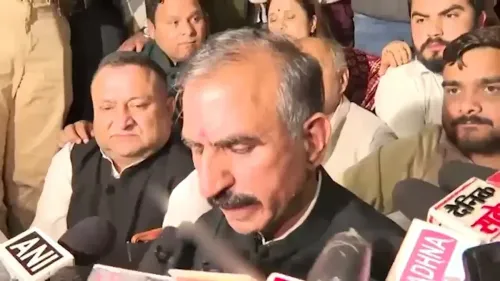
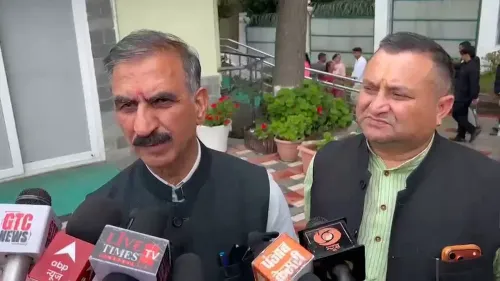
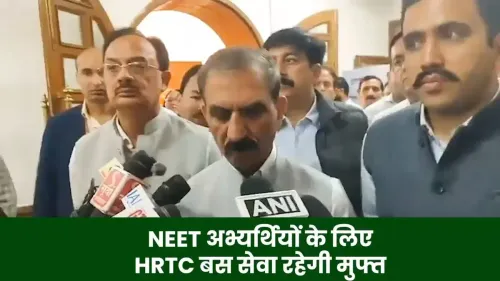
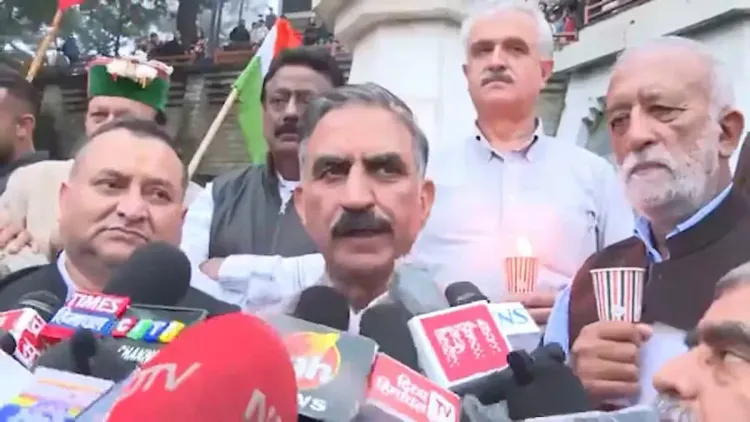
Himachal Pradesh Chief Minister Sukhvinder Singh Sukhu on Saturday, 25 July 2026, publicly backed students protesting against the NEET paper leak, condemning a lathi charge on demonstrators and reaffirming his government's commitment to exam transparency and accountability.
Context
In a post on X, CM Sukhu expressed solidarity with a candle march held in support of NEET aspirants, describing it as a symbol of the collective demand for justice, accountability, and a fair examination system. He wrote, 'न्याय, जवाबदेही और निष्पक्ष व्यवस्था की उसी सामूहिक भावना का प्रतीक है' ['it is a symbol of that same collective spirit of justice, accountability, and a fair system']. The Chief Minister thanked all residents of Himachal Pradesh who joined the march to amplify students' voices.
Sukhu directly criticised the use of force against protesting students, calling it 'extremely unfortunate' that those demanding transparency in NEET and action against paper leak culprits were met with baton charges instead of dialogue. 'In a democracy, dissent must be respected,' he stated, adding that 'dialogue and sensitivity are the greatest strengths of a democratic system, not force.'
Policy Backdrop
The National Eligibility cum Entrance Test (NEET) is the sole national entrance examination for undergraduate medical admissions in India, mandated by the Supreme Court in 2016 and conducted annually by the National Testing Agency (NTA). Allegations of large-scale paper leaks in 2024 triggered nationwide student protests and calls for sweeping systemic reforms, placing the NTA and the central government under sustained scrutiny.
The controversy reignited federal tensions, with opposition-governed states publicly highlighting their own anti-malpractice measures as a contrast to perceived lapses at the central level. CM Sukhu asserted that the Himachal Pradesh government has already taken strict action against paper leak offenders, bringing the guilty 'within the grip of the law.' He declared that 'tampering with the future of youth is not acceptable at any cost.'
Stakeholders and Impact
Medical aspirants across India — particularly those who have spent years preparing for NEET — are the most directly affected stakeholders. Any compromise in examination integrity can derail careers and deepen distrust in centralised testing systems. Student groups and civil society organisations have repeatedly called for independent audits of the NTA and stricter penal provisions for paper leak conspirators.
State governments, especially those led by opposition parties, have used the NEET controversy to press for greater state-level oversight or a decentralised examination framework. CM Sukhu's statement reinforces this pattern, positioning Himachal Pradesh as a state that acts decisively on exam fraud while calling on the centre to match that standard. The candle march referenced in the post signals sustained grassroots pressure that extends well beyond the initial 2024 protests.
What's Next
Attention will now turn to whether the central government responds with concrete NTA reform announcements or a parliamentary committee report on examination security in the upcoming legislative session. CM Sukhu's public stand is likely to keep political pressure on the issue and may encourage similar statements from Congress-governed states. The broader question of whether NEET remains a centralised examination or is restructured with greater state involvement could define the policy debate on youth access to professional education in the months ahead.
Point of View
He frames the Congress-led Himachal Pradesh government as the responsible actor on exam integrity while directing accountability pressure upward toward the central administration. The invocation of democratic values — dialogue over force — is a well-worn but effective rhetorical device that broadens the appeal beyond student communities to civil society at large. Situating state-level anti-paper-leak action within the national NEET controversy allows Sukhu to simultaneously defend his governance record and sustain political pressure on the centre. If the central government fails to announce credible NTA reforms, such state-level messaging will likely intensify ahead of the next legislative session.
NationPress
26 Jul 2026
Frequently Asked Questions
Why did CM Sukhu support the NEET candle march?
CM Sukhvinder Singh Sukhu supported the candle march because it represented students demanding transparency in the NEET examination, accountability for paper leak culprits, and a fair testing system. He said the march symbolised the collective spirit of justice and accountability shared by the people of Himachal Pradesh.
What did CM Sukhu say about the lathi charge on NEET protesters?
CM Sukhu called the lathi charge on NEET protesters 'extremely unfortunate,' arguing that students demanding exam transparency and action against paper leaks deserved dialogue, not force. He stated that in a democracy, dissent must be respected and that sensitivity is a democratic system's greatest strength.
What action has Himachal Pradesh taken against NEET paper leaks?
CM Sukhu stated that the Himachal Pradesh government has taken strict action against paper leak offenders and brought the guilty within the reach of the law. He did not specify individual cases in the post, but framed this as evidence of his government's commitment to exam integrity.
What is NEET and why is it controversial?
NEET, the National Eligibility cum Entrance Test, is the single national entrance examination for undergraduate medical admissions in India, mandated by the Supreme Court in 2016 and conducted by the National Testing Agency. It became highly controversial following widespread allegations of paper leaks in 2024, which triggered nationwide student protests and demands for systemic reform.
What reforms are expected for NEET and the NTA?
Observers are watching for central government announcements on NTA reforms and potential parliamentary committee reports on examination security. Opposition-ruled states like Himachal Pradesh have been pressing for greater accountability and transparency, and some have called for decentralised or state-level oversight of competitive examinations.