CM Sukhu Calls for Mass Environment Movement at Shimla
Synopsis
On World Environment Day, Himachal Pradesh CM Sukhvinder Singh Sukhu addressed a gathering at Shimla's Ridge Maidan, demanding Rs 90,000 crore in annual central compensation for the state's ecological services, calling for a mass conservation movement, and vowing to dismantle the chitta drug mafia without exception.
Key Takeaways
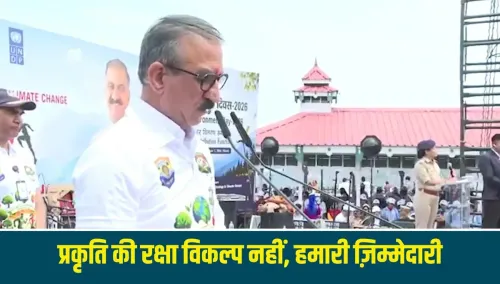
CM Sukhu addressed World Environment Day celebrations at Ridge Maidan, Shimla on 5 June 2025 .
Himachal Pradesh claims it provides approximately Rs 90,000 crore worth of ecological services annually but receives no central compensation.
The Chief Minister called for environmental conservation to be made a mass public movement, emphasising clean water, air, forests, and rivers as life's foundation.
The state government has launched a strong campaign against chitta (heroin) and other narcotics; Sukhu warned no influential person would be spared.
The 'Paryavaran Utkrishthata Puraskar' awards for 2025-26 were presented to outstanding institutions and individuals in environmental conservation.
Mini marathon winners were also felicitated at the event.
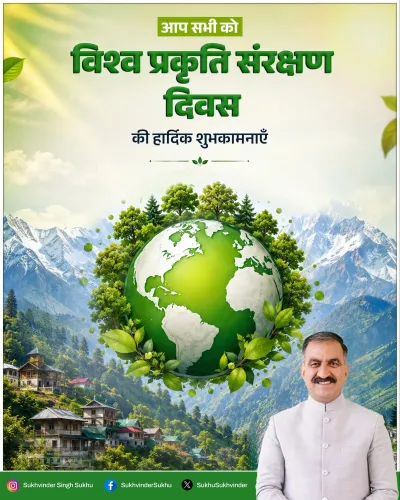
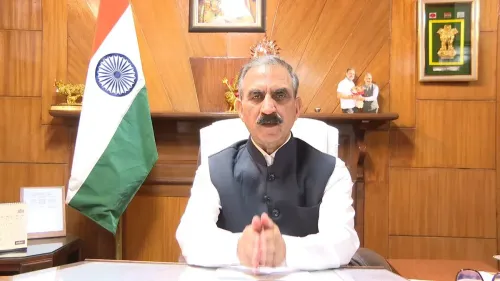
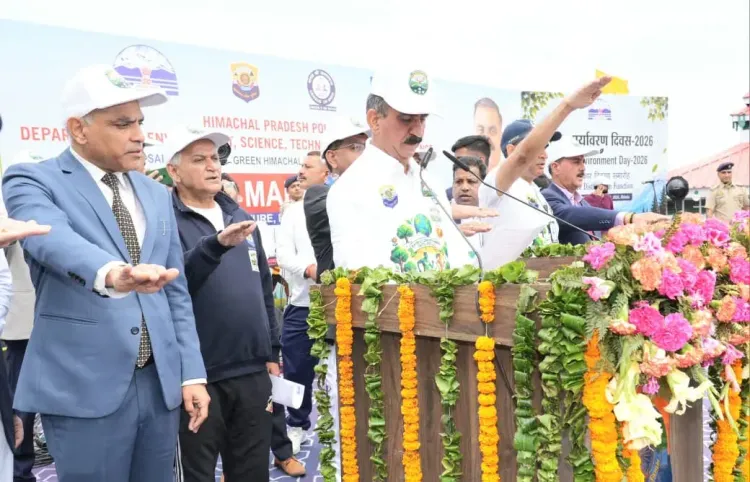
Himachal Pradesh Chief Minister Sukhvinder Singh Sukhu on Friday, 5 June 2025, addressed a gathering at Ridge Maidan, Shimla, on the occasion of World Environment Day, calling for environmental conservation to be turned into a mass public movement. He also renewed the state's demand for central compensation for ecological services and issued a stern warning against drug traffickers.
Context
Speaking at the Ridge Maidan event, CM Sukhu declared: 'पर्यावरण संरक्षण को जन आंदोलन बनाने का आह्वान किया' ('I called for making environmental conservation a mass movement'). He underlined that clean water, pure air, forests, and rivers are the foundation of life, and their protection is a collective responsibility of all citizens.
At the event, CM Sukhu also presented the 'Paryavaran Utkrishthata Puraskar' (Environment Excellence Awards) for the year 2025-26 to institutions and individuals who have done outstanding work in environmental conservation. Winners of a mini marathon held as part of the celebrations were also felicitated.
Policy Backdrop
Himachal Pradesh, a Himalayan state with extensive forest cover, plays a critical role in supplying ecosystem services — including water regulation and carbon sequestration — to northern India. CM Sukhu stated that the state provides approximately Rs 90,000 crore worth of ecological services to the country annually, yet receives no compensation from the central government in return.
This demand is not new. Himachal Pradesh governments have raised the issue of a 'green bonus' — a fiscal transfer from the centre recognising the state's ecological contribution — in successive budget speeches and submissions to Finance Commissions since the early 2010s. The argument is that Himalayan states generate national public goods through forest conservation without adequate fiscal recognition in federal transfers.
Stakeholders and Impact
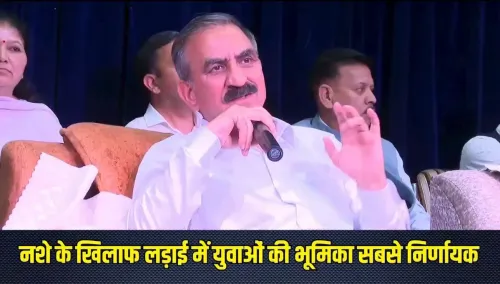
CM Sukhu used the platform to issue a sharp warning on the narcotics front, announcing that the state government has launched a strong campaign against chitta (heroin) and other drugs. He stated: 'नशे के अवैध कारोबार में संलिप्त किसी भी व्यक्ति को बख्शा नहीं जाएगा, चाहे वह कितना भी प्रभावशाली क्यों न हो' ('No person involved in the illegal drug trade will be spared, no matter how influential they may be'). He added that the chitta mafia would be 'ground to dust.'
The anti-drug drive directly concerns Himachal Pradesh's youth, who have been disproportionately affected by substance abuse networks operating across northern borders. Environmental institutions, civil society groups, and local communities who depend on the state's forests and rivers are the primary stakeholders in the ecological compensation debate.
What's Next
The 16th Finance Commission's deliberations on ecological compensation formulas will be closely watched by Himachal Pradesh and other Himalayan states seeking recognition for their forest conservation efforts. A favourable formula could set a precedent for green fiscal federalism in India.
On the narcotics front, the state government's anti-drug enforcement framework and any legislative measures expanding its scope will determine whether CM Sukhu's public warning translates into sustained institutional action against trafficking networks.
Point of View
A demand that gains traction each time a Finance Commission is in session. The sharp anti-drug rhetoric, invoking the 'chitta mafia', is directed as much at a domestic audience anxious about youth substance abuse as it is a political assertion of executive will. Together, the two messages position Sukhu as both a federalist champion fighting for the state's due and a law-and-order chief minister unwilling to tolerate powerful vested interests — a dual narrative with clear electoral utility.
NationPress
23 Sept 2026
Frequently Asked Questions
What did CM Sukhu say on World Environment Day 2025?
CM Sukhvinder Singh Sukhu called for environmental conservation to be made a mass public movement at a World Environment Day event at Ridge Maidan, Shimla on 5 June 2025. He also demanded central compensation for Himachal Pradesh's ecological services and warned drug traffickers of strict action.
How much ecological compensation is Himachal Pradesh demanding from the centre?
CM Sukhu stated that Himachal Pradesh provides approximately Rs 90,000 crore worth of ecological services to the country every year but currently receives no compensation from the central government in return.
What is the chitta drug crackdown in Himachal Pradesh?
The Himachal Pradesh government has launched a strong campaign against chitta (heroin) and other narcotics. CM Sukhu warned that no person involved in the illegal drug trade — however influential — would be spared, and vowed to dismantle the chitta mafia entirely.
What is the Paryavaran Utkrishthata Puraskar?
The 'Paryavaran Utkrishthata Puraskar' (Environment Excellence Award) is a Himachal Pradesh state award presented to institutions and individuals who have done outstanding work in environmental conservation. CM Sukhu presented the 2025-26 edition of the awards at the World Environment Day event in Shimla.
Why does Himachal Pradesh demand a green bonus from the central government?
Himachal Pradesh maintains large forest covers that supply water, carbon sequestration, and other ecosystem services to the rest of India. The state argues it bears the cost of conservation without receiving adequate fiscal compensation from the centre, a demand it has raised in Finance Commission submissions since the early 2010s.