CM Sukhu calls youth to join Anti-Chitta Walkathon in Shimla
Synopsis
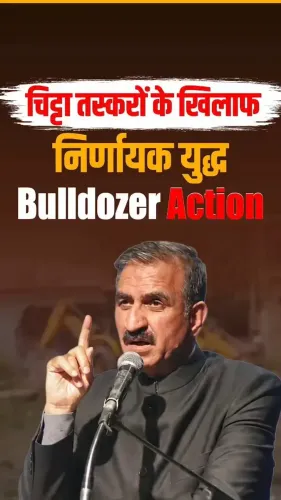
Himachal Pradesh CM Sukhvinder Singh Sukhu has announced an 'Anti-Chitta Walkathon' in Shimla on 5 June 2026, urging youth aged 17-25 to report drug activity to police and join the drive to make the state chitta-free.
Key Takeaways
CM Sukhvinder Singh Sukhu announced an 'Anti-Chitta Walkathon' in Shimla on 5 June 2026 to build public momentum against drug abuse.
He urged students and youth to immediately report anyone seen in the grip of 'chitta' to local police.
Drug traffickers specifically target youth aged 17 to 25 years , according to the Chief Minister's post. 'Chitta' is a heroin-based synthetic drug that has emerged as a major concern in Himachal Pradesh .
The state's campaign complements the national Nasha Mukt Bharat Abhiyan launched in 2020 and the NDPS Act, 1985 .
State police, schools, and colleges are central to the citizen-reporting and awareness model being promoted.
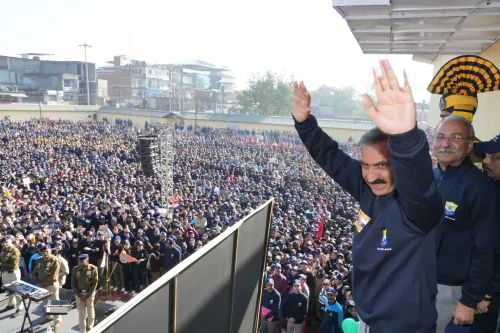
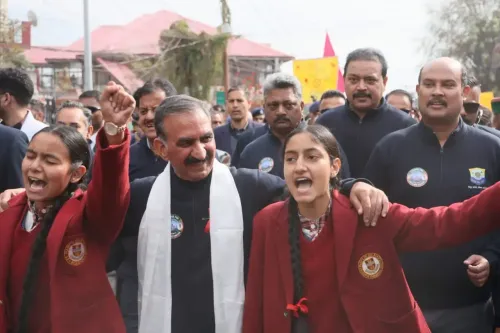
Himachal Pradesh Chief Minister Sukhvinder Singh Sukhu on Tuesday, 26 May 2026, urged young people and students to report suspected drug use in their schools and neighbourhoods to police, and announced an 'Anti-Chitta Walkathon' in Shimla on 5 June to mobilise public participation in making the state free of the synthetic drug 'chitta'.
Context
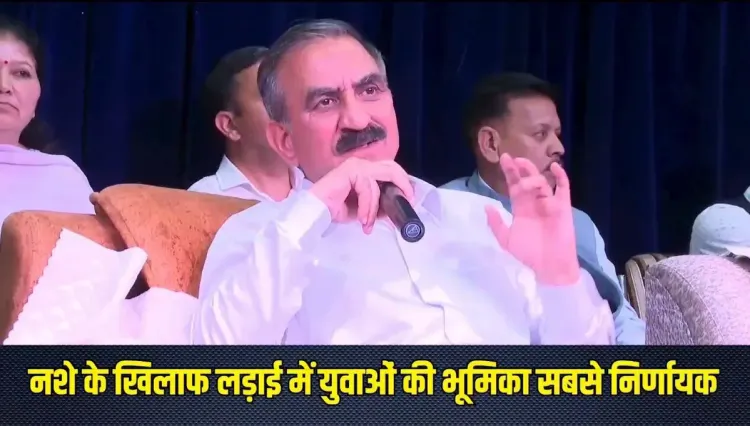
Posting in Hindi on X, CM Sukhu expressed satisfaction at growing awareness among children and youth against drug abuse. He wrote: 'नशे के विरुद्ध बच्चों और युवाओं में बढ़ती जागरूकता देखकर अत्यंत प्रसन्नता हो रही है' ('It is extremely heartening to see growing awareness among children and youth against drug abuse'). He specifically called out 'chitta' — a street name for heroin-based synthetic drugs widely circulated in Himachal Pradesh — as a threat that traffickers deliberately direct at school and college students.
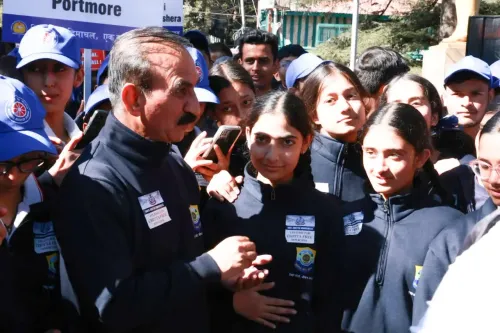
The Chief Minister warned that drug traffickers specifically target youth between the ages of 17 and 25 years, seeking to damage their futures, families, and society simultaneously. He appealed to young people to immediately inform police if anyone in their school, college, or neighbourhood appears to be in the grip of chitta.
Policy Backdrop
Himachal Pradesh, a northern hill state with a population of approximately seven million, has seen drug abuse among adolescents flagged as a growing concern by state authorities in recent years. The state's geography — bordering Punjab and sharing transit routes used by trafficking networks — has made it particularly vulnerable to the spread of synthetic opioids.
At the national level, the Nasha Mukt Bharat Abhiyan, launched in August 2020 by the Ministry of Social Justice and Empowerment, targets substance abuse in educational institutions through school and college outreach programmes. The foundational legal framework remains the Narcotic Drugs and Psychotropic Substances (NDPS) Act, 1985, which governs drug trafficking penalties across India. CM Sukhu's community-mobilisation approach complements these central initiatives without requiring fresh federal funding mandates.
Stakeholders and Impact
The walkathon and reporting appeal are directed primarily at students, youth aged 17 to 25, and their families across Himachal Pradesh. State police are positioned as the first point of contact for tip-offs, placing operational responsibility on local law enforcement to act on community intelligence. Schools and colleges are implicitly expected to serve as nodes for spreading the anti-drug message.
Indian state governments have increasingly adopted community walks, reporting hotlines, and campus programmes to counter rising synthetic drug and opioid use among adolescents. Border and hill states face similar challenges with trafficking networks that specifically target educational campuses, making citizen-participation models like this walkathon a recurring feature of state-level counter-narcotics strategy.
What's Next
All eyes will be on the turnout at the 'Anti-Chitta Walkathon' in Shimla on 5 June 2026, which will serve as a gauge of public engagement with the state government's anti-drug push. Observers will also watch whether the event is followed by concrete administrative steps — such as new police reporting protocols, expanded de-addiction facilities, or fresh outreach programmes in schools — by the Himachal Pradesh education and police departments. The walkathon's scale and follow-through will determine whether it marks a sustained policy shift or remains a symbolic gesture in the state's fight against chitta.
Point of View
Particularly when conventional enforcement alone has proved insufficient. By framing chitta as a threat to the 17-25 age bracket and asking students to become active informants, the administration is attempting to convert social awareness into operational police intelligence. The move also carries political weight: positioning the Congress-led state government as proactive on a law-and-order issue that resonates deeply with parents and educators. Whether the 5 June event translates into sustained institutional action — new de-addiction beds, school counsellors, or police hotlines — will determine its long-term credibility.
NationPress
13 Oct 2026
Frequently Asked Questions
What is the Anti-Chitta Walkathon in Shimla?
The Anti-Chitta Walkathon is a public awareness event announced by Himachal Pradesh CM Sukhvinder Singh Sukhu to be held in Shimla on 5 June 2026 , inviting citizens to walk together in solidarity against the synthetic drug 'chitta' and support efforts to make the state drug-free.
What is 'chitta' and why is it a concern in Himachal Pradesh?
'Chitta' is a street name for a heroin-based synthetic drug that has become a significant drug-abuse concern in Himachal Pradesh , particularly among youth aged 17 to 25 . Traffickers are reported to target school and college students in the state.
How can students report drug activity in Himachal Pradesh?
CM Sukhu has urged students and youth to immediately contact local police if they notice anyone in their school, college, or neighbourhood who appears to be under the influence of or involved with chitta.
What national scheme supports anti-drug efforts in Indian states?
The Nasha Mukt Bharat Abhiyan , launched in August 2020 by the Ministry of Social Justice and Empowerment , supports anti-drug awareness in educational institutions across India and complements state-level campaigns like the one in Himachal Pradesh .
Who is Sukhvinder Singh Sukhu?
Sukhvinder Singh Sukhu is the Chief Minister of Himachal Pradesh , in office since December 2022 , and a leader of the Indian National Congress . He has made social welfare and anti-drug efforts a visible part of his administration's agenda.