CM Sukhu Pledges Drug-Free, Green Himachal at Shimla Rally

Synopsis
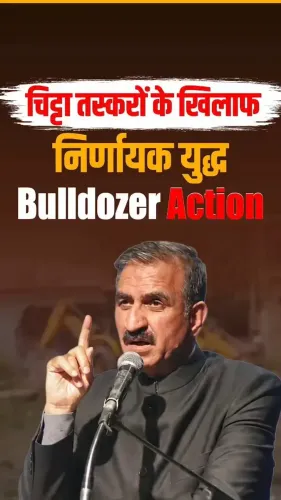
Himachal Pradesh Chief Minister Sukhvinder Singh Sukhu pledged at Ridge Maidan, Shimla on World Environment Day 2026 to eradicate chitta and build a drug-free, clean, safe and green Himachal Pradesh, linking anti-narcotics action with youth welfare and environmental conservation.
Key Takeaways
CM Sukhvinder Singh Sukhu took a public pledge at Ridge Maidan, Shimla on 5 June 2026 to eradicate chitta from Himachal Pradesh .
The pledge was made on World Environment Day , linking drug eradication with environmental protection.
The government's four-point vision is a chitta-free, clean, safe and green Himachal Pradesh .
Himachal Pradesh set up an Anti-Narcotics Task Force in 2023 to tackle the Punjab-Himachal drug corridor .
The campaign operates within the Central government's Nasha Mukt Bharat Abhiyan framework, launched in August 2020 .
Integration of anti-narcotics funding with the state budget is expected in the next legislative session.
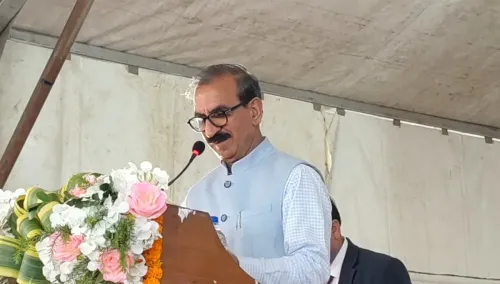
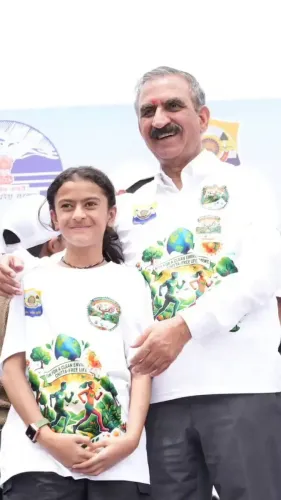
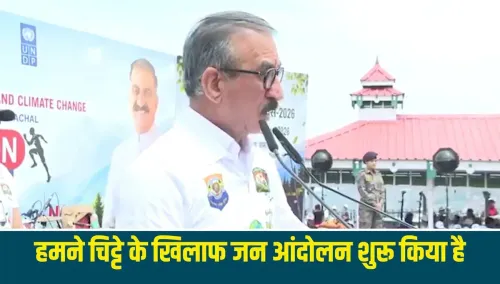
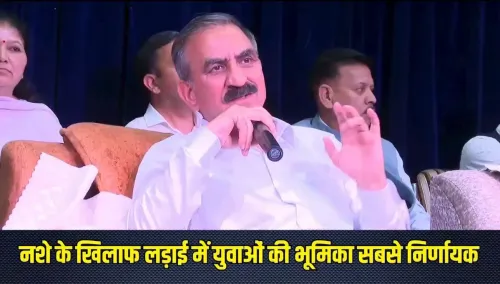
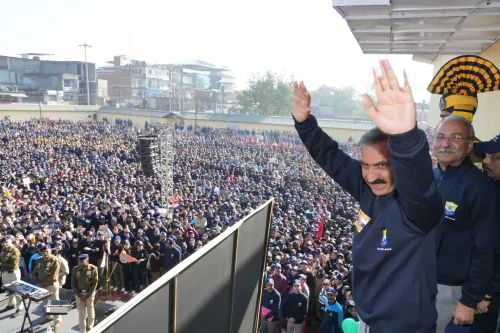
Himachal Pradesh Chief Minister Sukhvinder Singh Sukhu on Friday, 5 June 2026, publicly pledged to eradicate synthetic drugs — locally known as chitta — from the state, delivering the vow before a gathering at Ridge Maidan, Shimla. The declaration, made on World Environment Day, linked the anti-narcotics drive with environmental protection and the welfare of the state's youth.
Posting on X, Chief Minister Sukhu wrote: 'हम शपथ लेते हैं कि चिट्टे को जड़ से समाप्त करेंगे।' ('We pledge to eradicate chitta from its roots.') He added that the government would simultaneously protect the environment and ensure the well-being of youth and society, articulating a four-point vision: a chitta-free, clean, safe and green Himachal Pradesh.
Context
Chitta — a white-powder synthetic drug typically comprising heroin or methamphetamine — has emerged as one of the most pressing public-health crises in Himachal Pradesh over the past decade. The substance has spread from urban centres to remote hill villages, disproportionately affecting young men between the ages of 18 and 35. The Ridge Maidan event underscores the government's intent to make the anti-narcotics campaign a visible, mass-participation movement rather than a purely administrative exercise.
The choice of Ridge Maidan — Shimla's most prominent open public space and a historic site for civic gatherings — signals the political weight the Congress government is attaching to this pledge. Holding the event on World Environment Day also allows the administration to frame drug eradication and ecological conservation as complementary obligations of the state.
Policy Backdrop
The Central government's Nasha Mukt Bharat Abhiyan, launched in August 2020 by the Ministry of Social Justice and Empowerment, provides a national framework within which state-level campaigns operate. The scheme channels funding toward awareness drives, community outreach, and treatment infrastructure, and Himachal Pradesh has been among the participating states.
In 2023, the Himachal Pradesh government constituted a dedicated Anti-Narcotics Task Force to intensify seizures and rehabilitation efforts along the Punjab-Himachal drug corridor — the primary supply route through which synthetic drugs enter the hill state. That task force has since conducted targeted operations in border districts. CM Sukhu's latest pledge appears to build on that institutional groundwork, seeking to add a community-mobilisation dimension to enforcement.
Parallel efforts in the state have included afforestation drives, waste-management campaigns, and youth-skilling programmes — all framed as part of an integrated vision that treats social and environmental health as inseparable. Similar integrated approaches have been pursued in neighbouring Punjab and Uttarakhand.
Stakeholders and Impact
The primary beneficiaries of a successful anti-chitta drive would be Himachal Pradesh's hill communities, particularly families in districts such as Kangra, Mandi, Kullu and Shimla where drug dependency has strained household economies and public-health resources. Youth welfare organisations and school-level awareness bodies are expected to be key implementation partners.
Environmental groups active in the state welcome the government's decision to club ecological conservation with the anti-narcotics message, arguing that healthy, engaged youth are also more likely to participate in forest protection and clean-Himalaya initiatives. For the Congress government, the dual framing offers political capital ahead of future electoral cycles, presenting the administration as both socially responsive and environmentally conscious.
What's Next
Observers will watch for the rollout of an updated state anti-narcotics action plan and its integration with Central funding under the Nasha Mukt Bharat Abhiyan in the next budget session. The government is also expected to announce measurable targets — such as seizure volumes, rehabilitation admissions, and awareness-camp reach — to give the Ridge Maidan pledge operational substance.
Should the administration follow through with expanded task-force powers, inter-agency coordination with Punjab Police, and ring-fenced budget allocations, the chitta-free Himachal vision could become a model for other Himalayan states grappling with similar synthetic-drug crises. The durability of the commitment will ultimately be tested by outcomes on the ground rather than by the scale of the public ceremony.
Point of View
Borrowing the grammar of public oath-taking that has proven politically resonant across Indian states. By anchoring the announcement to World Environment Day, the Congress government in Shimla weaves together two vote-sensitive issues — youth welfare and ecological conservation — into a single, media-friendly narrative. The move also positions the state administration as an active partner in the Centre's Nasha Mukt Bharat Abhiyan, potentially unlocking additional federal funding. The real test will be whether the symbolic weight of the Shimla pledge translates into measurable reductions in chitta availability and addiction rates across Himachal's vulnerable hill districts.
NationPress
20 Oct 2026
Frequently Asked Questions
What is chitta and why is it a problem in Himachal Pradesh?
Chitta is a white-powder synthetic drug, typically heroin or methamphetamine, that has spread across Himachal Pradesh over the past decade, severely affecting youth in both urban and rural hill communities.
What did CM Sukhu announce at Ridge Maidan Shimla?
Chief Minister Sukhvinder Singh Sukhu pledged on 5 June 2026 to eradicate chitta from its roots and build a chitta-free, clean, safe and green Himachal Pradesh, combining anti-drug action with environmental protection.
What is the Nasha Mukt Bharat Abhiyan?
The Nasha Mukt Bharat Abhiyan is a Central government scheme launched in August 2020 by the Ministry of Social Justice and Empowerment to create a drug-free India through state-level awareness, treatment and community action programmes.
What is the Punjab-Himachal drug corridor?
The Punjab-Himachal drug corridor is the primary supply route through which synthetic drugs, including chitta, enter Himachal Pradesh from Punjab, prompting the state to set up a dedicated Anti-Narcotics Task Force in 2023.
What steps has the Himachal Pradesh government taken against drugs before this pledge?
The Himachal Pradesh government formed an Anti-Narcotics Task Force in 2023 to intensify seizures and rehabilitation, and has participated in the Central government's Nasha Mukt Bharat Abhiyan framework since its launch in 2020.