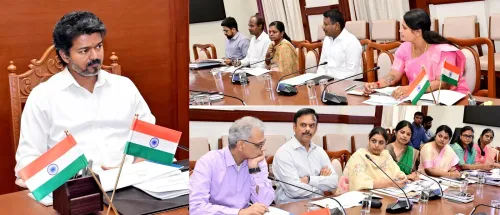
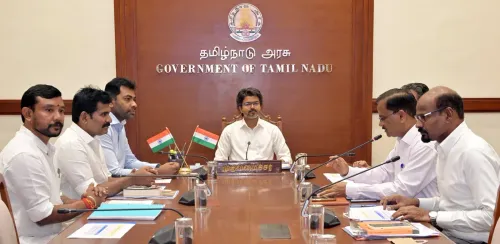
CM Vijay Chairs Social Justice Dept Review at Secretariat
Synopsis
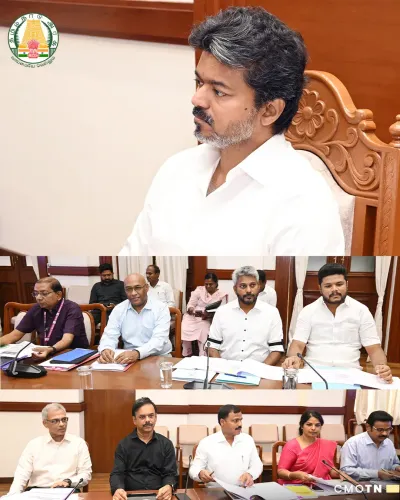
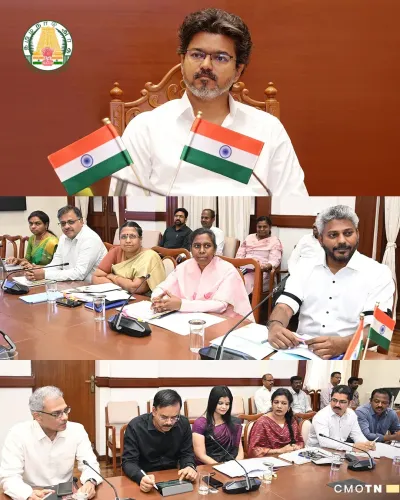
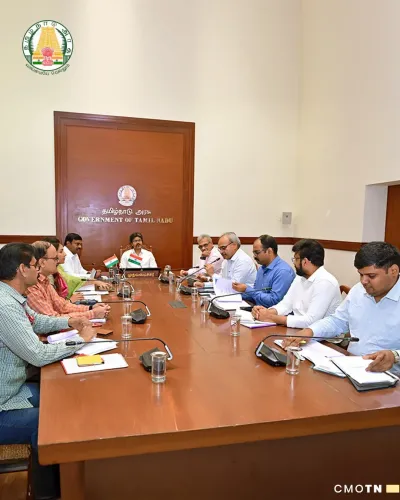
Chief Minister S. Joseph Vijay on 8 July 2026 chaired a review meeting at the Tamil Nadu Secretariat to assess the activities and schemes of the Social Justice Department, signalling direct executive oversight of welfare delivery for Backward Classes and SC/ST communities.
Key Takeaways
Joseph Vijay chaired the Social Justice Department review meeting on 8 July 2026 .
The meeting was held at the Tamil Nadu Secretariat in Chennai .
The review covered the operations and ongoing schemes of the Social Justice Department .
Primary beneficiaries of the department's programmes include Backward Classes, Scheduled Castes, and Scheduled Tribes .
Tamil Nadu's social justice tradition dates to the Justice Party government of the 1920s , one of the earliest caste-reservation frameworks in India.
Follow-up policy announcements or funding decisions are expected at the next state budget or assembly session.
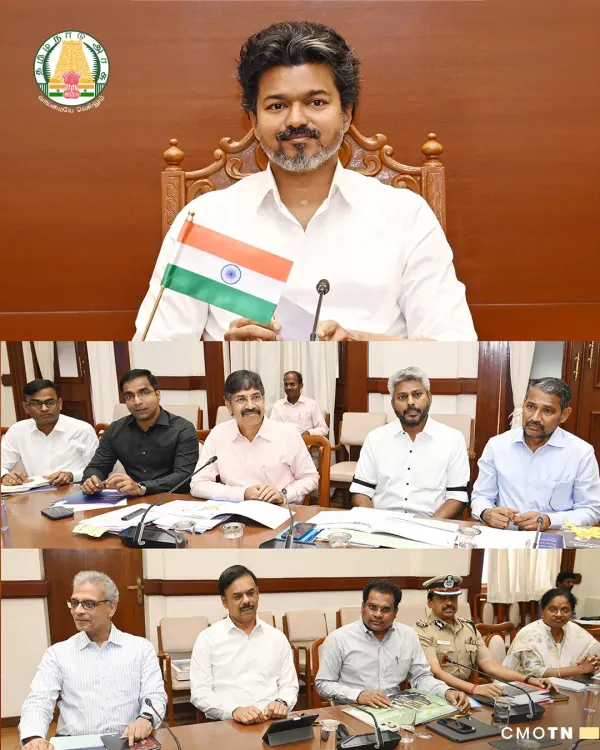
The Chief Minister's Office of Tamil Nadu announced on Wednesday, 8 July 2026 that Chief Minister S. Joseph Vijay presided over a review meeting at the Tamil Nadu Secretariat in Chennai, examining the operations and schemes of the Social Justice Department.
Context
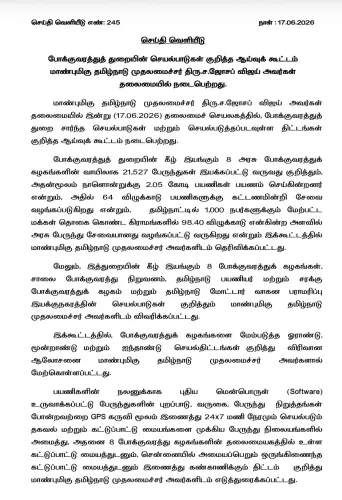
The Chief Minister's Office posted in Tamil: 'மாண்புமிகு தமிழ்நாடு முதலமைச்சர் திரு.ச.ஜோசப் விஜய் அவர்கள் தலைமையில் இன்று (8.7.2026) தலைமைச் செயலகத்தில், சமூக நீதித் துறையின் செயல்பாடுகள் மற்றும் திட்டங்கள் குறித்த ஆய்வுக்கூட்டம் நடைபெற்றது.' This translates as: 'A review meeting on the activities and schemes of the Social Justice Department was held today (8.7.2026) at the Secretariat under the chairmanship of Honourable Tamil Nadu Chief Minister Mr S. Joseph Vijay.'
The meeting took place at the Tamil Nadu Secretariat, the central administrative hub in Chennai that houses the offices of key state departments and senior officials. Periodic review meetings of this kind are a standard mechanism through which the Chief Minister's Office monitors scheme implementation across departments.
Policy Backdrop
The Social Justice Department oversees welfare schemes and legal protections for Backward Classes, Scheduled Castes, Scheduled Tribes, and other historically marginalised communities in the state. Tamil Nadu has one of the longest-standing traditions of affirmative action in India, tracing its roots to the Justice Party government of the 1920s, which pioneered caste-based reservations in public employment and education.
Subsequent constitutional amendments in the 1950s formalised and expanded these protections. Successive Dravidian-movement governments have maintained a consistent emphasis on social justice as a core policy plank, embedding targeted welfare and affirmative-action programmes across education, employment, and social security sectors.
Stakeholders and Impact
The primary beneficiaries of the Social Justice Department's programmes are members of Backward Classes and SC/ST communities, who together constitute a substantial share of Tamil Nadu's population. Review meetings at the Chief Minister level signal direct executive attention to the pace and quality of welfare delivery on the ground.
Departments typically present implementation data — including scheme coverage, fund utilisation, and grievance redressal — at such sessions. Outcomes from the meeting could inform adjustments to ongoing programmes or the framing of new welfare measures ahead of the next state budget or assembly session.
What's Next
Follow-up announcements on scheme expansions, revised eligibility norms, or fresh funding allocations are likely to emerge through the state assembly or the next budget presentation. Observers will watch for any directives issued by CM Vijay following the review, particularly on the pace of disbursals and the reach of flagship welfare initiatives targeting marginalised communities across Tamil Nadu's 38 districts.
Point of View
Particularly for a department as symbolically loaded as Social Justice in Tamil Nadu's Dravidian polity. The meeting continues a well-established pattern of periodic executive-level oversight that Dravidian governments have used to demonstrate accountability to marginalised voter blocs. The timing, mid-legislative-year, suggests the administration may be building a policy record ahead of budget season, when welfare scheme expansions carry both fiscal and electoral weight. Whether the review translates into concrete scheme enhancements or remains a procedural exercise will become clear in the weeks following the assembly's next session.
NationPress
8 Jul 2026
Frequently Asked Questions
What was the Social Justice Department review meeting held by CM Vijay about?
The meeting, chaired by Chief Minister S. Joseph Vijay on 8 July 2026 at the Tamil Nadu Secretariat, reviewed the activities and ongoing welfare schemes of the Social Justice Department, which serves Backward Classes, SC/ST communities, and other marginalised groups.
Where was the Tamil Nadu Social Justice Department review meeting held?
The meeting was held at the Tamil Nadu Secretariat in Chennai, the central administrative complex housing key state government departments.
What does the Tamil Nadu Social Justice Department do?
The Social Justice Department oversees welfare schemes, affirmative action programmes, and legal protections for Backward Classes, Scheduled Castes, Scheduled Tribes, and other historically disadvantaged communities in Tamil Nadu.
What is Tamil Nadu's history with social justice and reservations?
Tamil Nadu's caste-based reservation system traces back to the Justice Party government of the 1920s, making it one of India's earliest such frameworks. Constitutional amendments in the 1950s formalised these protections, and successive Dravidian-movement governments have continued to expand them.
What could come out of CM Vijay's Social Justice Department review?
Possible outcomes include directives on scheme implementation, revised fund allocations, or new welfare announcements, which are typically formalised during state budget presentations or assembly sessions.