CM Vishnu Deo Sai Pays Tribute to Martyr Kartar Singh Sarabha
Synopsis
Chhattisgarh Chief Minister Vishnu Deo Sai marked the martyrdom anniversary of Ghadar revolutionary Kartar Singh Sarabha on 16 November 2026, calling the 19-year-old freedom fighter an eternal source of inspiration for India's youth.
Key Takeaways
Chhattisgarh CM Vishnu Deo Sai posted a formal tribute to Kartar Singh Sarabha on his martyrdom anniversary, 16 November 2026 .
Kartar Singh Sarabha was hanged by British authorities on 16 November 1915 at Lahore Central Jail at the age of 19 .
Sarabha was a leading organiser of the Ghadar Party , a revolutionary movement founded by Indian expatriates in the United States and Canada .
Bhagat Singh kept Sarabha's photograph as a personal icon, naming him his greatest hero.
CM Sai described Sarabha's courage and patriotism as a 'source of inspiration for the youth of the nation.'
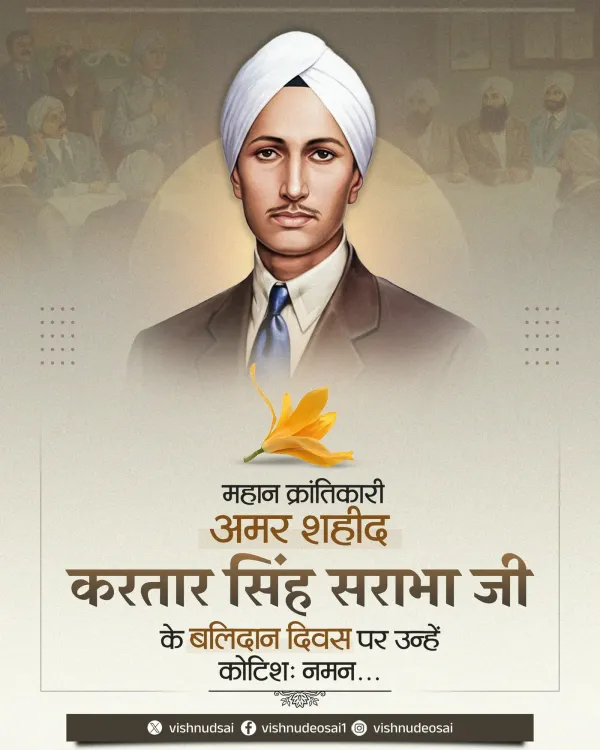
A teenager who chose the gallows over submission — Kartar Singh Sarabha was 19 years old when British authorities hanged him in November 1915, yet his name has echoed through India's freedom struggle for over a century. On his martyrdom anniversary, Chhattisgarh Chief Minister Vishnu Deo Sai offered a formal tribute on Monday, 16 November 2026, saluting the young revolutionary's courage and sacrifice.
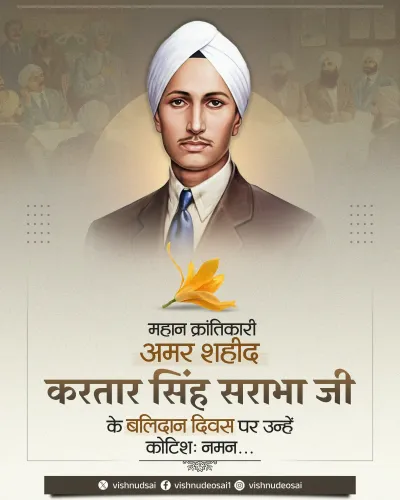
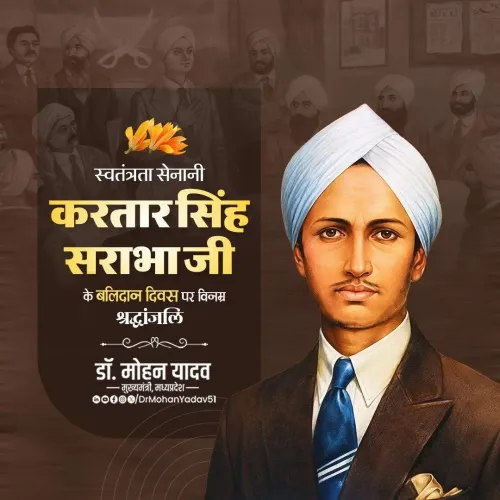
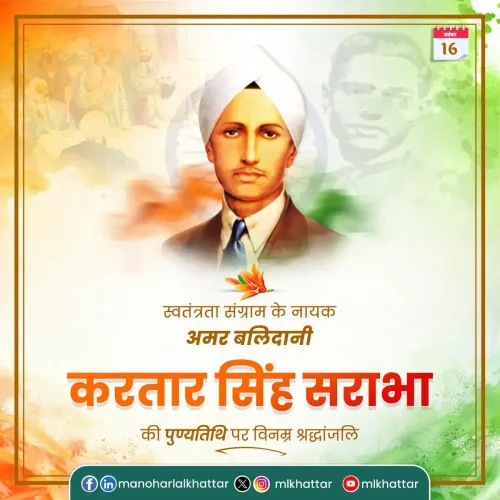
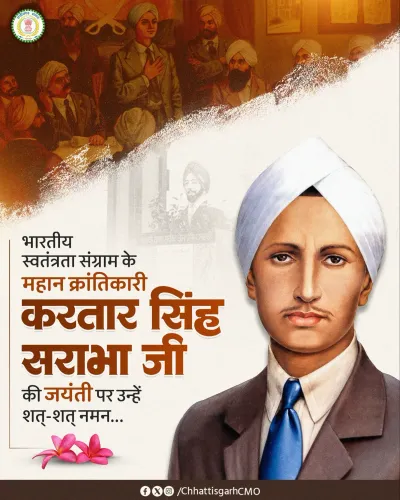
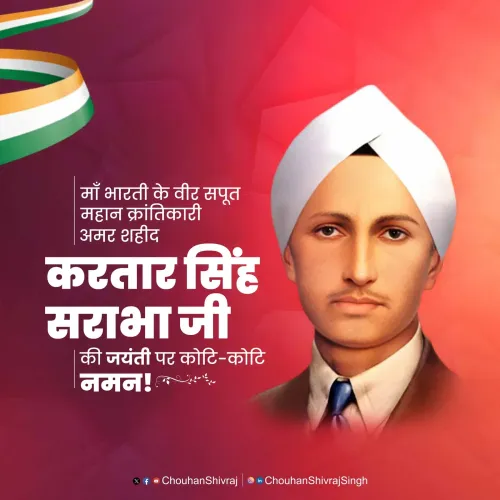
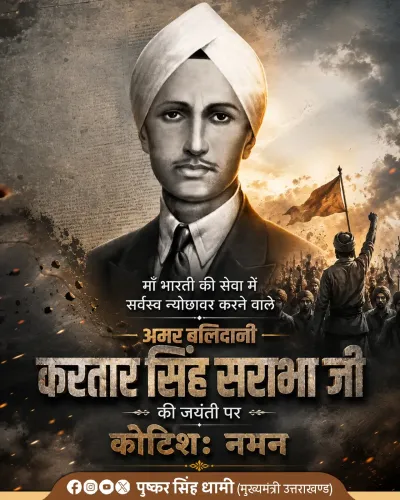
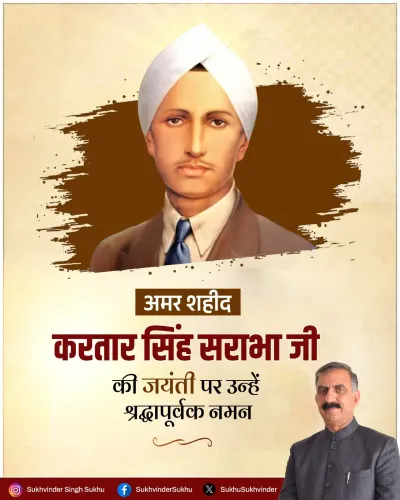
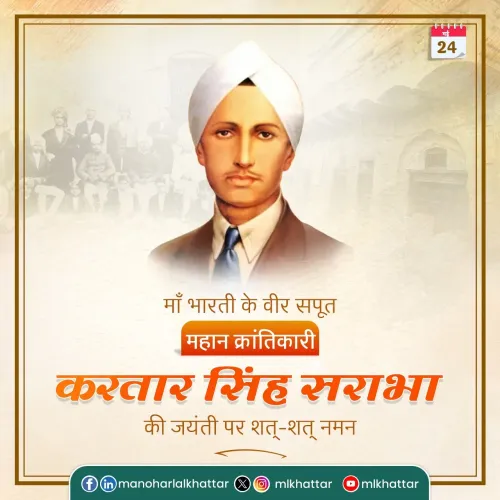
Posting in Hindi, CM Sai wrote: 'महान क्रांतिकारी, अमर शहीद करतार सिंह सराभा जी के बलिदान दिवस पर उन्हें कोटिशः नमन!' — 'Countless salutes to the great revolutionary and immortal martyr Kartar Singh Sarabha on his martyrdom anniversary!' He added that Sarabha's bravery, patriotism, and selflessness as a 'leading warrior of the Ghadar movement' would remain 'an eternal source of inspiration for the youth of the nation.'
Who Was Kartar Singh Sarabha — and Why He Still Matters
Kartar Singh Sarabha was born in 1896 in Sarabha village in what is now Punjab. He was barely in his teens when he travelled to the United States to study, only to be galvanised by the racial humiliation Indian workers and students faced abroad. He became one of the most energetic organisers of the Ghadar Party — a movement founded largely by Indian expatriates in the US and Canada with one stark aim: armed insurrection to end British colonial rule in India. Sarabha returned to the subcontinent to ignite an uprising among sepoys in the Indian Army, coordinating with revolutionaries across Punjab. The plan was betrayed, arrests followed swiftly, and Sarabha was executed on 16 November 1915 at Lahore Central Jail — a date that Indian revolutionary history has not forgotten. Bhagat Singh famously kept Sarabha's photograph in his pocket, citing him as his greatest hero.The Ghadar Movement's Place in India's Independence Story
The Ghadar movement occupies a distinctive space in the history of India's freedom struggle — it was armed, it was diasporic, and it predated the mass-movement era by decades. Where non-violent civil disobedience drew international attention through its discipline and moral authority, the Ghadar revolutionaries chose a different logic: that colonial power would only yield to direct, organised resistance. Their legacy is especially strong in Punjab, but it is claimed across the country as proof that the independence movement was never a single-strand story. Political leaders — across parties and states — routinely mark Ghadar anniversaries and martyrdom days, reinforcing the idea that the armed strand of the independence movement deserves equal commemoration alongside non-violent efforts. Sarabha gave everything before he turned twenty. That fact alone commands the remembrance.Point of View
Legitimising armed sacrifice as an equally honourable strand of nationalism. For BJP leaders specifically, invoking figures like Sarabha connects to a long-standing effort to foreground revolutionary heroes who have sometimes been overshadowed in mainstream historical memory. CM Sai's post also reflects a nationwide pattern where state chief ministers participate in the symbolic calendar of national martyrdom anniversaries, reinforcing their credibility as guardians of patriotic memory. Sarabha's youth — executed at 19 — makes him a particularly potent symbol when addressing messaging aimed at younger citizens.
NationPress
16 Nov 2026
Frequently Asked Questions
Who was Kartar Singh Sarabha?
Kartar Singh Sarabha was a young Indian revolutionary and prominent member of the Ghadar Party, executed by British authorities on 16 November 1915 at the age of 19 for plotting an armed uprising against colonial rule in Punjab.
What was the Ghadar movement?
The Ghadar movement was an early 20th-century revolutionary effort launched mainly by Indian expatriates in the United States and Canada, aimed at ending British rule in India through organised armed insurrection.
Why is Kartar Singh Sarabha remembered on 16 November?
16 November marks the anniversary of Sarabha's execution at Lahore Central Jail in 1915, which is observed as his martyrdom day across India, particularly in Punjab.
What did Bhagat Singh say about Kartar Singh Sarabha?
Bhagat Singh famously kept a photograph of Kartar Singh Sarabha in his pocket and cited him as his greatest source of inspiration and his personal hero.
Why did Chhattisgarh CM Vishnu Deo Sai pay tribute to Sarabha?
CM Vishnu Deo Sai posted the tribute on 16 November 2026, the anniversary of Sarabha's execution, calling him an eternal inspiration for Indian youth and honouring his role as a Ghadar movement warrior.