CM Yogi calls inclusive welfare delivery every govt's duty
Synopsis
Uttar Pradesh Chief Minister Yogi Adityanath declared on X that delivering welfare scheme benefits to every section of society without discrimination is the fundamental responsibility of any welfare government, restating a core governance principle of his administration since 2017.
Key Takeaways
CM Yogi Adityanath posted on 16 November 2026 that inclusive, non-discriminatory scheme delivery is a core duty of any welfare government.
The statement reaffirms a guiding principle the UP administration has invoked since taking office in 2017 .
Uttar Pradesh — with over 240 million residents — has rolled out welfare programmes across housing, health, food security and employment since 2017.
The phrase 'bina bhedbhav ke' (without discrimination) is a deliberate signal against caste or community-based exclusion in benefit distribution.
Budget sessions and scheme-review meetings will serve as the next concrete accountability checkpoints for last-mile delivery.
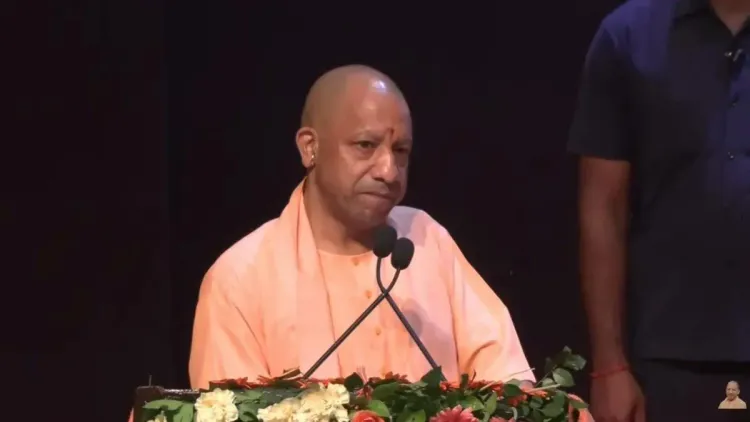
Every welfare government, Uttar Pradesh Chief Minister Yogi Adityanath argued on Monday, 16 November 2026, carries one non-negotiable obligation: ensuring that scheme benefits reach every section of society without discrimination. The statement, posted on X, frames inclusive delivery not as a political aspiration but as a constitutional duty of the state.
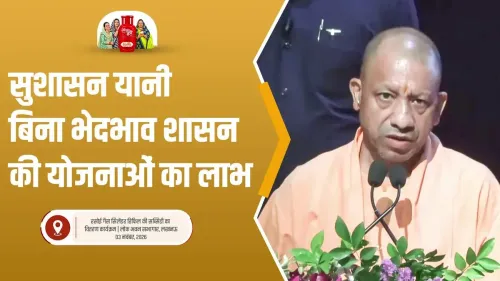
In his own words, 'योजनाओं का लाभ कैसे हम समाज के प्रत्येक तबके को बिना भेदभाव के दे सकते हैं, यह किसी भी कल्याणकारी सरकार का दायित्व होना चाहिए' — 'How we can deliver the benefits of schemes to every section of society without discrimination should be the responsibility of any welfare government.'
Nine years of rebuilding UP's welfare architecture
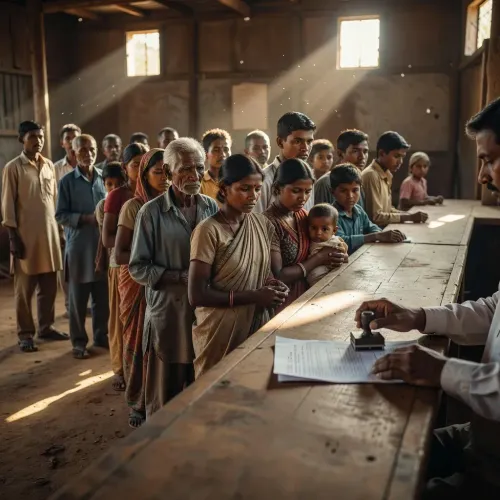
Since 2017, the Yogi administration has rolled out a sweeping range of welfare programmes spanning housing, health, food security, and employment across Uttar Pradesh — India's most populous state with over 240 million residents. The stated intent behind that overhaul has consistently been universal access: benefits that follow need, not caste, community, or patronage network.
That framing has been a recurring motif in state communications since the first term. What Monday's post signals is that the principle remains the administration's declared yardstick — a benchmark against which scheme implementation is meant to be judged.
Why the 'without discrimination' language carries weight
The phrase 'bina bhedbhav ke' — without discrimination — is a deliberate rhetorical choice in a state whose welfare politics have historically been contested along caste and communal lines. By anchoring the statement in governmental duty rather than political credit, the Chief Minister is pitching inclusive delivery as an administrative standard, not a favour.
Comparable language now runs through both state and central government welfare communication, reflecting a broader nationwide shift toward outcome-focused, universal-access schemes — from PM Awas Yojana to Ayushman Bharat. UP's framing tracks closely with that model, positioning the state as a leading implementer of the Centre's inclusive-development agenda.
Budget sessions and scheme-review meetings will be the next real test of whether the stated principle translates into measurable last-mile delivery — especially in underserved rural districts where beneficiary gaps have historically been widest. The standard has been set, publicly and plainly. The numbers will tell the rest of the story.
Point of View
Strengthening the BJP's claim that targeted schemes are depoliticising welfare delivery. With state budget and scheme reviews on the horizon, the declaration also functions as a public standard that the administration will now be measured against. Analysts will watch whether implementation data — particularly in rural districts — eventually validates the rhetoric.
NationPress
16 Nov 2026
Frequently Asked Questions
What did Yogi Adityanath say about welfare schemes in his post?
He said that delivering the benefits of welfare schemes to every section of society without discrimination should be the fundamental responsibility of any welfare government.
What welfare schemes has the Yogi government launched since 2017?
Since 2017, the UP government under Yogi Adityanath has implemented welfare programmes covering housing, health, food security, and employment, aiming at universal access across all communities.
What does 'bina bhedbhav ke' mean in Yogi Adityanath's post?
'Bina bhedbhav ke' translates to 'without discrimination', referring to the principle that welfare benefits should not be distributed on the basis of caste, religion, or community affiliation.
Why is inclusive welfare delivery significant in Uttar Pradesh?
Uttar Pradesh is India's most populous state and has historically seen welfare distribution influenced by caste and community dynamics, making the stated commitment to non-discriminatory delivery a politically and administratively significant benchmark.
What will indicate whether UP's welfare delivery lives up to this standard?
Upcoming Uttar Pradesh budget presentations and scheme-review meetings will be key checkpoints, with last-mile delivery data in underserved rural districts providing the clearest measure of implementation.