CM Yogi Credits Modi for UP Defence Corridor Amid Op Sindoor
Synopsis
The Chief Minister's Office of Uttar Pradesh credited PM Narendra Modi's Defence Industrial Corridor for enabling domestic production of ammunition, artillery and missiles in the state, citing Operation Sindoor as proof of India's indigenous defence capability.
Key Takeaways
The Chief Minister's Office of Uttar Pradesh posted on 21 June 2026 crediting PM Narendra Modi for enabling defence manufacturing in the state.
The post says ammunition, artillery and missiles are now being manufactured within Uttar Pradesh through the Defence Industrial Corridor .
The UP Defence Industrial Corridor was announced in 2018 as part of the Make in India initiative, spanning six nodes across the state.
Operation Sindoor is cited in the post as a live demonstration of India's military strength and indigenous defence capability.
The corridor is part of India's broader push since 2014 to reduce import dependence and raise domestic procurement in defence.
Progress on node-wise commissioning and future budget allocations for ammunition and missile production will be key indicators to watch.
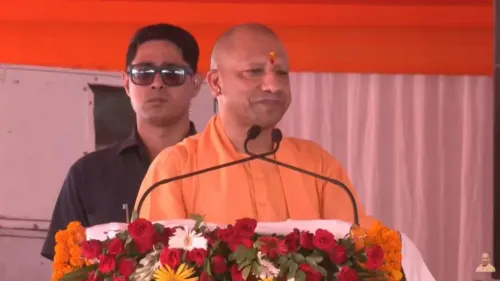
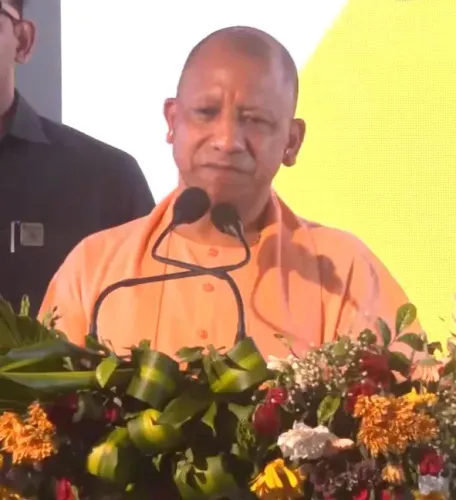
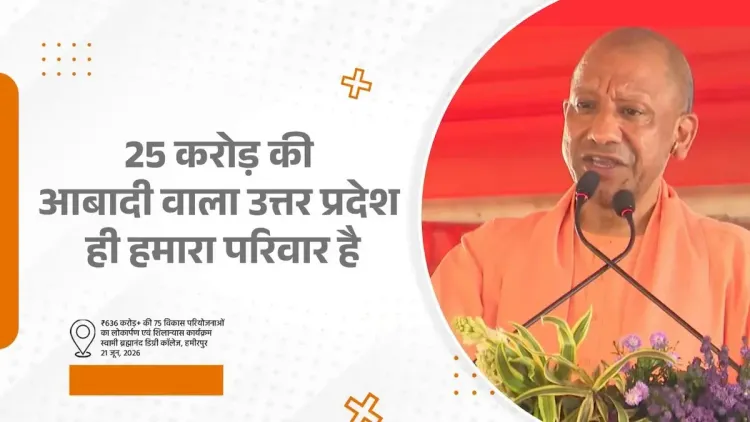
The Chief Minister's Office of Uttar Pradesh posted on Sunday, 21 June 2026, attributing the successful domestic manufacture of ammunition, artillery and missiles within the state to the efforts of Prime Minister Narendra Modi and the Uttar Pradesh Defence Industrial Corridor. The post, shared in the name of Chief Minister Yogi Adityanath, also invoked Operation Sindoor as proof of India's indigenous defence capability.
Context
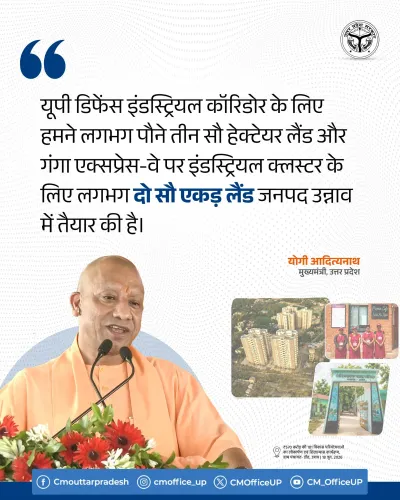
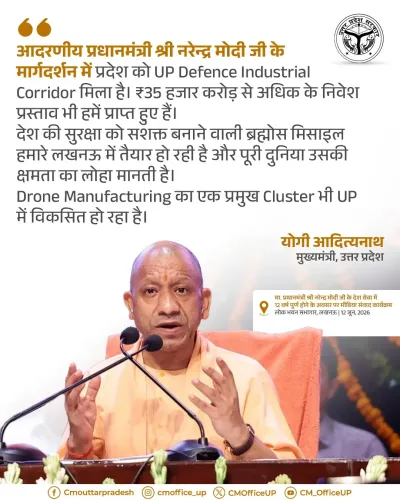
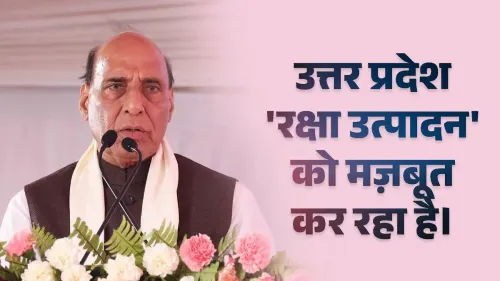
The post states — 'आज आदरणीय प्रधानमंत्री श्री @narendramodi जी के प्रयासों से डिफेंस कॉरिडोर के माध्यम से उत्तर प्रदेश में ही गोला-बारूद, तोप और मिसाइल का निर्माण संभव हुआ है' — ('Today, through the efforts of respected Prime Minister Shri Narendra Modi, it has become possible to manufacture ammunition, artillery and missiles within Uttar Pradesh itself, through the Defence Corridor'). The statement positions the corridor as a direct outcome of central government policy and the Prime Minister's personal initiative. The post further cites Operation Sindoor as a demonstration of the Indian Army's strength and the prowess of indigenous defence capability.
Policy Backdrop
The Uttar Pradesh Defence Industrial Corridor was announced by the Union Government in 2018 as one of two such corridors — the other in Tamil Nadu — under the broader Make in India initiative aimed at reducing India's dependence on defence imports. The corridor spans six nodes across the state, designed to create an integrated ecosystem linking large defence public-sector units with private manufacturers and MSMEs. The 2020 Atmanirbhar Bharat package reinforced this agenda by expanding private-sector participation and raising foreign direct investment limits in defence production.
Since 2014, India has progressively revised offset policies and introduced production-linked incentive schemes to raise the share of domestically procured defence equipment. The UP corridor is a key pillar of that strategy, with ammunition, artillery systems and missile components among the priority product categories.
Stakeholders and Impact
The corridor's beneficiaries span a wide industrial base — from large defence manufacturers and public-sector undertakings to small and medium enterprises in Uttar Pradesh that supply components and sub-assemblies. Successful indigenisation of ammunition and missile production has direct implications for the Indian Army's supply chain resilience, reducing dependence on foreign suppliers for critical warfighting materiel. CM Yogi Adityanath's invocation of Operation Sindoor signals an attempt to connect the corridor's industrial output to a live demonstration of military effectiveness, reinforcing the political salience of defence manufacturing for the state.
What's Next
Attention will now turn to node-wise commissioning progress within the UP corridor and whether the next Union defence budget or expanded production-linked incentive schemes will provide additional momentum for ammunition and missile manufacturing. Uttar Pradesh is positioning itself as a hub of India's defence industrial base, and further milestones — including capacity ramp-ups and export orders — will be closely watched as indicators of the corridor's maturity. The political framing around Operation Sindoor also suggests that indigenous defence production will remain a prominent theme in both state and national discourse ahead of future electoral cycles.
Point of View
While using the emotional resonance of Operation Sindoor to validate the indigenisation agenda. By crediting PM Modi personally, CM Yogi reinforces the BJP's dual narrative of strong national security and economic self-reliance under a unified political leadership. The invocation of a military operation to underscore industrial policy is a pattern increasingly visible in Indian political communication, blurring the line between defence achievement and electoral positioning. Whether the corridor's actual manufacturing output matches the political claims will be the critical test of this narrative's durability.
NationPress
21 Jun 2026
Frequently Asked Questions
What is the Uttar Pradesh Defence Industrial Corridor?
The Uttar Pradesh Defence Industrial Corridor is a central government initiative announced in 2018 under Make in India, designed to create a defence manufacturing ecosystem across six nodes in UP, covering products such as ammunition, artillery and missiles.
What did CM Yogi Adityanath say about the Defence Corridor?
CM Yogi Adityanath's office stated that through PM Modi's efforts, it has become possible to manufacture ammunition, artillery and missiles within Uttar Pradesh itself via the Defence Corridor, and cited Operation Sindoor as proof of India's indigenous defence capability.
What is Operation Sindoor and why is it mentioned?
Operation Sindoor is referenced in the post as a demonstration of the Indian Army's strength and the effectiveness of India's indigenous defence production; the research notes it cannot be independently verified from available training data.
How does the UP Defence Corridor fit into India's Atmanirbhar Bharat policy?
The corridor is a key pillar of Atmanirbhar Bharat in defence, part of a broader push since 2014 to reduce import dependence by expanding domestic manufacturing capacity through industrial clusters, revised FDI limits and production-linked incentive schemes.
Which products are being manufactured in the UP Defence Corridor?
According to the Chief Minister's Office post, ammunition (gola-barood), artillery (top) and missiles (missile) are among the defence products now being manufactured within Uttar Pradesh through the corridor.