CM Yogi Flags UP's Shift: One District, One Medical College
Synopsis
Uttar Pradesh Chief Minister Yogi Adityanath on 26 July 2026 declared that UP has shifted from 'One District-One Mafia' to 'One District-One Medical College', framing the state's medical-college expansion across all 75 districts as the defining successor to his administration's earlier anti-mafia drive.
Key Takeaways
CM Yogi Adityanath posted on 26 July 2026 contrasting UP's past 'One District-One Mafia' reputation with the current 'One District-One Medical College' drive.
The One District One Medical College scheme aims to place at least one government medical college in each of Uttar Pradesh's 75 districts .
Multiple new government medical colleges were approved between 2018 and 2022 , raising the total significantly from pre-2017 levels.
The scheme targets expansion of MBBS seats and improved specialist healthcare access at the district level.
National Medical Commission approval is required for each new college before student admissions can begin.
Key beneficiaries include medical aspirants, rural patients, and district health administrations across the state.
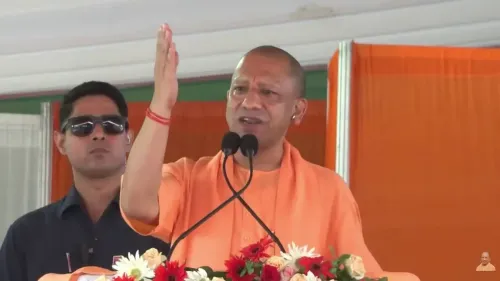
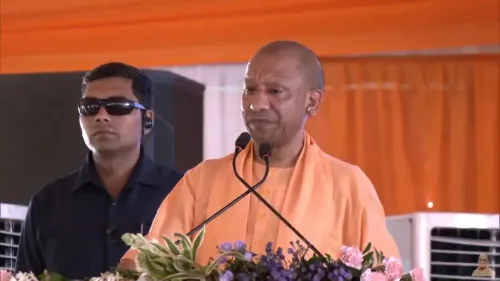
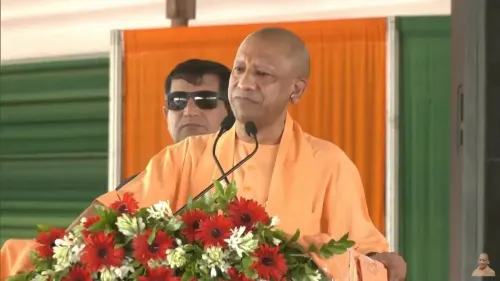
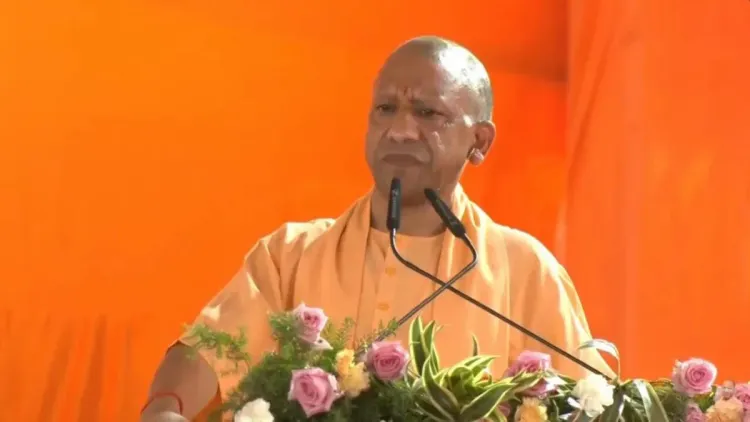
Uttar Pradesh Chief Minister Yogi Adityanath on Sunday, 26 July 2026 declared that the state has moved from an era defined by district-level organised crime to one defined by district-level medical education, invoking a sharp rhetorical contrast to mark the expansion of government medical colleges across Uttar Pradesh's 75 districts.
Posting on X, the Chief Minister wrote: 'अब उत्तर प्रदेश में.... 'वन डिस्ट्रिक्ट-वन माफिया' नहीं, बल्कि 'वन डिस्ट्रिक्ट-वन मेडिकल कॉलेज' है...' — translating as: 'Now in Uttar Pradesh... it is not 'One District-One Mafia', but 'One District-One Medical College'.' The post was accompanied by a video.
Context
The phrase 'One District-One Mafia' alludes to the state's pre-2017 reputation, when each district was widely associated with an entrenched organised-crime network. After the BJP government came to power in 2017, CM Yogi Adityanath launched sustained anti-mafia operations that became a defining political identity of his administration. Sunday's post reframes that legacy: the dominant 'one district, one' association is now medical infrastructure, not crime.Policy Backdrop
The One District One Medical College scheme is a state initiative designed to ensure at least one government medical college in every district of Uttar Pradesh, with the twin goals of expanding MBBS seats and improving access to specialist healthcare at the district level. Between 2018 and 2022, the state cabinet cleared multiple new government medical colleges in underserved districts, raising the total count significantly from pre-2017 levels. The drive aligns with the national push to address India's chronic shortage of doctors by creating new colleges and upgrading district hospitals into teaching institutions requiring National Medical Commission approval. Uttar Pradesh, as India's most populous state, carries a disproportionate share of the country's public-health burden. Low doctor-to-population ratios in rural and semi-urban districts have historically meant that patients in smaller towns travelled to Lucknow, Varanasi, or Kanpur for secondary and tertiary care. District-level medical colleges are intended to shorten that gap both by training doctors locally and by providing attached hospital services to surrounding populations.Stakeholders and Impact
The most immediate beneficiaries of the scheme are medical aspirants from smaller districts, who gain access to government-subsidised MBBS programmes closer to home, reducing both cost and relocation barriers. Rural and semi-urban patients stand to gain from upgraded district hospital infrastructure that accompanies each new college. District health administrations are also affected, as the colleges bring faculty, equipment, and administrative structures that strengthen the overall local health system. Comparable district-level medical-college programmes have been pursued in other large states, suggesting this model is gaining traction as a scalable solution to India's doctor shortage.What's Next
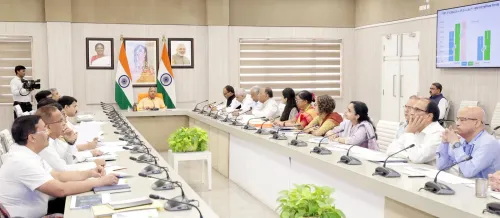
Attention will now turn to state budget allocations for districts yet to receive a functional college and to National Medical Commission approvals, which are required before any new institution can admit students. Subsequent MBBS admission cycles will serve as the clearest measure of whether the scheme is delivering seats at scale. Analysts and health-policy observers will also watch whether the colleges are staffed adequately, since faculty shortages have hampered similar initiatives in other states. The political signalling in Sunday's post suggests the government intends to make health infrastructure a central plank of its governance narrative ahead of future electoral cycles.Point of View
He signals that his administration regards the security phase as settled and the social-infrastructure phase as the new front. The medical-college expansion fits a broader pattern among large Indian states of using district-level health institutions both as genuine public-health tools and as visible governance deliverables. The rhetorical move also pre-empts opposition narratives by reclaiming the 'mafia' reference on the government's own terms, recontextualising it as a problem solved rather than an ongoing embarrassment. Whether the scheme delivers on its promise will ultimately depend on faculty recruitment and NMC approvals — administrative hurdles that political messaging cannot substitute for.
NationPress
26 Jul 2026
Frequently Asked Questions
What is the One District One Medical College scheme in Uttar Pradesh?
The One District One Medical College scheme is a Uttar Pradesh government initiative to establish at least one government medical college in each of the state's 75 districts, aimed at increasing MBBS seats and improving district-level healthcare access.
How many medical colleges has UP added under Yogi Adityanath?
The state cabinet approved multiple new government medical colleges between 2018 and 2022, raising the total significantly from pre-2017 levels; exact operational figures for mid-2026 are subject to ongoing National Medical Commission approvals.
What did CM Yogi mean by 'One District-One Mafia'?
The phrase refers to UP's pre-2017 era when each district was widely associated with an entrenched organised-crime network; CM Yogi's post uses it as a rhetorical contrast to highlight the shift toward medical infrastructure.
Who benefits from UP's district medical college expansion?
The primary beneficiaries are medical aspirants from smaller districts who gain access to government MBBS programmes locally, rural and semi-urban patients who receive upgraded hospital services, and district health administrations that gain additional resources.
What approvals are needed before a new UP medical college can admit students?
Each new government medical college requires approval from the National Medical Commission before it can begin MBBS admissions, in addition to state budget allocations for construction, equipment, and faculty recruitment.