CM Yogi marks World Toilet Day, hails Swachh Bharat Mission
Synopsis
On World Toilet Day, 19 November 2026, UP Chief Minister Yogi Adityanath praised PM Modi's Swachh Bharat Mission for elevating sanitation into a cultural value and restoring dignity to women, urging citizens to make cleanliness a way of life.
Key Takeaways
Uttar Pradesh Chief Minister Yogi Adityanath posted a World Toilet Day message on 19 November 2026 .
He described a toilet as the foundation of health, hygiene, security, and human dignity — not merely a facility.
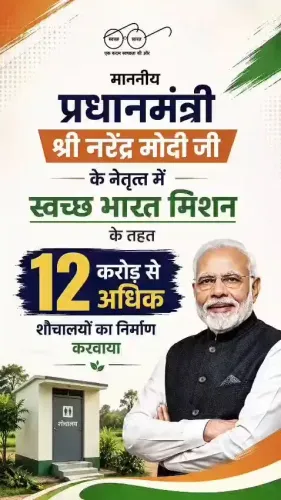
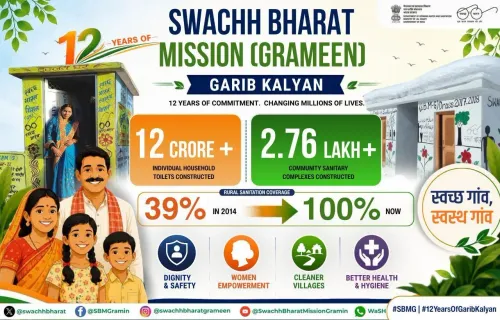
He credited Prime Minister Narendra Modi and the Swachh Bharat Mission , launched on 2 October 2014 , with transforming sanitation into a mass movement.
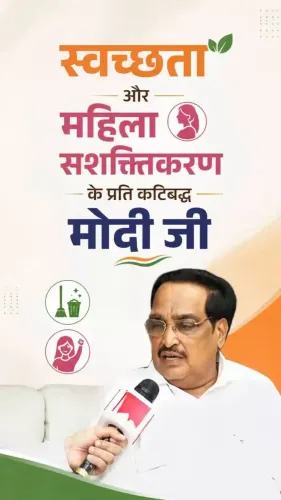
The post specifically highlighted the mission's role in restoring dignity and safety for women and mothers.
CM Yogi called on citizens to make cleanliness a sanskar — an ingrained cultural value — rather than a one-time effort.
Uttar Pradesh has been a major implementing state for Swachh Bharat Mission since 2014, with Phase 2 focusing on ODF-Plus villages and waste management.
A toilet, Uttar Pradesh Chief Minister Yogi Adityanath declared on World Toilet Day, 19 November 2026, is not merely a convenience — it is the foundation of health, hygiene, security, and human dignity. That single framing cuts to the heart of why sanitation has become one of independent India's most consequential public-health battles.
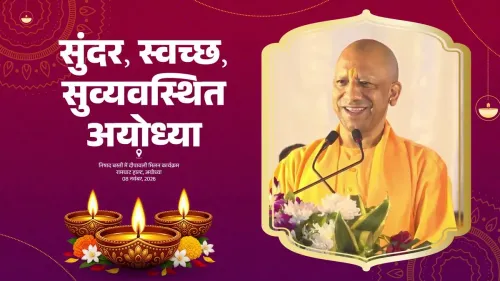
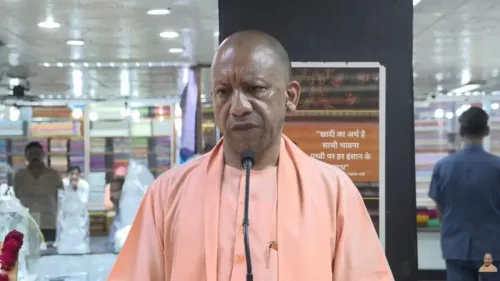
Posting in Hindi on the UN-designated observance day, CM Yogi wrote: 'शौचालय मात्र एक सुविधा नहीं है, बल्कि स्वास्थ्य, स्वच्छता, सुरक्षा और मानवीय गरिमा का आधार है' — 'A toilet is not merely a facility; it is the foundation of health, cleanliness, security, and human dignity.' He credited Prime Minister Narendra Modi and the Swachh Bharat Mission with transforming sanitation from a government programme into a people's movement, and specifically for restoring dignity and respect to mothers and sisters across the country.
Swachh Bharat Mission: from launch to living culture
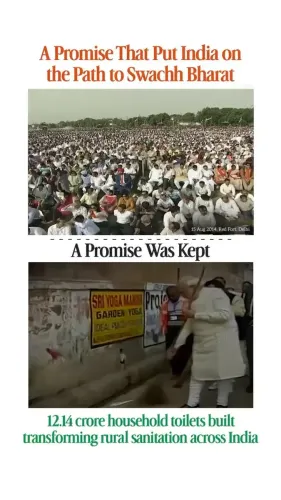
The Swachh Bharat Mission was launched by Prime Minister Modi on 2 October 2014 — Mahatma Gandhi's birth anniversary — as a nationwide drive to eliminate open defecation and build household and community toilets across urban and rural India. What began as a construction target evolved into a wider campaign around hygiene behaviour, menstrual sanitation, and waste management. Uttar Pradesh, with its vast rural population, has been among the largest implementing states since the programme's inception.
CM Yogi's post calls on citizens to make cleanliness a 'sanskar' — a deeply held cultural value, not just a civic duty. The appeal is deliberate: behavioural change, public-health experts have long argued, outlasts infrastructure alone. Building a toilet matters; ensuring it is used, maintained, and seen as a matter of self-respect matters more.
Women's dignity at the centre of the sanitation argument
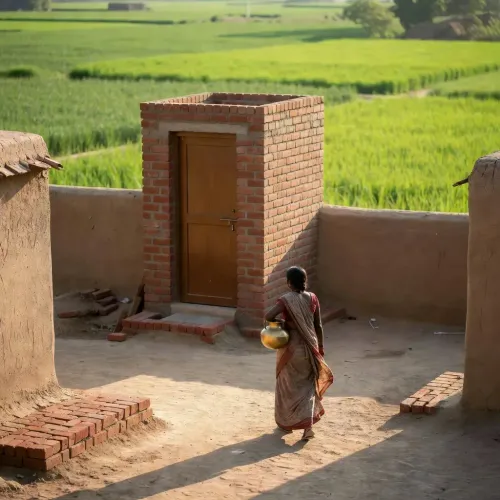
The Chief Minister's specific mention of 'maataon-bahnon ki garima' — the dignity and honour of mothers and sisters — echoes a strand of the Swachh Bharat Mission that resonated most powerfully at the grassroots: that the absence of household toilets forced women to venture out in darkness, exposing them to safety risks. Toilet access for women became both a public-health metric and a women's-rights argument, and that framing has driven adoption in ways that purely technical outreach could not.
World Toilet Day and the global sanitation gap
World Toilet Day is observed every year on 19 November as a UN-designated day to spotlight the global sanitation crisis. It serves as a prompt for governments and civil society to take stock of progress and renew commitments. For India, the day has increasingly become an occasion to report on Swachh Bharat milestones and to reinforce the mission's second phase — which extends the focus to ODF-Plus (open-defecation-free plus) status, encompassing solid and liquid waste management in villages.
Yogi Adityanath's post fits a well-established pattern of state leaders using the observance to publicly align with the central mission — but the language he chose, anchoring sanitation in human dignity rather than government targets, signals a mature phase of the campaign: one where the conversation has moved from construction counts to cultural embedding. The kicker from Lucknow, then, is this: Uttar Pradesh's ODF-Plus journey will be a leading indicator of whether that cultural shift has truly taken hold.
Point of View
Safety, and women's rights rather than construction statistics, he aligns with the BJP's broader narrative that Swachh Bharat Mission is a civilisational uplift, not merely an infrastructure drive. The move also shores up Uttar Pradesh's standing as a committed partner in the central government's flagship welfare scheme ahead of Phase 2 progress reviews. The consistent use of international observance days by state chief ministers to amplify central schemes reveals a well-oiled federal communication strategy. Whether Uttar Pradesh's on-ground ODF-Plus data eventually matches the rhetorical ambition is the harder, more consequential question.
NationPress
19 Nov 2026
Frequently Asked Questions
What is World Toilet Day and when is it observed?
World Toilet Day is a UN-designated annual observance held every year on 19 November to highlight the global sanitation crisis and promote access to safe toilets for all.
What is the Swachh Bharat Mission and when was it launched?
The Swachh Bharat Mission is a central government programme launched by Prime Minister Narendra Modi on 2 October 2014 to eliminate open defecation, build household toilets, and promote hygiene behaviour across India.
What did CM Yogi Adityanath say on World Toilet Day 2026?
CM Yogi said that a toilet is the foundation of health, cleanliness, security, and human dignity, praised the Swachh Bharat Mission for making sanitation a people's movement, and called on citizens to make cleanliness an ingrained cultural value.
What is ODF-Plus under Swachh Bharat Mission Phase 2?
ODF-Plus is the second phase of Swachh Bharat Mission that goes beyond open-defecation-free status to include solid and liquid waste management in villages, aiming for a comprehensive clean-environment standard.
How has Swachh Bharat Mission helped women in Uttar Pradesh?
By enabling household toilet construction, the mission reduced the need for women to venture outdoors in unsafe conditions, directly improving their safety, privacy, and dignity — a key social argument that drove grassroots adoption of the programme in states like Uttar Pradesh.