CM Yogi Hails UP's Pilgrim Sites as Modi-Era Showpieces
Synopsis
The Chief Minister's Office of Uttar Pradesh, citing CM Yogi Adityanath, has highlighted the transformation of Kashi Vishwanath Dham, Ayodhya, and Mathura-Vrindavan under PM Modi's vision, with Kashi now reportedly able to host 50,000 pilgrims simultaneously.
Key Takeaways
Kashi Vishwanath Dham now claims capacity for 50,000 simultaneous devotees , enabled by the corridor redevelopment project inaugurated in December 2021 .
CM Yogi Adityanath attributes the transformation of all three sites to PM Narendra Modi's vision and guidance.
Ayodhya's redevelopment is framed as evoking the Treta Yuga , anchored to the Ram Mandir inauguration of January 2024 .
Mathura-Vrindavan is described as still advancing on a development path, suggesting infrastructure work is ongoing rather than concluded.
Uttar Pradesh has pursued this religious-site overhaul since 2017 , integrating state execution with central government religious tourism priorities.
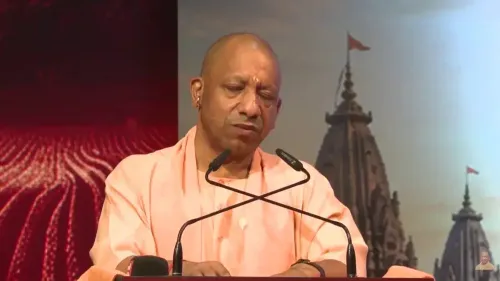
Three of Hinduism's most sacred cities — Kashi, Ayodhya, and Mathura-Vrindavan — have been physically transformed under a years-long push by the Uttar Pradesh government, and on Wednesday, 18 November 2026, the Chief Minister's Office of Uttar Pradesh put that transformation on record in a statement attributed to Chief Minister Yogi Adityanath.
The statement credits Prime Minister Narendra Modi's 'vision aur margdarshan' (vision and guidance) for the scale of change, singling out the Kashi Vishwanath Dham as now capable of hosting up to 50,000 devotees simultaneously for seamless darshan — a figure that underscores the ambition behind the corridor project.
From Narrow Lanes to a Grand Temple Complex
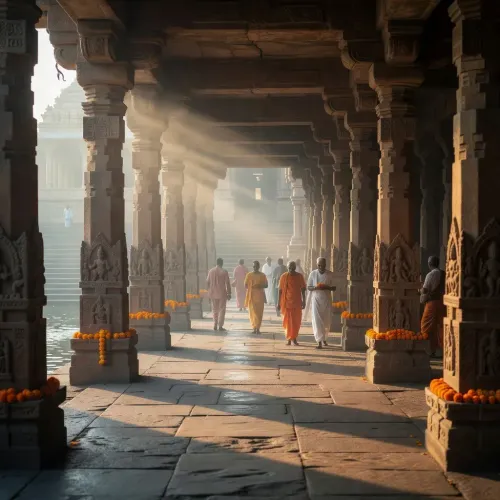
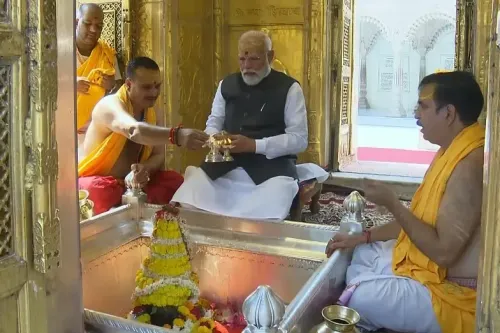
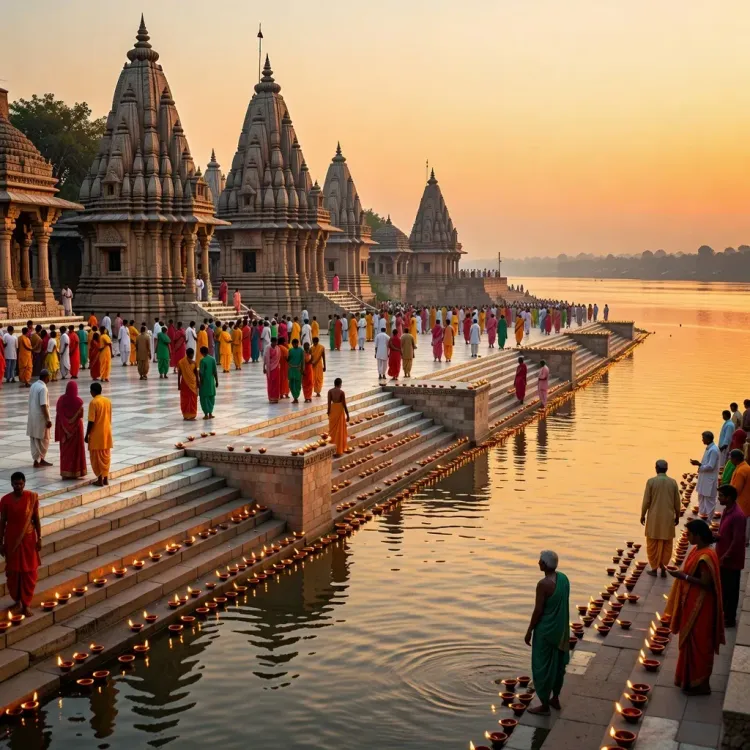
The Kashi Vishwanath Corridor, inaugurated by Prime Minister Modi in December 2021, razed hundreds of structures to open a wide processional route between the Ganga ghats and the ancient temple. Before the project, pilgrims navigated labyrinthine alleys with little crowd management or amenity. The corridor replaced that chaos with open plazas, waiting halls, and direct river access — a logistical overhaul as much as an aesthetic one.
The claim of 50,000 simultaneous visitors is a marker the state government has anchored its communication to, though independent footfall verification remains awaited.
Ayodhya's Treta Yuga Resonance
At Ayodhya, CM Yogi's statement reaches for mythology, saying the city's 'divyata Tretayug ka smaran kara rahi hai' — 'its divinity recalls the Treta Yuga', the cosmic age associated with Lord Ram. That framing aligns with the political and spiritual weight the government placed on the Ram Mandir inauguration of January 2024, which followed the foundation ceremony in August 2020. The temple and surrounding township redevelopment have reshaped Ayodhya's physical skyline and economy in ways that were unimaginable a decade ago.
Mathura-Vrindavan: The Third Axis
Mathura-Vrindavan, the twin towns tied to Lord Krishna's birth and childhood, complete the state's trinity of prioritised pilgrimage corridors. The statement describes them as advancing on the path of development with 'new grandeur and vibrancy' — language suggesting ongoing infrastructure upgrades rather than a completed milestone. The UP government has consistently framed beautification and access improvement at Vrindavan's ghats and Mathura's temple precincts as part of the same religious-tourism strategy.
A State-Level Strategy with Central Backing
Since 2017, Uttar Pradesh has integrated central government emphasis on religious tourism into a state-level execution framework — widened approach roads, improved lighting, pilgrim facilitation centres, and heritage-sensitive construction. The logic is both devotional and economic: pilgrimage drives hospitality, retail, and local employment across all three city clusters.
With visitor footfall at these sites already at record levels following the Ram Mandir consecration, the UP government's next chapter will be written in capacity numbers, spending data, and the pace of remaining work at Mathura-Vrindavan — where the story, by the CM's own telling, is still unfolding.
Point of View
Bundling three distinct infrastructure timelines — Kashi (2021), Ayodhya (2024), Mathura-Vrindavan (ongoing) — into a single, unified narrative of BJP-led civilisational renewal ahead of what could be an election cycle. By invoking Treta Yuga at Ayodhya, the CM moves the register from policy briefing to cultural assertion, a rhetorical shift that appeals directly to the government's core voter base. The 50,000-pilgrim capacity figure for Kashi is a concrete, quotable metric designed to anchor the messaging in tangible delivery. Taken together, the communication reinforces UP's positioning as the heartland of Hindu pilgrimage infrastructure — a brand the state government has invested heavily in since 2017.
NationPress
18 Nov 2026
Frequently Asked Questions
What is the Kashi Vishwanath Corridor and when was it inaugurated?
The Kashi Vishwanath Corridor is a large-scale redevelopment project in Varanasi that connects the Kashi Vishwanath Temple directly to the Ganga ghats via open plazas and pilgrim facilities. It was inaugurated by Prime Minister Narendra Modi in December 2021 .
How many pilgrims can visit Kashi Vishwanath Dham at one time?
The Uttar Pradesh government has stated that Kashi Vishwanath Dham can now accommodate up to 50,000 devotees simultaneously , a figure attributed to the expanded facilities under the corridor project.
When was the Ram Mandir in Ayodhya inaugurated?
The Ram Mandir at Ayodhya was inaugurated in January 2024 , following a foundation ceremony held in August 2020 .
What development work is happening at Mathura-Vrindavan?
Mathura-Vrindavan is undergoing ongoing infrastructure and aesthetic upgrades as part of the UP government's religious tourism strategy, including ghat beautification, improved lighting, and better pilgrim access — though the work is described as still in progress.
What is CM Yogi Adityanath's role in developing UP's pilgrimage sites?
Chief Minister Yogi Adityanath has led state-level execution of religious infrastructure projects across Kashi, Ayodhya, and Mathura-Vrindavan since 2017 , working in conjunction with central government support and PM Modi's backing.